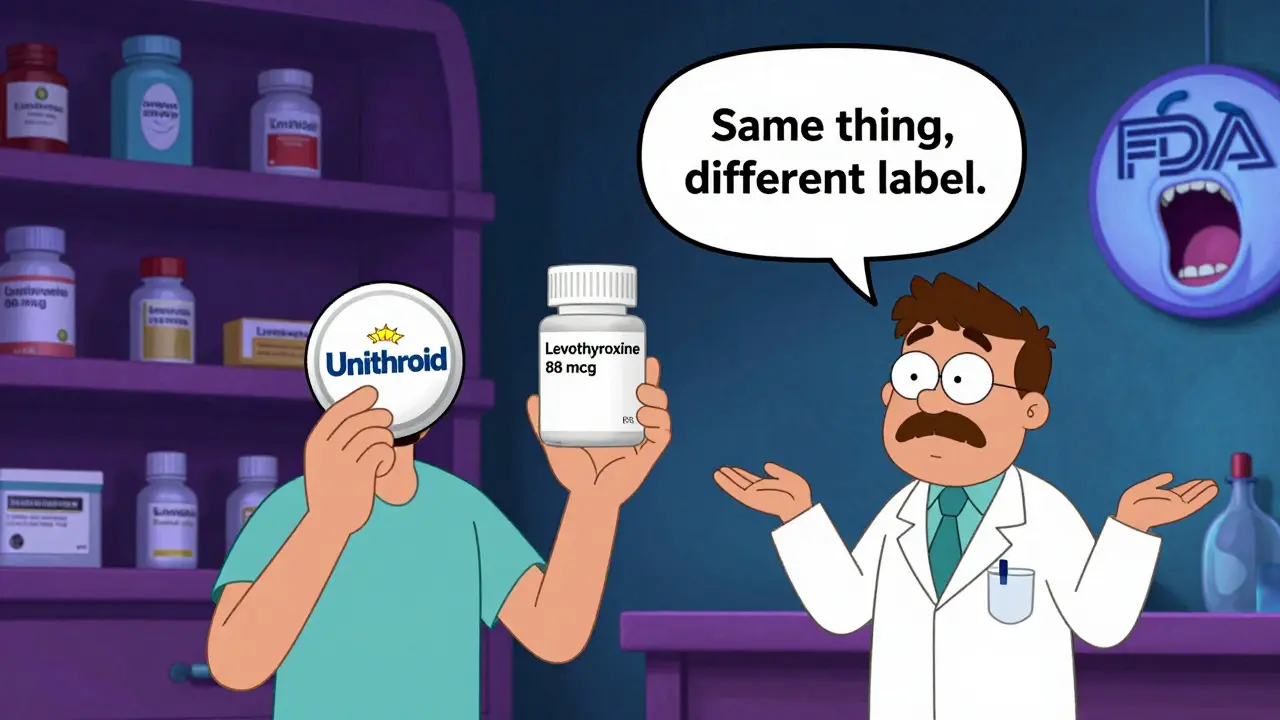
Ever opened your prescription bottle and seen a pill that looks exactly like your brand-name drug-but without the brand name on it? That’s not a mistake. It’s an authorized generic.
Authorized generics aren’t just cheaper versions of brand-name drugs. They’re the exact same pill, made in the same factory, with the same ingredients, same coating, same everything. The only difference? No fancy logo. No marketing. Just the medicine.
How Authorized Generics Are Different From Regular Generics
Regular generic drugs are made by other companies after the brand-name drug’s patent expires. Those companies have to prove to the FDA that their version works the same way. That’s called bioequivalence. They use the same active ingredient, sure-but they can change the fillers, the dye, the shape, even the taste. That’s allowed. And sometimes, those changes cause problems. People report weird side effects, or their body just doesn’t seem to respond the same way.
Authorized generics don’t have that issue. They’re made by the original brand-name company-or licensed to another company using the exact same recipe, equipment, and batch process. No changes. No substitutions. It’s the same drug, just sold under a different label.
Here’s the kicker: authorized generics aren’t listed in the FDA’s Orange Book, where all regular generics are cataloged. That’s because they don’t go through the Abbreviated New Drug Application (ANDA) process. They’re covered under the original brand’s New Drug Application (NDA). The FDA just gets a heads-up. That’s it.
Why Do Brand-Name Companies Make Their Own Generics?
It sounds strange, right? Why would a company that spent millions marketing a drug turn around and sell the exact same thing for less?
It’s not charity. It’s strategy.
When a brand-name drug’s patent runs out, generic competitors flood the market. Prices drop fast. The brand-name company loses most of its sales. But if they launch their own authorized generic right before or during that window, they can keep a big slice of the market. They still make money. Patients still get lower prices. And the brand keeps its relationship with pharmacies and insurers.
Between 2010 and 2019, there were 854 authorized generic launches in the U.S. A 2022 study found that 75% of them came out after traditional generics had already entered the market. That’s not random. That’s a calculated move. The brand company waits to see who’s coming in, then drops their version to capture customers who might be wary of switching to a new-looking pill.
And here’s another trick: if a traditional generic gets 180 days of exclusivity (a special perk under the Hatch-Waxman Act), the brand can still launch its authorized generic during that time. That means two versions of the same drug are on the shelf at once-and the brand still gets a piece of the pie.
What Does an Authorized Generic Look Like?
Visually, it’s almost identical to the brand-name drug. Same color. Same shape. Same imprint. Sometimes, it’s exactly the same. Other times, the manufacturer tweaks the imprint slightly-just enough to tell them apart on the shelf.
The packaging? No brand name. No logo. Just the drug name, strength, and manufacturer. You might see something like “Levothyroxine 88 mcg” instead of “Unithroid 88 mcg.” The bottle might say “Greenstone” or “Prasco” instead of “Pfizer” or “AbbVie.”
But here’s the thing: if you’ve been taking a brand-name drug for years and suddenly get a pill that looks exactly the same-but cheaper-you might not even notice the switch. That’s by design.

Are Authorized Generics Cheaper?
Yes-but not always as cheap as you’d think.
Authorized generics usually cost 15-30% less than the brand-name version. That’s a big savings. But they’re often more expensive than traditional generics that come in later, especially when multiple companies start making the same drug.
Why? Because the brand-name company still controls production. They’re not under pressure to slash prices like a new generic manufacturer trying to win market share. Once five or six traditional generics hit the market, prices can drop 90% or more. But the authorized generic? It holds steady.
So if you’re price-shopping, don’t assume an authorized generic is the cheapest option. Check the price of regular generics first. But if you’ve had issues with other generics-like side effects or inconsistent results-the authorized version might be your best bet.
Real Examples You Might Recognize
Here are a few common drugs that have authorized generic versions:
- Concerta (methylphenidate ER) → Authorized generic by Actavis
- Celebrex (celecoxib) → Authorized generic by Greenstone
- Colcrys (colchicine) → Authorized generic by Prasco
- Unithroid (levothyroxine) → Authorized generic by Jerome Stevens
These aren’t obscure drugs. Millions of people take them. And if you’re getting one of these, you might already be taking the authorized version without knowing it.
Why Pharmacists and Doctors Get Confused
Even healthcare pros mix these up.
Authorized generics aren’t in the Orange Book. They don’t show up in most pharmacy software as “generic.” They’re often labeled as “brand” or just “generic” without clarification. So a pharmacist might think they’re dispensing the real thing when they’re not. Or they might think they’re giving a regular generic when they’re actually giving the exact same drug as the brand.
That leads to confusion. Patients get pills that look different from what they’re used to-and they panic. “Is this the same?” “Did they give me the wrong medicine?”
Pharmacists have to explain: “Yes, this is identical. It’s made by the same company. Same formula. Same everything.”
It’s not just about cost. It’s about trust.
Should You Choose an Authorized Generic?
Here’s when it makes sense:
- You’ve had bad reactions to other generics (different fillers causing stomach upset, headaches, or mood swings)
- You’re on a medication where small changes matter-like thyroid meds, seizure drugs, or blood thinners
- You want the lowest price you can get without risking inconsistency
- Your insurance covers it at a low copay
Here’s when it might not be worth it:
- A traditional generic is significantly cheaper and you’ve never had issues with generics before
- You’re on a tight budget and every dollar counts
- You’re switching from brand to generic for the first time and your doctor hasn’t flagged any concerns
Ask your pharmacist: “Is this an authorized generic?” They can check the label or the manufacturer. If it is, and it’s cheaper than the brand, it’s usually a smart pick.
The Bottom Line
Authorized generics are the hidden middle ground in the drug market. They’re not the expensive brand. They’re not the cheap, unpredictable generic. They’re the exact same drug, sold without the brand name. For patients who need consistency, they’re a lifeline. For pharmaceutical companies, they’re a smart business move.
They’re not perfect. They don’t always drive prices down the way the system was designed to. But for many people, they’re the safest, most reliable alternative to the brand-name drug they’ve trusted for years.
Next time you get a prescription, check the label. If the name doesn’t match what you expected-but the pill looks familiar-you might be holding an authorized generic. And that’s not a bad thing.
Are authorized generics the same as the brand-name drug?
Yes. Authorized generics are made using the exact same active and inactive ingredients, in the same facility, with the same manufacturing process as the brand-name drug. The only difference is the label. They are not bioequivalent-they are identical.
Why are authorized generics sometimes more expensive than regular generics?
Because they’re produced by the original brand company, they don’t face the same price pressure as traditional generics. When multiple companies start making the same drug, competition drives prices down. Authorized generics often stay priced higher because there’s only one producer-usually the brand itself.
Do authorized generics show up in the FDA’s Orange Book?
No. Authorized generics are not listed in the FDA’s Orange Book because they’re not approved under the Abbreviated New Drug Application (ANDA) process. They’re marketed under the original brand’s New Drug Application (NDA), so they’re tracked separately by the FDA.
Can I ask my pharmacist for an authorized generic?
Yes. You can ask if an authorized generic version is available for your prescription. Pharmacists can check the manufacturer and label to confirm. If it’s available and priced lower than the brand, it’s often a good option-especially if you’ve had issues with other generics.
Are authorized generics safe?
Yes. They’re made under the same FDA inspections and quality controls as the brand-name drug. Since they’re identical in composition and manufacturing, they carry the same safety profile. Many patients switch to authorized generics specifically because they’ve had bad reactions to other generics with different fillers.
Why do pharmaceutical companies make authorized generics?
To maintain market share after a patent expires. By launching their own version at a lower price, they can keep customers who might otherwise switch to a traditional generic. It’s a business strategy that lets them keep revenue while still offering a lower-cost option.
Let’s be precise: authorized generics are not ‘bioequivalent’-they’re pharmacologically identical. The FDA’s Orange Book omission isn’t a loophole; it’s a regulatory distinction rooted in the NDA framework. Any clinician who confuses this with ANDA-approved generics is either misinformed or negligent. This isn’t semantics-it’s patient safety.
OMG I JUST REALIZED I’VE BEEN TAKING AN AUTHORIZED GENERIC FOR MY THYROID FOR TWO YEARS AND NEVER KNEW!! 😱 It looked exactly like my old Unithroid, just cheaper-and my labs haven’t budged one bit. I’m telling everyone. This is the hidden gem of pharma! 💪💊
Wait… so the drug companies are basically tricking us? They make the SAME PILLS, then slap on a different label and say ‘oh, it’s generic now’-but they’re still making bank? That’s not just clever, it’s morally sketchy. And don’t even get me started on how pharmacies don’t even tell you. I feel betrayed. 😔
Bro, this is actually genius. In India, we don’t have this system-but I’ve seen people switch from brand to generic and get sick from fillers. This? This is the sweet spot. Same medicine, lower cost, no drama. Pharma’s not evil here-they’re just playing the game smart.
I appreciate how clearly this was explained. For patients who’ve had bad experiences with generics-especially with thyroid or seizure meds-this is a quiet relief. Not everyone needs to know the details, but those who do deserve the option. Thank you for highlighting the human side of this.
Back home in Kerala, we call this ‘copy with no logo’-and everyone knows it’s the real thing. Funny how the West makes it sound like a secret. We’ve been doing this for decades with insulin and antibiotics. Just check the manufacturer, not the name on the bottle.
Let’s pause for a moment of institutional sarcasm: The FDA doesn’t list authorized generics in the Orange Book? Brilliant. So if your pharmacist doesn’t know the difference, and your insurance system doesn’t flag it, and your doctor assumes ‘generic’ means ‘ANDA-approved’-then the entire ecosystem is built on a lie. And we’re all just… hoping for the best?
If you’ve ever had a weird reaction to a generic-headaches, nausea, mood swings-this is your lifeline. Authorized generics aren’t the cheapest, but they’re the most reliable. And if your pharmacist says ‘it’s the same’-ask them to check the manufacturer code. Most of the time, it’s the same factory. You’re not taking a gamble-you’re just skipping the branding tax.
It is, frankly, a grotesque irony that the very corporations that spent billions on marketing campaigns to convince the public that their branded formulations were uniquely superior, now peddle identical products under a stripped-down label-while still commanding premium pricing over true generics. This is not innovation. It is predatory preservation. And it is, in every meaningful sense, a failure of both market ethics and regulatory oversight.