Blood Thinner Travel Timing Calculator
Plan your blood thinner schedule correctly when crossing time zones. Your medication timing is critical for safety and effectiveness while traveling.
Getting on a plane with a blood thinner isn’t just about packing your pills. It’s about planning for time zones, dehydration, long sits, and what happens if you get sick halfway across the world. If you’re on warfarin or a DOAC like apixaban or rivaroxaban, your trip needs a different kind of checklist - one that keeps your blood from clotting or bleeding too much.
Know Which Blood Thinner You’re On
There are two main types of blood thinners: warfarin and DOACs. They work differently, and that changes everything when you’re traveling.
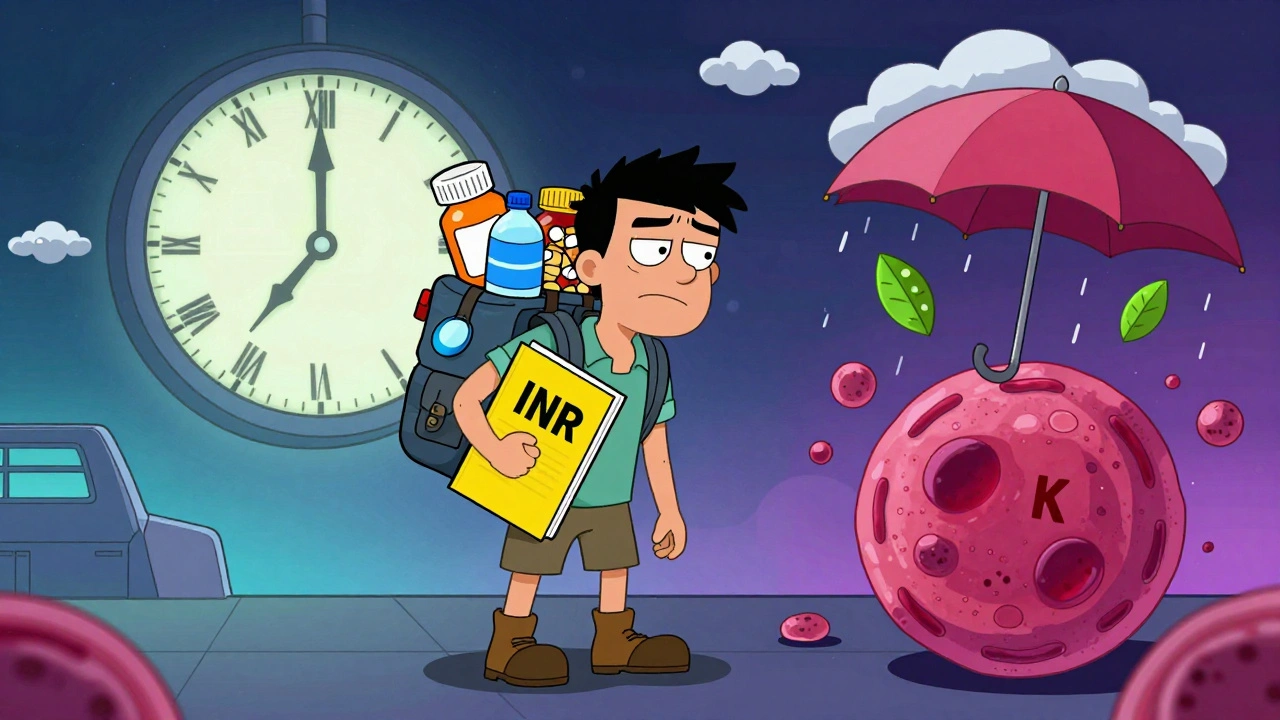
Warfarin has been around for decades. It’s cheap and effective, but it’s finicky. Your body’s response to it depends on how much vitamin K you eat - think leafy greens, broccoli, kale. A big plate of spinach in Italy or a bowl of natto in Japan can throw your INR off. That’s why warfarin users need regular blood tests to check their INR levels. Most people carry a yellow booklet with their test results and dosing history. If you’re on warfarin, that booklet isn’t optional. It’s your medical lifeline abroad.
DOACs - like dabigatran, apixaban, rivaroxaban, and edoxaban - changed the game. They don’t need blood tests. They don’t care if you eat spinach or skip a meal. They work fast, leave your system fast, and have fewer interactions with food or other drugs. For travelers, that’s a huge win. No more hunting for a lab in Bangkok or worrying about whether your hotel breakfast will mess with your dose.
Timing Your Doses Across Time Zones
Skipping a dose is risky. Taking two by accident is dangerous. That’s why timing matters more than you think.
If you’re on a DOAC, take it at the same time every day - even when you cross time zones. If you normally take apixaban at 8 a.m. Eastern Time and you’re flying to London, set an alarm on your phone for 1 p.m. London time. Don’t try to match your home clock. Just keep the interval between doses consistent. Most DOACs last 12 to 24 hours, so missing one dose can leave you unprotected.
Warfarin users have more flexibility with timing, but not much. You still need to take it daily, and if you’re traveling for more than a week, you’ll need to plan your INR checks. Some clinics abroad can test INR, but don’t assume they will. Bring extra tablets - different strengths - just in case you need to adjust your dose based on a test result you get overseas.
Hydration Is Non-Negotiable
Dehydration thickens your blood. And if you’re on a blood thinner, that’s a double risk: it can trigger clots, and it can make bleeding worse.
On long flights, you’re in dry air, sipping airport coffee, maybe having a glass of wine to relax. Bad idea. Alcohol and sugary drinks dehydrate you. Water is your best friend. Aim for at least 8 ounces every hour during flights longer than six hours. Drink before you board. Drink during layovers. Drink after you land. Don’t wait until you’re thirsty.
Also, avoid salty snacks. They make you retain fluid and can mess with your electrolyte balance. Stick to nuts, fruit, or plain crackers. Simple is safer.
Movement Is Your Best Defense
Staying seated for hours - whether on a plane, train, or bus - is one of the biggest clot risks for anyone on blood thinners. The risk isn’t huge, but it’s real. And if you’ve had a clot in the last four weeks, you shouldn’t be flying at all.
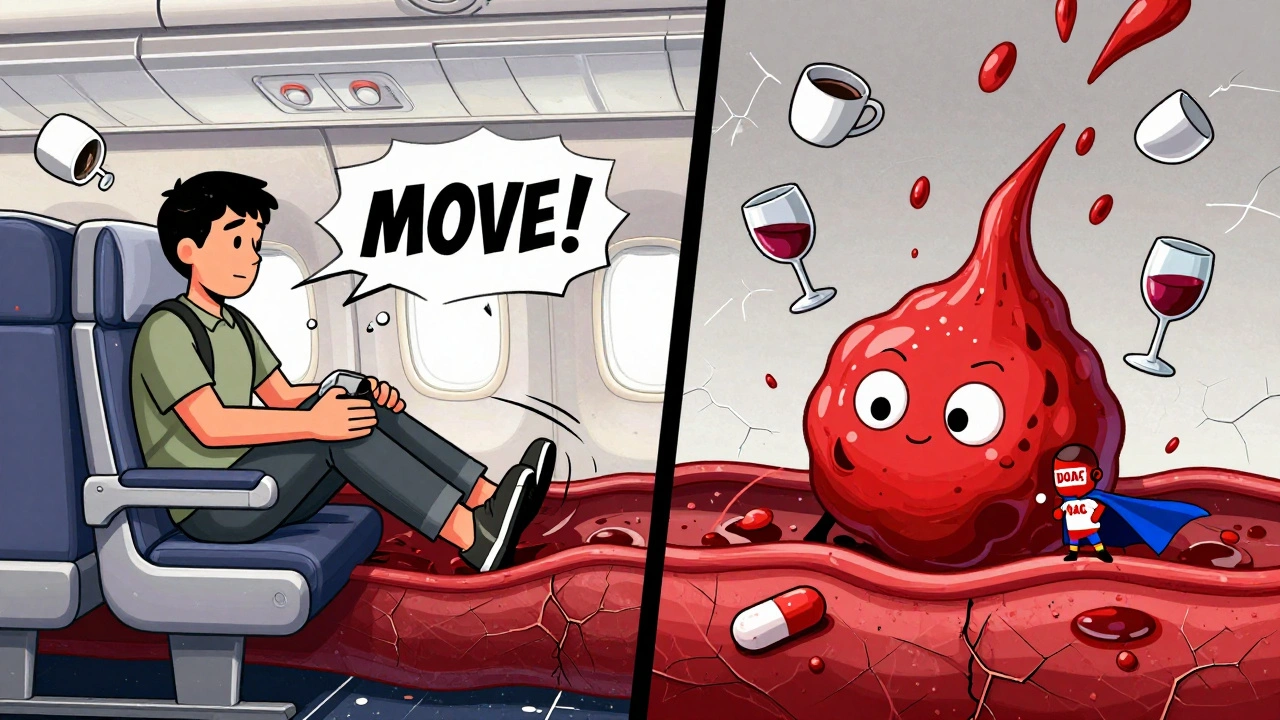
For flights over six hours, get up and walk every two to three hours. If you can’t get up, do seated exercises: flex your ankles, circle your feet, squeeze your calves. Do them every 30 minutes. Don’t wait until your legs feel stiff. Move before you feel the need.
Even on road trips, stop every two hours. Walk around the gas station. Stretch your legs. Don’t just sit and scroll. Your veins need the movement.
What to Pack - Beyond the Pills
You wouldn’t leave home without your wallet. Don’t leave without your medical essentials.
- Warfarin users: Bring your yellow INR booklet. Bring extra tablets (including 1mg ones for fine-tuning). Bring a copy of your prescription with generic names.
- DOAC users: Bring enough for the whole trip plus a week extra. Store them in your carry-on. Never check them.
- Both: Carry a doctor’s note explaining your condition and medication. It helps if security questions your pills or if you need urgent care abroad.
- Always: Pack a small first-aid kit with gauze, tape, and antiseptic. If you cut yourself, you might bleed more than usual. Know how to apply pressure and when to seek help.
And don’t forget: keep your meds in their original bottles. Customs officers don’t care about your pill organizer. They care about labels with your name and the prescription info.
Avoid These Risks
Some activities are riskier than others - even if you’re on a blood thinner.
Scuba diving? Not recommended. If you’re on warfarin, a decompression injury or ear pressure change could cause bleeding in your ears or spinal cord. Even if you’ve done it before, it’s not safe. The same goes for contact sports, rock climbing, or anything where a fall could cause internal bleeding.
And don’t take new supplements. Turmeric, ginger, garlic pills - they can thin your blood even more. Same with herbal teas. Green tea can interfere with warfarin. Stick to what you know.
What to Do If Something Goes Wrong
Traveling with a blood thinner means being ready for the unexpected.
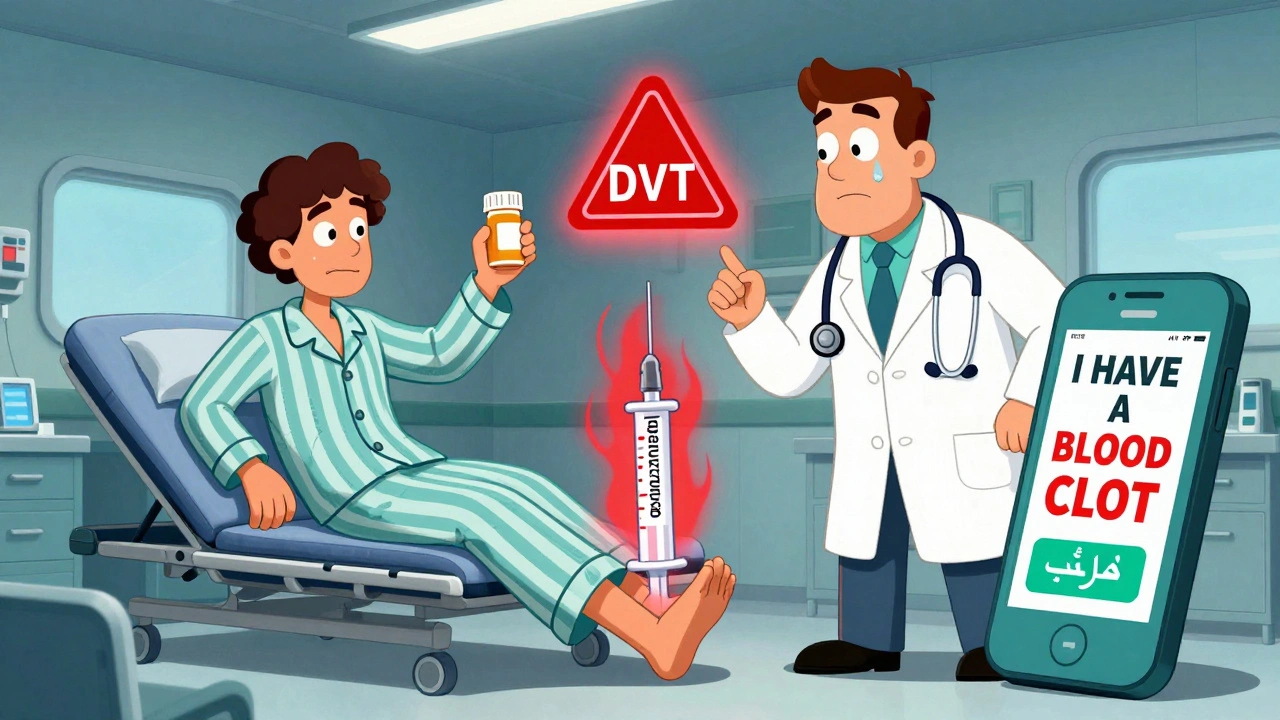
If you feel sudden swelling, pain, or warmth in your leg - especially if it’s only on one side - don’t wait. That could be a DVT. If you get short of breath, chest pain, or cough up blood - that could be a pulmonary embolism. Both are emergencies.
Go to the nearest hospital. Tell them you’re on a blood thinner. Show your booklet or prescription. Most hospitals worldwide can handle this. They’ll test your blood, check your clotting, and adjust your treatment. Getting help early means you’re more likely to recover quickly and keep your trip on track.
If you’re in a country where you don’t speak the language, download a translation app. Write down: “I am on a blood thinner. I think I have a clot.” in the local language. Save it in your phone. It could save your life.
DOACs vs. Warfarin: The Traveler’s Choice
| Feature | Warfarin | DOACs (Apixaban, Rivaroxaban, etc.) |
|---|---|---|
| Need blood tests? | Yes, monthly INR checks | No |
| Diet restrictions? | Yes - vitamin K affects dosing | No |
| Travel-friendly? | Harder - needs monitoring | Yes - simple, predictable |
| Reversal agents available? | Vitamin K, fresh frozen plasma | Yes - idarucizumab (for dabigatran), andexanet alfa (for Xa inhibitors) |
| Best for long trips? | Only if you can access labs | Yes - ideal for international travel |
For most travelers, DOACs are the smarter choice. No labs. No diet stress. No last-minute panic if you miss a test. But if you’ve been on warfarin for years and it’s working, don’t switch just for travel. Talk to your doctor. There’s no rush.
When to Skip Travel Altogether
If you’ve had a blood clot in the last four weeks, don’t travel. Not even for a weekend. Your body is still healing. The risk of another clot is highest in those first weeks. No amount of walking, water, or alarms will make it safe.
Same goes if you’ve had major surgery, a recent stroke, or uncontrolled high blood pressure. Talk to your doctor before booking anything. Your health isn’t worth risking for a vacation.
Final Rule: Don’t Guess. Plan.
Traveling with blood thinners isn’t about being scared. It’s about being prepared. You’ve managed your meds every day. Now you’re just taking them somewhere new.
Make a checklist. Pack extra. Set alarms. Drink water. Move often. Know your meds. And if you’re unsure - call your doctor before you go. A 15-minute call can prevent a hospital stay abroad.
You’ve got this. The world is big. And with the right plan, you can see it - safely.
Can I drink alcohol while on blood thinners?
Moderate alcohol is usually okay, but it increases bleeding risk and dehydrates you. One drink occasionally is fine, but don’t make it a habit - especially on flights. Skip cocktails and beer on long trips. Stick to water.
What if I lose my blood thinner while traveling?
If you lose your pills, go to a local pharmacy with your prescription or doctor’s note. Most countries can fill prescriptions for DOACs and warfarin. If you can’t find a pharmacy, go to a hospital. Don’t skip doses. Missing even one day increases your clot risk.
Do I need a doctor’s note for airport security?
Not required, but highly recommended. Security may question why you’re carrying multiple pills or large bottles. A note from your doctor explaining your condition and medication helps avoid delays. Keep it in your carry-on with your meds.
Can I use a pill organizer for my blood thinner?
Yes - but only as a backup. Always keep your original bottles in your carry-on. Pill organizers can get mixed up or lost. Original bottles have your name, dosage, and prescription info - critical if you need help abroad.
Are DOACs safe in countries with limited medical care?
Yes. DOACs are actually safer than warfarin in remote areas because they don’t require blood tests. Reversal agents are available in most major hospitals worldwide. The main risk is missing doses - so set alarms and pack extra.
If you’ve had a clot before, you know how quickly things can change. But with the right prep, you can travel without fear - just caution. The goal isn’t to avoid travel. It’s to enjoy it - safely.
Just got back from 3 weeks in Thailand on apixaban and let me tell you - the hydration tip saved my life. I drank water like it was my job and skipped the mango smoothies. No clots, no drama. Also brought extra pills in my carry-on and a doctor’s note. Simple. Effective. Don’t overthink it.
So let me get this straight - we’re telling people to avoid scuba diving because of a blood thinner but it’s totally fine to ride a motorbike in Vietnam? I mean, if you’re gonna live dangerously, at least pick something fun.
Traveling with anticoagulants requires discipline. Not fear. Preparation is not optional. The difference between a smooth trip and a hospital stay is often just a checklist and a phone alarm.
Wait so DOACs are better but what about the fact that they cost 10x more and your insurance hates you? Also I tried drinking water on a flight once and my seatmate gave me side eye like I was some kind of alien. Who even are these people?
One thing missing from this guide: what to do if you’re in a country where DOACs aren’t available. In some regions, even warfarin is hard to get. Always carry a letter from your prescriber with the generic name and dosage, and know the nearest embassy. It’s not paranoia - it’s planning.
Why do Americans always act like they’re the only ones who travel with meds? I’ve been on warfarin for 12 years and I’ve flown to 17 countries. Everyone else just does it. Stop making it a drama. Also, no one cares about your yellow booklet.
This post made me feel so seen. I was terrified to go to Japan last year but followed every tip - set alarms, packed nuts instead of chips, walked every hour on the plane. And you know what? I ate the best sushi of my life and didn’t have a single scare. You can do hard things.
Man I used to be the guy who skipped doses when I was on vacation. Then I got a DVT on a road trip to Colorado. Now I carry my meds like they’re my kid’s pacifier. Don’t be me. Just… don’t.
Just a quick tip - if you’re on DOACs and you’re flying long haul, bring a small cooler with ice packs and keep your pills in there. Heat can degrade them. I learned this the hard way in Dubai. No one told me that.
So you think drinking water is the solution? My cousin in Delhi takes warfarin and drinks chai three times a day - and he’s fine. Maybe the real issue is overmedicalizing normal life.
What about the fact that some DOACs aren’t covered by insurance outside the US? I had to pay $400 out of pocket for a 30-day supply in Portugal. And the pharmacy didn’t even have my brand. Had to switch mid-trip. No one warns you about that.
^ this. I switched from warfarin to rivaroxaban for travel, but when I got to Mexico City, my prescription was flagged as ‘high-risk.’ Took 3 days to get a local doctor to refill. Bring extra. Like, a lot extra. And call your pharmacy before you go - they can help you find a partner pharmacy overseas.