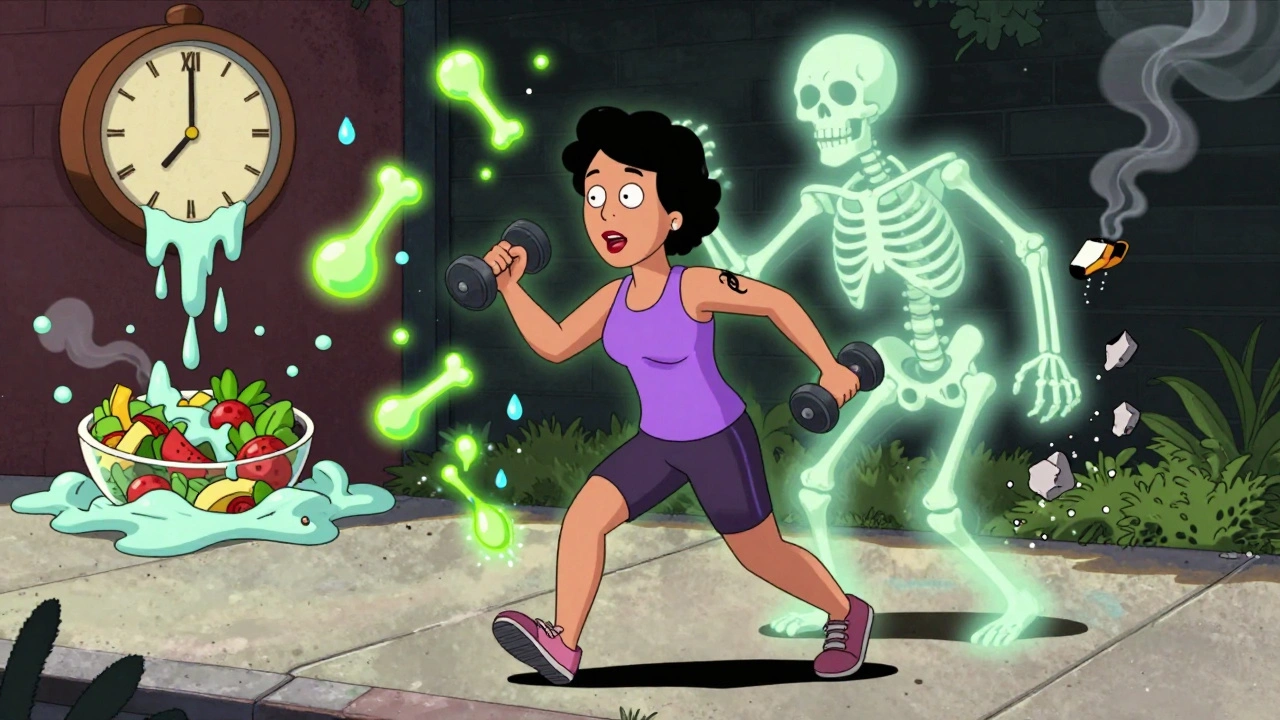
One in three women over 50 will break a bone because of weak bones. One in five men over 50 will too. And once that first fracture happens, your chances of another one jump by up to 200%. This isn’t just about getting older-it’s about what you’ve been doing, or not doing, for years. Osteoporosis doesn’t come on overnight. It’s the quiet erosion of your skeleton, happening long before you feel pain or notice a change in height. The good news? You can stop it. Even if you’re already in your 50s, 60s, or beyond, there’s still time to strengthen your bones and avoid the next fall.
Why Your Bones Are Losing Density
Your bones aren’t static. They’re alive, constantly breaking down old tissue and building new. Up until your mid-20s, you’re building more than you lose. That’s when you hit peak bone mass. After that, it’s a slow decline-about 0.3% to 0.5% per year. But for women after menopause, that rate spikes to 2-3% a year for the first five to seven years. That’s not just aging. That’s hormonal. Estrogen helps keep bone breakdown in check. When it drops, your body starts eating away at bone faster than it can rebuild. Men aren’t immune. As men age, testosterone levels fall, and bone loss picks up. But men usually start with higher peak bone mass, so they hit the danger zone later. Still, by age 70, one in five men will have osteoporosis. And it’s not just hormones. Genetics play a huge role. If your mom or dad broke a hip after age 50, your risk goes up by 60-80%. Race matters too. White and Asian women are 1.7 times more likely to develop osteoporosis than Black women. That doesn’t mean Black women are protected-just that their risk profile is different.The Hidden Risk Factors You Can’t Ignore
Some risks you can’t change. Age, gender, family history-those are fixed. But the biggest drivers of bone loss are things you can control. And most people have no idea they’re doing them. Calcium isn’t optional. Adults need 1,000 mg a day. Seniors need 1,200 mg. Most people get less than half that. Dairy isn’t the only source. Leafy greens, canned salmon with bones, fortified plant milks, and tofu made with calcium sulfate all count. But if you’re not hitting those numbers, you’re asking your body to rob your bones to keep your blood calcium stable. That’s how fractures start. Vitamin D is the missing link. Without enough vitamin D, your body can’t absorb calcium-no matter how much you eat. Nearly 42% of U.S. adults have levels below 20 ng/mL, the threshold for deficiency. That means over 100 million people are at higher risk of fractures, even if they’re eating enough calcium. You can’t get enough from sunlight alone, especially in winter or if you’re over 65. Supplementation isn’t a luxury-it’s a necessity. Smoking cuts bone density by 55%. Nicotine reduces blood flow to bones, slows down bone-forming cells, and messes with estrogen. One pack a day? That’s not just lung damage-it’s bone damage. Alcohol is worse than you think. More than two drinks a day increases hip fracture risk by 41%. It affects balance, impairs bone repair, and lowers testosterone and estrogen. Even if you don’t fall, your bones are weaker. Sitting is the silent killer. If you’re not putting stress on your bones, they don’t know they need to stay strong. Sedentary lifestyles raise fracture risk by 25-30%. Walking doesn’t count if it’s slow and short. You need impact. You need resistance. Your bones respond to force.Fractures Don’t Come Out of Nowhere
A fracture from a fall from standing height-or even less-isn’t an accident. It’s a red flag. The first fracture is often the only warning you get. And once you’ve had one, your risk of another skyrockets. A spinal fracture? That doubles your chance of another. A hip fracture? Your risk of dying within a year jumps to 20-24%. That’s higher than most cancers. Here’s the brutal truth: bone density scans (DXA) miss half the people who will fracture. That’s because bone strength isn’t just about how dense your bones are. It’s about their structure, their elasticity, how well they absorb shock. Someone with normal bone density can still break a hip if their bones are brittle inside. That’s why doctors now use tools like FRAX, which looks at your age, weight, smoking status, alcohol use, and past fractures-not just your scan-to predict your risk.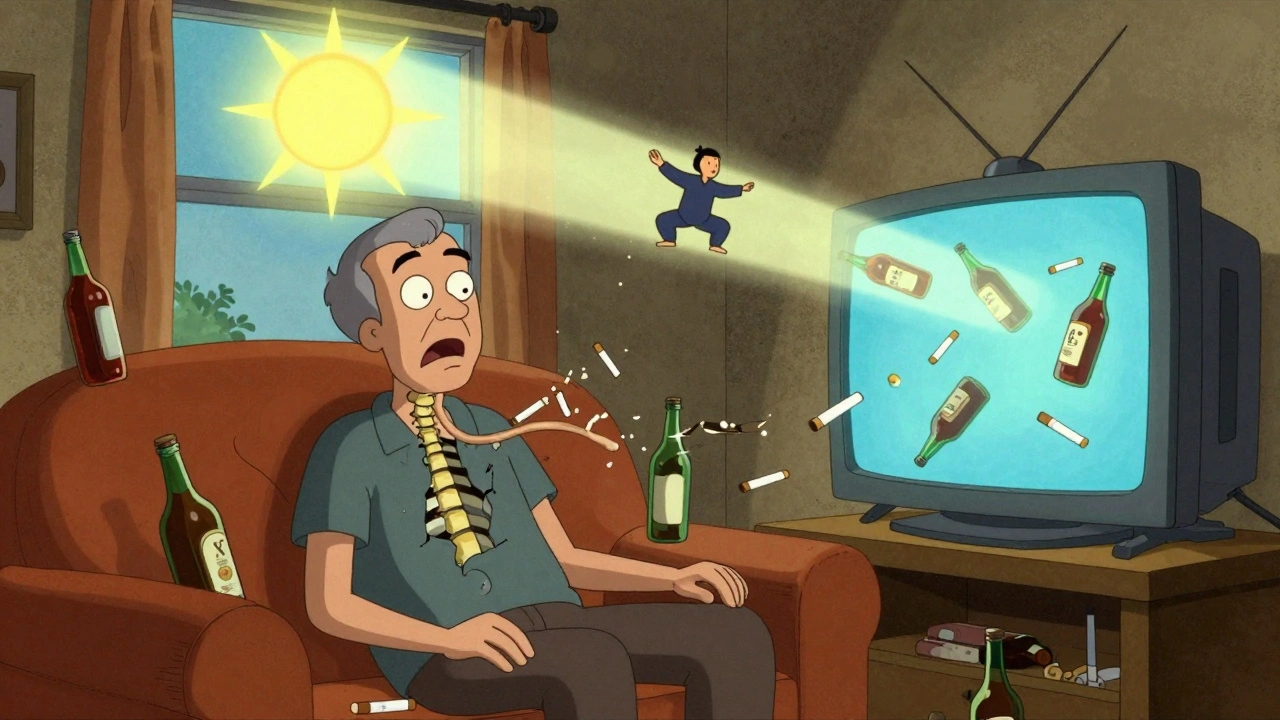
What Actually Works to Build Stronger Bones
You don’t need fancy equipment. You don’t need expensive supplements. You need consistency.- Weight-bearing exercise: Walk fast, jog, climb stairs, hike. Do it 5 days a week for 30-45 minutes. This isn’t a suggestion-it’s medicine. Studies show this reduces fracture risk by 30-40%.
- Strength training: Lift weights, use resistance bands, do bodyweight squats and lunges. Do it twice a week. Muscle pulls on bone. That pull tells your body to build more bone. After 6-12 months, you’ll see measurable gains.
- Balance training: Stand on one foot. Do heel-to-toe walks. Try tai chi. Falls cause 90% of fractures. Improving balance cuts fall risk by 45%.
One study followed 2,543 people over 65 who did supervised exercise for six months. Their confidence soared. Their falls dropped. Their fractures? Down by nearly half.
Supplements help-but only if you’re deficient. Take calcium in doses of 500-600 mg at a time with meals. Your body can’t absorb more than that at once. Pair it with 800-1,000 IU of vitamin D daily. If your levels are below 20 ng/mL, you may need 2,000 IU to catch up. Get tested. Don’t guess.
What Doesn’t Work (And Why)
Not all advice is equal. Some things you’ve heard are flat-out wrong. “I’m taking calcium supplements, so I’m fine.” Not if you’re still smoking, drinking, or sitting all day. Supplements can’t undo a bad lifestyle. “My bone density is normal, so I’m safe.” As mentioned, half the people who fracture have normal DXA results. Structure matters more than density. “Bisphosphonates are the only solution.” These drugs (like alendronate) slow bone loss. But 38% of people stop taking them within a year because of stomach pain, joint aches, or jaw problems. They’re not magic bullets. They’re tools-used when the risk is high enough to justify the side effects. “I’ll start when I’m older.” Peak bone mass is set by age 30. If you didn’t build strong bones as a kid or teen, you’re starting behind. But it’s never too late to slow the loss. Even at 70, exercise and nutrition can improve bone strength.
When to Get Tested
The U.S. Preventive Services Task Force recommends a DXA scan for all women over 65. Men over 70. But if you’re younger and have risk factors-family history, smoking, low body weight, steroid use, early menopause-you should get tested earlier. No waiting for a fracture. The scan takes 15-20 minutes. Radiation? Less than three hours of natural background exposure. The result? A T-score.- -1.0 or higher: Normal
- -1.0 to -2.5: Osteopenia (low bone mass)
- -2.5 or lower: Osteoporosis
But don’t fixate on the number. Focus on your risk. A T-score of -2.0 with a history of falls and smoking? That’s higher risk than someone with -2.6 who exercises and doesn’t smoke.
The Future Is in Prevention-Starting Today
By 2050, osteoporosis cases will triple globally. The cost of treating fractures in the U.S. will hit $95 billion a year. But every dollar spent on prevention saves $5.40 in avoided care. That’s not just economics-it’s quality of life. New treatments are emerging. Romosozumab, approved in 2023, actually builds new bone while slowing breakdown. Probiotics like Lactobacillus reuteri are showing promise in early studies, boosting bone density by 1.5-2% in a year. But none of these replace the basics: movement, nutrition, and avoiding toxins. The most powerful tool you have? You. Your choices today shape your bones in 10, 20, 30 years. You don’t need to be perfect. Just consistent. Walk more. Lift something heavy. Eat your greens. Take your vitamin D. Quit smoking. Cut back on alcohol. Get tested if you’re at risk. Fractures aren’t inevitable. They’re preventable. The time to act isn’t after the fall. It’s now.Can you reverse osteoporosis naturally?
You can’t fully reverse osteoporosis, but you can significantly improve bone strength and reduce fracture risk. Weight-bearing exercise, strength training, adequate calcium and vitamin D, quitting smoking, and limiting alcohol can slow or even stop further bone loss. In some cases, bone density improves by 1-3% over a year with consistent lifestyle changes. Medications like romosozumab can rebuild bone, but natural methods are the foundation of long-term protection.
What foods are best for bone health?
Focus on calcium-rich foods: dairy (milk, yogurt, cheese), canned salmon and sardines with bones, tofu made with calcium sulfate, fortified plant milks, kale, bok choy, and broccoli. Pair them with vitamin D sources like egg yolks, fatty fish, and fortified cereals. Magnesium and vitamin K (found in spinach, Brussels sprouts, and fermented foods) also support bone structure. Avoid excessive salt and soda-they leach calcium from bones.
Is walking enough to prevent bone loss?
Walking helps, but it’s not enough on its own. Brisk walking is weight-bearing and good for cardiovascular health, but it doesn’t provide enough stress to significantly rebuild bone. To strengthen bones, you need resistance-lifting weights, using bands, doing squats, lunges, or stair climbing. Combine walking with two days of strength training per week for the best results.
Do men get osteoporosis?
Yes. One in five men over 50 will have an osteoporotic fracture. Men lose bone slower than women, but they still lose it. Low testosterone, steroid use, smoking, alcohol, and lack of exercise are major causes. Men are less likely to get tested, so osteoporosis often goes undiagnosed until a fracture occurs. Men over 70 should get a bone density scan, and those with risk factors should be tested earlier.
How do I know if I’m getting enough vitamin D?
The only way to know for sure is a blood test. Levels below 20 ng/mL are deficient, 20-30 ng/mL are insufficient, and above 30 ng/mL are sufficient. Most people need 800-1,000 IU daily. If you’re deficient, you may need 2,000 IU for a few months to catch up. Sunlight alone isn’t reliable-especially in winter, if you have dark skin, or if you’re over 65.
Can osteoporosis medications cause harm?
Yes, some can. Bisphosphonates may cause jawbone problems (osteonecrosis) or atypical thigh fractures after long-term use (over 5 years). These are rare but serious. Most people tolerate them well. The key is using them only when needed-based on fracture risk, not just bone density. Always discuss risks and benefits with your doctor. For many, lifestyle changes are safer and just as effective in the long run.
What’s the best way to prevent falls at home?
Remove tripping hazards: loose rugs, clutter, cords. Install grab bars in the bathroom. Use non-slip mats in the shower. Improve lighting-especially on stairs and hallways. Wear shoes with good grip, not slippers. Get your vision checked yearly. Balance exercises like tai chi reduce fall risk by 45%. A home safety check by an occupational therapist can identify hidden dangers.
OMG this hit me right in the feels 😭 I just turned 58 and realized I haven't lifted anything heavier than my coffee mug in years... time to grab those dumbbells and stop pretending I'm a couch potato. My grandma broke her hip at 62 and it changed everything. Not gonna be her.
Starting tomorrow-walk 30 mins, do 10 squats, and I’m buying that fortified oat milk. No excuses!
LMAO you guys think vitamin D supplements are magic? Nah. The real issue is Big Pharma and the FDA letting dairy companies push calcium like it’s the holy grail while ignoring that 80% of us are deficient in magnesium-which actually helps calcium *stick* to bone. And don’t even get me started on how fluoride in water destroys bone structure. You want strong bones? Stop drinking tap water, quit dairy, and eat bone broth. Period.
Also, walking? Pfft. You need heavy deadlifts or you’re wasting your time. I’ve been doing 3x/week since I was 40. My T-score is +0.8 at 61. Fight me.
As an Aussie who’s spent too many winters in Melbourne with zero sun, I can confirm: vitamin D isn’t optional-it’s survival. I got my levels tested last year after a nasty fall on the pavement (no broken bones, thank god). Turned out I was at 14 ng/mL. Took 5000 IU daily for 3 months. Now I’m at 42. My bones feel like they’ve been recharged.
And yeah, walking’s good-but you need impact. I started doing bodyweight squats while brushing my teeth. Five sets a day. Tiny habit. Huge difference. Also, if you’re not eating tinned sardines, you’re missing out. Cheap, tasty, and full of calcium + omega-3s. Try it. You’ll thank me.
There’s something deeply human about how we ignore our skeletons until they scream. We treat our bodies like cars we never service-until the engine blows. But bones? They’re alive. They remember every step you take, every meal you skip, every cigarette you light.
I’ve worked with seniors for over 20 years. The ones who thrive aren’t the ones with the best supplements. They’re the ones who show up. Every day. Even if it’s just standing up from a chair ten times. Even if it’s holding onto a railing while doing heel raises. Progress isn’t dramatic. It’s quiet. It’s consistent. It’s showing up when no one’s watching.
You don’t need to be perfect. You just need to not quit.
And if you’re reading this and thinking, ‘I’m too old’-you’re not. You’re just late. And late is better than never.
Okay but… what if this is all a scam? 🤔 I read that the DXA scan machine manufacturers fund the whole osteoporosis panic to sell more meds and scans. And why do they never mention that calcium supplements might cause heart attacks? 🚨 I’ve got my mom’s old bone density report from 2012-she was told she had osteopenia… then they prescribed her alendronate and she got jaw necrosis. 😳
Maybe we’re being manipulated. Maybe we just need to eat organic kale and dance in the sun. 🌞🥬 #StopTheFear
While the general recommendations presented are evidence-based and align with current clinical guidelines from the American College of Rheumatology and the National Osteoporosis Foundation, it is critical to emphasize that individual risk stratification must precede intervention. The FRAX tool, while imperfect, remains the most validated algorithm for 10-year fracture probability assessment. Furthermore, the assertion that 'supplements help only if deficient' is empirically accurate: serum 25(OH)D levels below 20 ng/mL warrant supplementation, but supra-physiologic dosing (>4000 IU/day without monitoring) may increase fall risk in the elderly due to hypercalciuria.
Weight-bearing exercise must be progressive and supervised in populations with prior fragility fractures. Resistance training should target major muscle groups with load ≥70% 1RM, performed twice weekly. Balance training, particularly tai chi, has Level 1 evidence for reducing falls. No substitute exists for these interventions.
Interesting how we think bones are just… there. Like furniture. But they’re alive. Breathing. Listening. Feeling. We forget that we are not separate from our bodies-we are them.
Maybe osteoporosis isn’t a disease of the skeleton. Maybe it’s a disease of disconnection. We don’t feel our feet on the ground. We don’t feel the weight of our own existence. We sit. We scroll. We numb.
What if the cure isn’t calcium or vitamin D… but presence?
Stand up. Feel your feet. Breathe. That’s the first rep.
The assertion that 'osteoporosis is preventable' is statistically misleading. Population-level data does not equate to individual causality. The correlation between exercise and bone density is confounded by socioeconomic status, access to nutrition, and genetic predisposition. Moreover, the claim that 'one in three women over 50 will break a bone' ignores survivorship bias-many of these fractures occur in frail, institutionalized patients with multiple comorbidities.
Furthermore, the promotion of vitamin D supplementation lacks robust RCT evidence for fracture prevention in non-deficient populations. The 2018 JAMA meta-analysis found no significant reduction in hip fracture risk with supplementation alone. Therefore, the narrative presented is overly simplistic and potentially harmful in its determinism.
Okay, real talk-I’m 64, and I used to think this stuff was for old people. Then I slipped on ice last winter and landed on my hip. Didn’t break anything, but the pain? Oh man. It took weeks to walk right. And the fear? That’s worse than the pain.
So I started small. Every morning, I do five squats by the kitchen counter. Then I walk around the block. Not slow. Not casual. I’m moving like I’ve got somewhere to be-because I do. I’ve got birthdays to see, grandkids to chase, and I’m not letting my bones quit on me.
I eat yogurt with my breakfast now. I take my D3. I stopped drinking soda cold turkey. And yeah, I still have a cigarette sometimes… but only one a day now. Baby steps. That’s all it takes.
You don’t have to be a gym rat. You don’t have to be perfect. Just don’t sit still. Your bones are holding you up. Hold them back, too.
And if you’re reading this and thinking ‘I’m too busy’-you’re not. You’re just scared. But I was too. And look-I’m still here. Still moving. Still alive. And I’m not done yet.