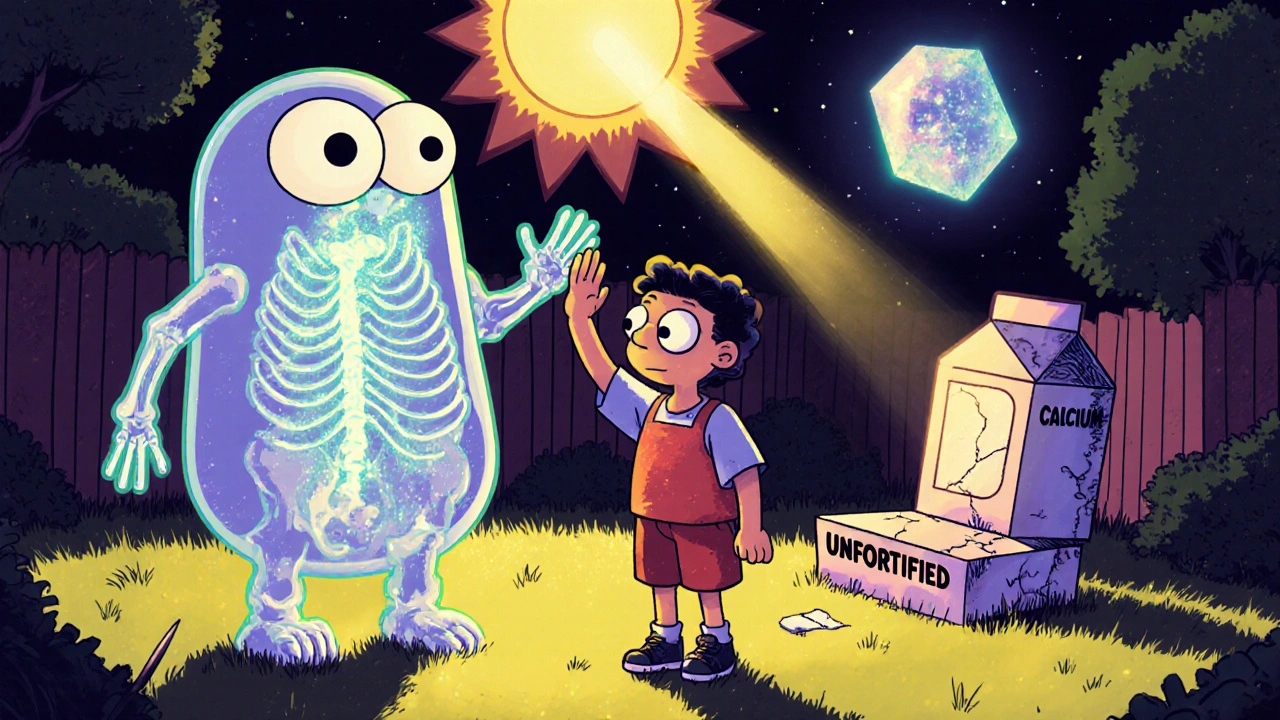
Every year, thousands of children around the world develop rickets-not because they’re malnourished in every way, but because they’re missing just two minerals: calcium and phosphorus. It’s not a disease of the past. It’s still happening today, even in places with plenty of food. And the fix isn’t always supplements. It’s understanding how these two minerals work together to build strong bones from the inside out.
What Rickets Really Is
Rickets isn’t just bowed legs. It’s a softening and weakening of bones in children, caused by a failure in bone mineralization. When bones don’t get enough calcium and phosphorus, they can’t harden properly. That’s why kids with rickets might have delayed walking, curved legs, thickened wrists or ankles, and even chest deformities from the rib cage pushing outward. In severe cases, the skull can feel soft, like a ping pong ball.
This isn’t rare. The World Health Organization estimates that rickets affects up to 60% of children in some parts of Africa and South Asia. But it’s not limited to low-income countries. In the U.S., cases are rising again-especially among kids who avoid sunlight, drink mostly plant-based milks without fortification, or have digestive disorders that block nutrient absorption.
Why Calcium Alone Isn’t Enough
You’ve probably heard that calcium builds strong bones. That’s true-but it’s only half the story. Calcium needs phosphorus to do its job. Together, they form hydroxyapatite, the mineral crystal that gives bones their hardness. Without enough phosphorus, even high doses of calcium won’t harden the skeleton. It’s like trying to build a brick wall with only bricks and no mortar.
Most kids get enough calcium from milk, yogurt, cheese, fortified orange juice, or leafy greens. But phosphorus? It’s everywhere-in meat, eggs, dairy, beans, nuts, and whole grains. Most children in developed countries don’t lack phosphorus. So why does rickets still happen?
The real problem isn’t usually low calcium or low phosphorus. It’s low vitamin D.
The Vitamin D Connection
Vitamin D isn’t just a vitamin. It’s a hormone that tells your body how to absorb calcium and phosphorus from food. Without it, your gut absorbs less than 15% of the calcium you eat. With enough vitamin D, that jumps to 30-40%. Same for phosphorus.
Most kids get vitamin D from sunlight. Skin makes it when exposed to UVB rays. But in places like Miami, where people wear sunscreen, stay indoors, or have darker skin that blocks UVB more efficiently, vitamin D production drops. Breastfed babies are especially at risk if their moms don’t get enough vitamin D themselves.
That’s why doctors recommend 400 IU of vitamin D daily for all infants from birth until they’re weaned onto at least 32 ounces of vitamin D-fortified milk per day. Older kids need 600 IU daily. If they’re not getting it from food or sun, they need a supplement.
Food Sources That Actually Work
Not all calcium and phosphorus sources are equal. Here’s what works best for preventing rickets:
- Fortified milk (cow’s milk, soy milk, almond milk)-check the label. It should have at least 120 mg calcium and 20 mg phosphorus per 100 mL.
- Yogurt and cheese-Greek yogurt has more calcium than regular, and hard cheeses like cheddar are packed with both minerals.
- Salmon and sardines-not just for omega-3s. A 3-ounce serving gives you 180 mg calcium and 250 mg phosphorus.
- Eggs-the yolk contains phosphorus and a small amount of vitamin D.
- Fortified cereals-many are enriched with calcium, phosphorus, and vitamin D. Read the nutrition facts.
Plant-based diets can work-but only if they’re planned. Almond milk, oat milk, and rice milk often have less calcium than cow’s milk unless fortified. And some plant foods like spinach and beet greens have calcium, but also oxalates that block absorption. That’s why relying on spinach alone for calcium is a mistake.
Who’s Most at Risk?
Some kids are more likely to develop rickets. Watch for these red flags:
- Babies exclusively breastfed beyond 6 months without vitamin D supplements
- Children with dark skin living in northern latitudes or who cover up for cultural or religious reasons
- Kids with celiac disease, cystic fibrosis, or chronic diarrhea
- Teens who avoid dairy and get no sunlight
- Children on long-term anticonvulsant or steroid medications
If your child has any of these risk factors, talk to your doctor. A simple blood test can check calcium, phosphorus, alkaline phosphatase, and vitamin D levels. Early detection means easy fixes-supplements, dietary changes, or more sun exposure.
How to Prevent It Before It Starts
Preventing rickets doesn’t require expensive supplements or complicated diets. It’s about consistency:
- Give all breastfed babies 400 IU of vitamin D daily from birth until they drink 32 oz of fortified milk.
- Make sure toddlers and older kids get 600 IU of vitamin D daily-through food, sun, or a supplement.
- Include at least two servings of calcium-rich foods daily: milk, yogurt, cheese, or fortified alternatives.
- Don’t rely on plant-based milks unless they’re fortified with calcium, phosphorus, and vitamin D.
- Let kids play outside 10-15 minutes a day without sunscreen (arms and legs exposed), especially in the morning or late afternoon.
That’s it. No magic pills. No expensive treatments. Just regular habits that match what bones actually need to grow.
What Happens If You Wait Too Long?
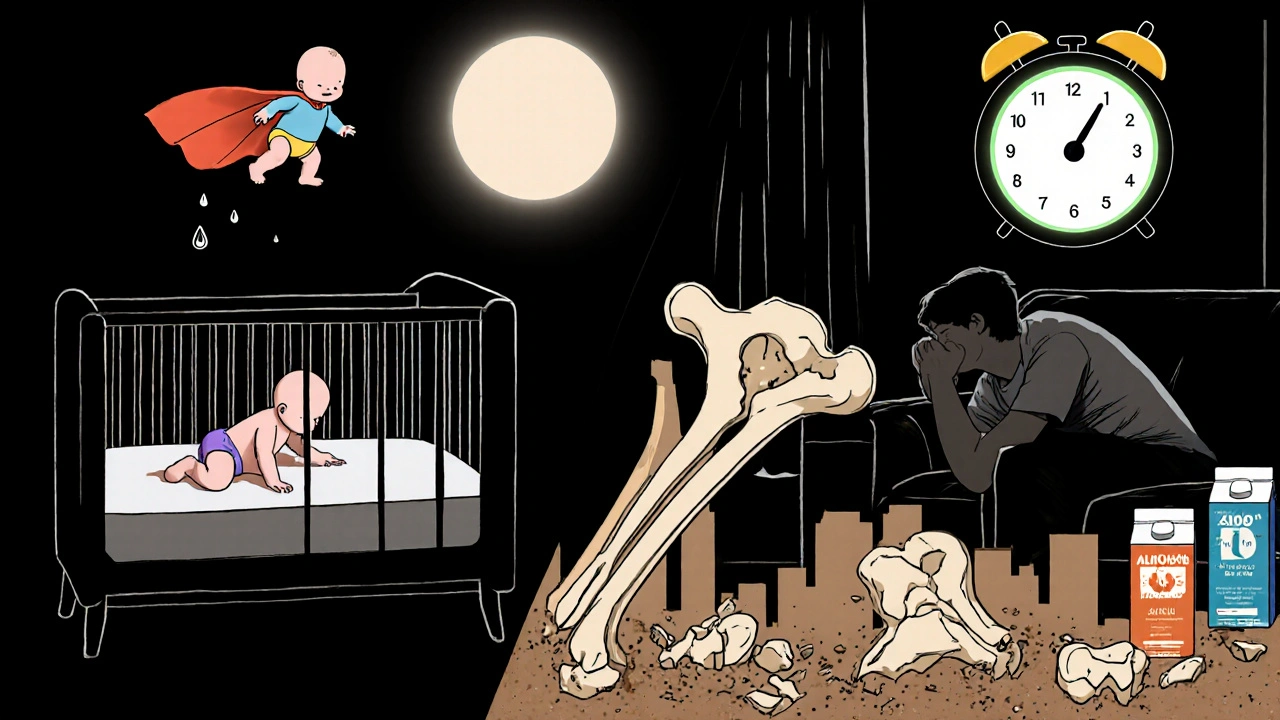
Rickets is reversible-if caught early. But if it’s ignored, the damage can be permanent. Bones can stay deformed. Growth plates can close unevenly. Teeth can develop poorly. In rare cases, low calcium can trigger seizures.
Treatment usually means high-dose vitamin D supplements for a few weeks, followed by daily maintenance doses. Calcium and phosphorus are added only if blood levels are low. In severe cases, orthopedic braces or surgery may be needed to correct bone deformities.
But here’s the truth: prevention is 100 times easier than correction. A $10 bottle of vitamin D drops lasts six months. A cup of yogurt costs less than a soda. A walk outside takes five minutes.
Myths That Still Cause Rickets
There are dangerous myths still floating around:
- Myth: “Breast milk has everything a baby needs.”
Fact: Breast milk has almost no vitamin D. It’s not a flaw-it’s biology. Babies need supplementation. - Myth: “If my child eats dairy, they’re fine.”
Fact: Many kids drink lactose-free or plant-based milks that aren’t fortified. Check the label. - Myth: “Sunscreen blocks vitamin D completely.”
Fact: Sunscreen reduces vitamin D production but doesn’t eliminate it. Short, unprotected exposure is safe and effective.
These myths aren’t harmless. They’re why rickets is still diagnosed in children today.
Can rickets be cured completely?
Yes, if caught early. With proper vitamin D, calcium, and phosphorus, most bone deformities improve within months. Bones have a remarkable ability to remodel. But if the condition is severe and untreated for over a year, some changes-like leg curvature or dental issues-may need medical or surgical correction.
Is rickets only a problem in developing countries?
No. While rates are higher in places with limited sunlight or poor nutrition, rickets is rising in the U.S. and Europe. Cases are now mostly linked to dietary choices-like avoiding dairy, using unfortified plant milks, or excessive sunscreen use-rather than poverty.
Do I need to give my child calcium supplements?
Usually not. Most children get enough calcium from food. Supplements are only needed if a child can’t eat dairy, has a digestive disorder, or has low blood calcium levels confirmed by a doctor. Too much calcium can cause kidney stones or interfere with iron and zinc absorption.
Can too much phosphorus be harmful?
It’s rare from food alone. Most children don’t get too much phosphorus. But processed foods with added phosphates (like soda, deli meats, and frozen meals) can push intake too high. This isn’t linked to rickets, but long-term excess may affect kidney health. Focus on whole foods instead.
How do I know if my child is getting enough vitamin D?
There’s no reliable way to tell without a blood test. But if your child gets daily vitamin D supplements, eats fortified foods, and spends short periods in the sun, they’re likely fine. Kids at higher risk-dark skin, limited sun exposure, or medical conditions-should be tested by age one.
What Comes Next?
Once rickets is prevented, the next step is lifelong bone health. Kids who had rickets are more likely to have low bone density as adults. That’s why it’s not just about fixing a childhood problem-it’s about building a foundation for life.
Teach your child to eat calcium-rich foods. Encourage outdoor play. Don’t fear the sun-just avoid burns. And if you’re ever unsure, ask your pediatrician. A simple blood test can save years of pain, braces, or surgery.
Strong bones don’t come from luck. They come from knowing what your child needs-and giving it to them every single day.
My niece had rickets at 18 months. We thought it was just delayed walking until her pediatrician noticed the bowed legs. Turned out she was on almond milk and never got her vitamin D drops. We started supplements and sun time-within 4 months, her legs straightened out. No surgery. No drama. Just consistency.
Don’t overcomplicate it. Vitamin D is the real hero here. Calcium and phosphorus? They’re just doing their job because someone remembered to turn on the switch.
It’s wild how something so simple-sunlight, milk, a tiny pill-can prevent a condition that once defined entire generations. We’ve forgotten how biological systems work. We think health is about supplements and apps and biohacks, when really it’s about honoring the rhythm of our bodies.
Calcium and phosphorus don’t care about your Instagram diet. They just want to bond together in the dark, quiet space of a growing bone. And vitamin D? It’s the quiet manager making sure they show up for work. We’re not curing rickets. We’re just remembering how to let nature do what it’s been doing for millennia.
People think they’re being ‘healthy’ by switching to oat milk and avoiding dairy, but they’re just playing Russian roulette with their kid’s skeleton.
You don’t get to opt out of biology because you’re woke about cows. If you’re going to replace cow’s milk, you better check the label like your child’s future depends on it-because it does. And if you’re not giving vitamin D? You’re not a parent. You’re a liability.
Stop pretending ‘natural’ means better. Nature didn’t design humans to live in sealed apartments with SPF 50 on 24/7.
sunlight is the original supplement
your kid doesn’t need a lab test if they get 10 minutes of morning light and a glass of fortified milk
stop overmedicalizing childhood
bones know what to do
we just have to stop getting in their way
I used to think rickets was a 19th century problem until I saw a 3-year-old in my clinic with soft skull bones and delayed motor skills. Mom was vegan, gave her rice milk, and thought ‘sunscreen is always better.’
It’s not about judgment. It’s about education. Most parents aren’t malice-they’re just misinformed. The real tragedy isn’t the disease. It’s that we have the tools to prevent it, yet we still let it slip through the cracks because we assume ‘it can’t happen here.’
Maybe we need pediatricians to hand out vitamin D drops at birth like we do with hepatitis B shots. Simple. Routine. Non-negotiable.
In Nigeria, we used to see rickets in children who never saw sunlight because their mothers kept them indoors due to fear of ‘evil spirits.’ Now we see it in American homes where parents fear the sun because of skin cancer warnings.
The truth? Both are wrong. The answer isn’t total avoidance or total exposure. It’s balance. Ten minutes. Arms and legs. Before 10 AM or after 3 PM. No sunscreen. Just enough.
And if you’re using plant milk-check the label. Fortified means fortified. Not ‘may contain traces.’
We all want what’s best for our children. But sometimes, what’s trendy isn’t what’s true.
Okay but can we talk about how this post is just a giant ad for Big Dairy and Big Pharma?
My kid drinks oat milk, gets zero sun because I’m scared of melanoma, and still has perfect bones. Maybe rickets is just a myth invented to sell supplements?
Also why is everyone so obsessed with ‘fortified’ stuff? Isn’t that just chemical manipulation? Why not go back to real food? Like… actual food?
Also I’m pretty sure the WHO stats are inflated. Who even counts these kids? Some guy in a village with a clipboard?
They’re lying to you. Vitamin D isn’t the answer. It’s the distraction.
Look at the real cause: glyphosate. It’s in your food, your water, your air. It binds calcium and phosphorus in the gut. That’s why kids aren’t absorbing it-even if they’re eating dairy and taking supplements.
And don’t get me started on the CDC pushing vitamin D shots. Who profits? Big Pharma. Who gets blamed? Parents who use plant milk.
Real solution? Stop eating processed food. Stop using sunscreen. Stop trusting doctors. Go back to the land. Let your kids eat dirt. That’s how we evolved.
They don’t want you to know this. That’s why they call it ‘rickets’ instead of ‘glyphosate poisoning.’
Ugh I’m so tired of this ‘just give vitamin D’ narrative. Like yeah it’s easy but what about the systemic issues? Why are Black kids in Chicago getting rickets while white kids in Malibu are fine? It’s not about sunscreen-it’s about redlining, food deserts, and pediatricians who don’t speak Spanish.
And why is the solution always ‘take a pill’? Why not fix the food system? Why not make fortified milk affordable? Why not fund public health programs instead of blaming moms for using oat milk?
It’s always the individual’s fault. Never the system. Classic.
Also I’m not giving my kid dairy because I’m lactose intolerant and also I don’t trust cows. They’re not even meant to drink milk past infancy. Evolution didn’t design us for this.