Anticoagulant Procedure Risk Calculator
This tool helps you understand your bleeding and clotting risk when considering a cosmetic procedure while on blood thinners. Recommendations are based on current medical guidelines and research.
Important: This tool provides general guidance. Always consult your healthcare provider before making any decisions about your medications.
Why Your Blood Thinners Matter More Than You Think Before a Cosmetic Procedure
If you’re on blood thinners-whether it’s warfarin, apixaban, aspirin, or something else-and you’re thinking about getting a cosmetic procedure, you’re not alone. In fact, 25 to 40% of people getting skin or facial procedures are already taking anticoagulants for heart conditions, blood clots, or atrial fibrillation. That’s one in every three or four patients. But here’s the thing most people don’t realize: stopping your blood thinner before a procedure isn’t always safer. In some cases, it’s far riskier.
For years, doctors told patients to stop blood thinners before any surgery. The idea was simple: less blood thinning = less bleeding. But research since the 1990s has turned that logic upside down. A 1996 study of over 650 patients showed that stopping warfarin or aspirin didn’t reduce bleeding during minor skin procedures. And in 2014, a survey of Mohs surgeons found that when patients stopped their blood thinners, they had more strokes, heart attacks, and even deaths than those who kept taking them. Three people died. Twenty-four had strokes. Most of those events happened after warfarin was stopped.
The truth? For many cosmetic procedures, continuing your anticoagulant is the safer choice. The real danger isn’t a little bruising-it’s a clot that could paralyze you, kill you, or send you back to the hospital.
Not All Blood Thinners Are the Same
When people say “blood thinner,” they’re talking about three very different types of drugs. And each one behaves differently in your body-especially around surgery.
- Warfarin (Coumadin): This is the old-school anticoagulant. It takes days to build up or wear off. You need regular blood tests (INR) to make sure your level is in the safe range. If your INR is above 3.5, your bleeding risk jumps. But if it’s below that? You can usually keep taking it for minor procedures. Studies show people on warfarin are 3.8 times more likely to bleed during facial surgery than those not on it. They’re also more than seven times more likely to get an infection afterward.
- DOACs (rivaroxaban, apixaban, dabigatran, edoxaban): These are the newer direct oral anticoagulants. They work faster, leave your body faster-half-life is only 9 to 17 hours. That means you can safely skip your morning dose the day of a procedure. For minor skin surgeries, studies show bleeding rates stay around 1.74% even when you keep taking them. In one study, patients who kept their DOACs had fewer bleeding problems than those who stopped them.
- Antiplatelets (aspirin, clopidogrel): These aren’t true anticoagulants-they stop platelets from clumping. And guess what? Multiple studies, including one in Skin Therapy Letter, found no significant increase in bleeding after minor procedures like mole removals or laser treatments. Aspirin? You can usually keep taking it. Clopidogrel? Same thing. Stopping them doesn’t help you avoid bruising, but it might raise your risk of a heart attack or stroke.
So if you’re on aspirin for your heart and want to get Botox? Don’t panic. If you’re on apixaban and considering a rhinoplasty? Talk to your doctor, but don’t assume you need to stop.
What Procedures Are Safe? What’s Risky?
Not all cosmetic procedures are created equal when it comes to bleeding. The risk depends on where you’re being treated and how deep the surgery goes.
- Low-risk procedures: Think Botox, dermal fillers, chemical peels, laser hair removal, shave biopsies, and small excisions under 2 cm. For these, almost all guidelines now say: keep your blood thinners. The bleeding risk is tiny. The clotting risk if you stop? Way bigger.
- Moderate-risk procedures: These include medium-sized skin excisions, some laser resurfacing, and minor facial surgeries like eyelid lifts (blepharoplasty). For DOACs, you might be told to skip your dose the morning of. Warfarin? Keep it going if your INR is under 3.5. Aspirin? No need to stop.
- High-risk procedures: Think full facelifts, neck lifts, major body contouring (tummy tuck, breast augmentation), or Mohs surgery on the nose or ears. These involve lots of blood vessels. Here, your surgeon might ask you to stop DOACs 24-48 hours before. Warfarin? Might need to stop 5 days out, but only if your thrombosis risk is low. And never, ever bridge with heparin unless you have a mechanical heart valve. Bridging increases bleeding without helping your heart.
One 2015-2022 study of over 1,500 people getting body contouring found that only 1.27% had serious drug-related bleeding. Even then, the highest rate was for rivaroxaban (1.3%), and the lowest was for apixaban (0.48%). That’s less than 1 in 200. Meanwhile, the risk of a blood clot from stopping your medication? Around 0.15%-but that’s only if you’re low-risk. If you have atrial fibrillation or a history of clots? Your baseline risk is 0.6% to 1.1% even while on meds. Stop them, and that number skyrockets.
Why Bruising Happens-and When It’s Normal
You’ve probably seen someone after a filler treatment with a black eye or a swollen cheek. It’s scary. But here’s the reality: bruising is common-even if you’re not on blood thinners.
Facial skin is packed with tiny blood vessels. A needle going in? That’s going to hit one. If you’re on aspirin or a DOAC, you might get a bigger bruise. But that’s not a complication. It’s a side effect. And it usually fades in 1-2 weeks.
Real bleeding complications? That’s when you get a hematoma-a pool of blood under the skin that swells fast, causes pain, and might need to be drained. That’s rare. In studies, it happens in less than 2% of cases, even when patients are on anticoagulants. The bigger red flag? If your swelling gets worse after 48 hours, or you start feeling dizzy, short of breath, or have chest pain. That’s not bruising. That’s a clot.
Don’t assume every purple mark means something went wrong. But do call your doctor if:
- The area keeps expanding after 2 days
- You feel pressure or tightness that doesn’t go away
- You have sudden pain, numbness, or loss of movement
- You’re coughing up blood, having trouble breathing, or your leg swells suddenly
These aren’t signs of a bad injector. These are signs you need urgent care.
The Bottom Line: What You Should Do
You’re not supposed to guess. You’re not supposed to read a blog and stop your meds. Here’s your action plan:
- Don’t stop anything on your own. Ever. Not aspirin. Not warfarin. Not apixaban.
- Tell every provider. Your dermatologist, your plastic surgeon, your aesthetician-they all need to know what you’re taking. Bring a list. Include doses and why you’re on it.
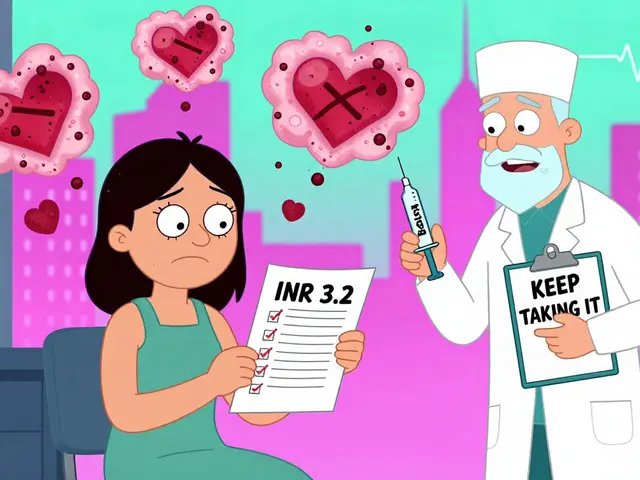
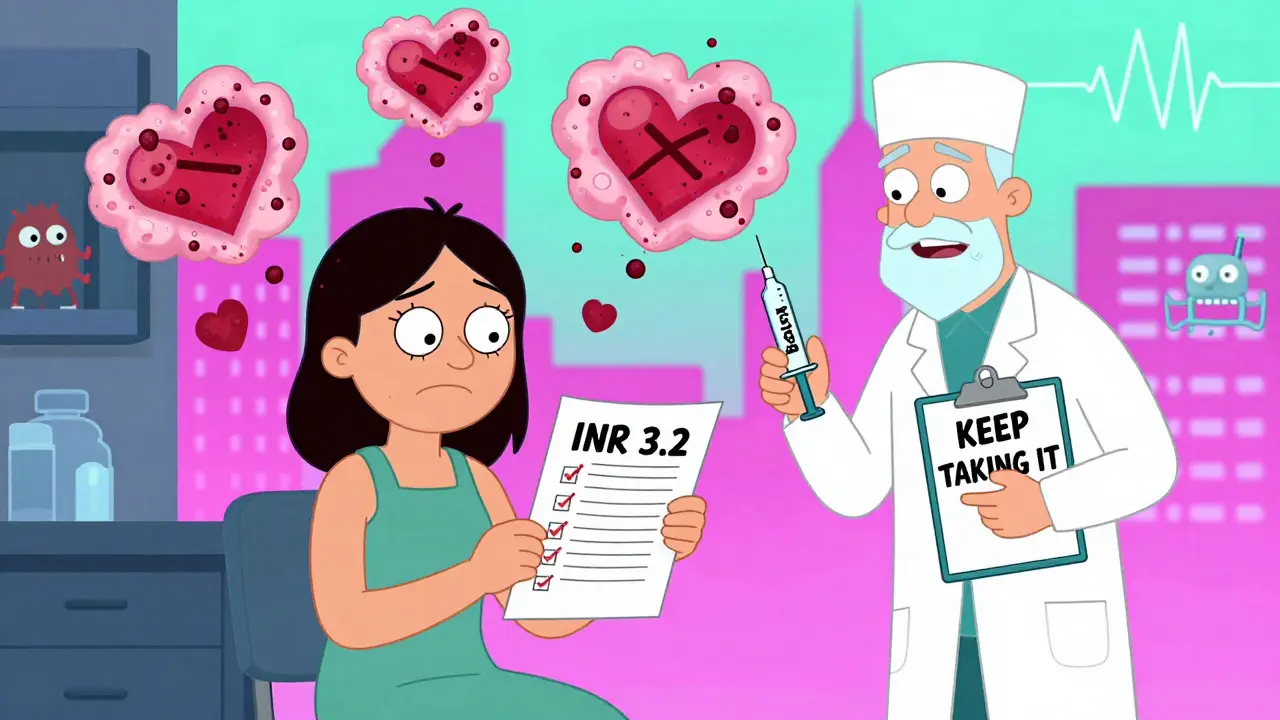
- Get your INR checked if you’re on warfarin. Make sure it’s under 3.5. If it’s higher, your procedure might need to be delayed.
- Ask about timing for DOACs. For most minor procedures, just skip your morning dose. For bigger ones, ask if you need to stop 24-48 hours out. Never stop without direction.
- Don’t rush. Don’t panic. If your doctor says you need to stop, ask why. Ask about your clotting risk. Ask if bridging is needed. Most of the time, it’s not.
The goal isn’t to avoid all bruising. The goal is to avoid a stroke. Or a heart attack. Or a death you could have prevented.
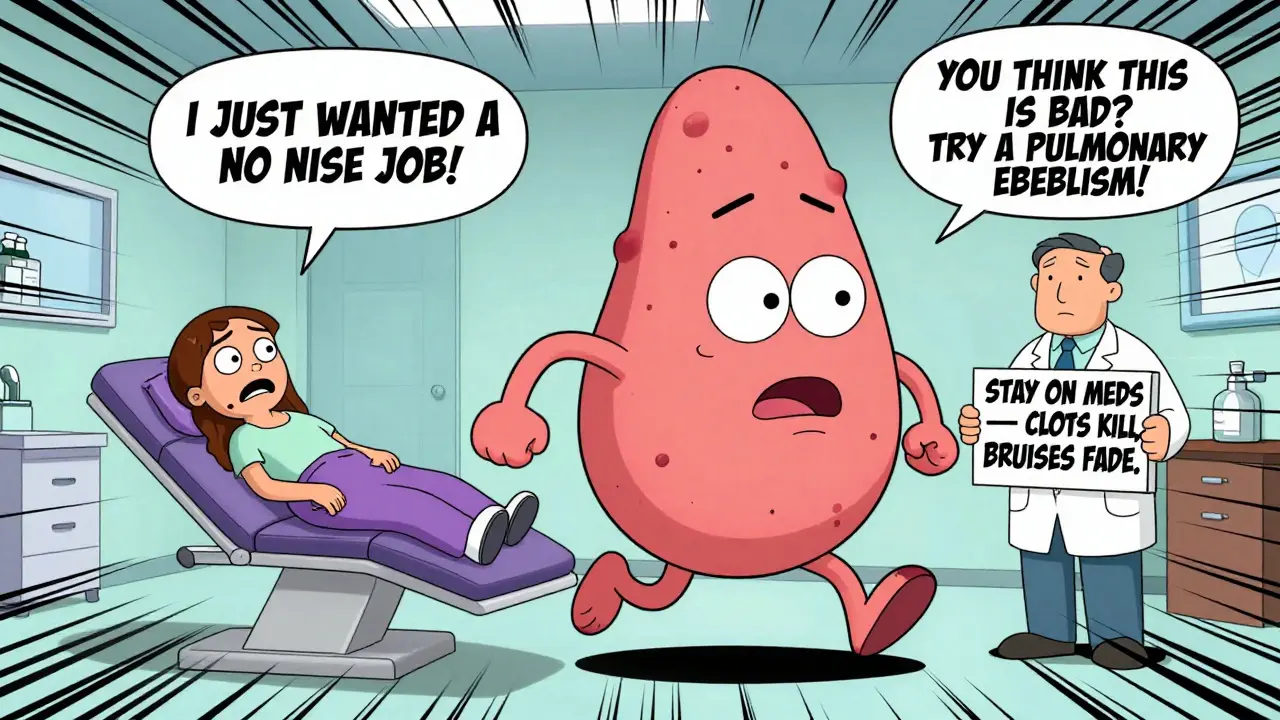
What Your Doctor Should Be Asking You
Good providers don’t use one-size-fits-all rules. They ask questions like:
- Why are you on this medication?
- When was your last INR? What was the result?
- Have you had a clot before?
- Are you on one drug or two? (Dual therapy raises bleeding risk.)
- What’s your risk of stroke or clotting based on your heart condition?
- Is this procedure high-risk for bleeding?
If your doctor says, “Just stop everything,” walk out. That’s outdated. That’s dangerous. The British Society of Dermatology, the American Society of Plastic Surgeons, and the American Academy of Dermatology all agree: continue anticoagulants for low- and moderate-risk procedures.
The evidence is clear. The guidelines are updated. The risk of stopping is greater than the risk of staying on.
What Happens If You Ignore This?
People stop their blood thinners because they’re scared of bruising. They think a big purple mark is worse than a blood clot.
But here’s what actually happens:
- A 68-year-old woman stops her apixaban before a facelift because her aesthetician said “it’s safer.” Three days later, she has a stroke. Paralyzed on one side. Never recovers fully.
- A 72-year-old man skips his warfarin before a chin implant. He bleeds a little, but nothing serious. He’s discharged. Two days later, he has a pulmonary embolism. Dies in the ER.
- A 55-year-old woman keeps her aspirin for a lip filler. Gets a small bruise. It fades. She’s fine.
The difference isn’t luck. It’s knowledge.
There’s no such thing as a “safe” cosmetic procedure if you’re ignoring your heart health. The best result isn’t the prettiest nose or the smoothest skin. It’s walking out alive, healthy, and without a clot in your lung or brain.
Can I keep taking aspirin before a cosmetic procedure?
Yes, in almost all cases. Multiple studies show aspirin does not significantly increase bleeding risk during minor cosmetic procedures like fillers, Botox, or laser treatments. Stopping aspirin can raise your risk of heart attack or stroke, especially if you’re taking it for cardiovascular protection. Always inform your provider, but don’t stop without medical advice.
Should I stop my DOAC (like apixaban or rivaroxaban) before a facelift?
For high-risk procedures like a full facelift, your surgeon may ask you to skip your morning dose the day of surgery or stop for 24-48 hours before. But this depends on your individual clotting risk. For low-risk procedures, continuing DOACs is often safer. Never stop without consulting both your cardiologist and surgeon. Bridging with heparin is rarely needed and increases bleeding risk.
Is bruising after a filler a sign of something dangerous?
Bruising is common and usually harmless. It’s caused by tiny blood vessels being nicked during injection. If the bruise gets bigger after 48 hours, feels warm or hard, or you develop pain, numbness, or vision changes, contact your provider immediately. These could be signs of a hematoma or blocked blood flow-not just normal bruising.
What’s the safest blood thinner for cosmetic procedures?
Apixaban has shown the lowest bleeding rates in studies involving cosmetic and dermatologic procedures, with hematoma rates as low as 0.48%. Aspirin and clopidogrel also carry minimal risk. Warfarin carries the highest bleeding risk, especially if your INR is above 3.5. But the safest choice depends on your medical history-not just the drug itself.
Can I get cosmetic procedures if I have a mechanical heart valve?
Yes, but it requires careful planning. People with mechanical heart valves are at high risk for clots and usually need to stay on anticoagulants. Stopping warfarin is dangerous. Bridging with heparin may be necessary for high-risk procedures, but only under strict supervision by a cardiologist and surgeon. Never make this decision alone.