Proton Pump Inhibitors: What They Are, How They Work, and What You Need to Know
When your stomach churns out too much acid—leading to heartburn, regurgitation, or a persistent sour taste—you might be prescribed proton pump inhibitors, a class of medications that block the enzyme system responsible for producing stomach acid. Also known as PPIs, these drugs are among the most commonly used treatments for acid reflux and GERD, helping millions manage symptoms without surgery or drastic lifestyle changes.
Proton pump inhibitors don’t just mask pain—they stop acid production at the source. The stomach lining has tiny pumps that release acid when food arrives. PPIs shut those pumps down, reducing acid levels for up to 24 hours. That’s why they’re more effective than antacids or H2 blockers for long-term relief. But they’re not harmless. Long-term use has been linked to nutrient deficiencies, bone loss, and even an increased risk of certain infections. Not everyone needs them, and not everyone should take them for years without a plan.
Many people start PPIs after a doctor says, "This will help your heartburn," but few get a clear exit strategy. That’s a problem. Some end up taking them for years because stopping feels scary—even if the original issue is gone. The posts below show real cases: people who reversed GERD with diet changes, others who switched to safer alternatives, and patients who discovered their chronic pain wasn’t acid at all—it was something else entirely. You’ll also find discussions on how PPIs interact with other meds, what side effects actually matter, and how to talk to your doctor about tapering off safely.
These aren’t just drug reviews. They’re practical guides from people who’ve been there. Whether you’re just starting PPIs, wondering if you can quit, or trying to understand why your doctor ordered blood tests for magnesium or B12, the articles here give you the facts without the fluff. No marketing. No hype. Just what works, what doesn’t, and what you need to ask next.
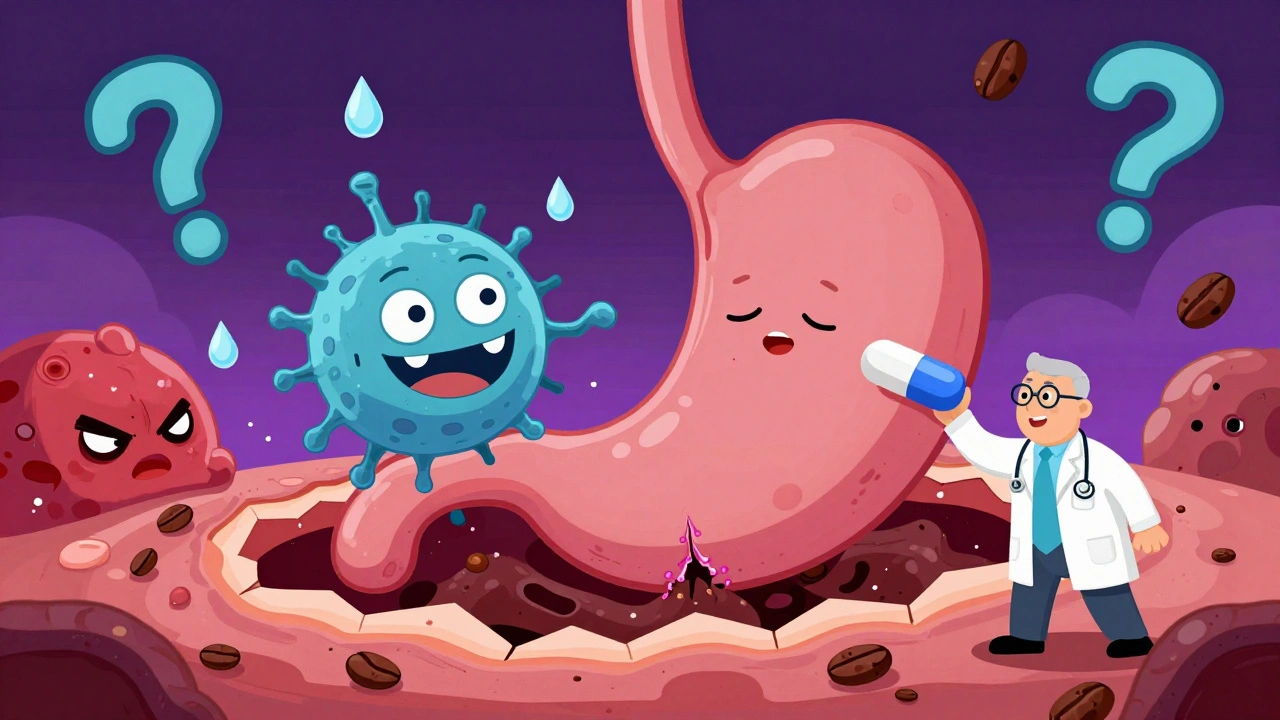
Gastritis and H. pylori: Understanding Stomach Lining Inflammation and Effective Treatment
Gastritis is stomach lining inflammation often caused by H. pylori bacteria. Learn how it's diagnosed, treated with antibiotics and acid blockers, and why eradication prevents ulcers and cancer.