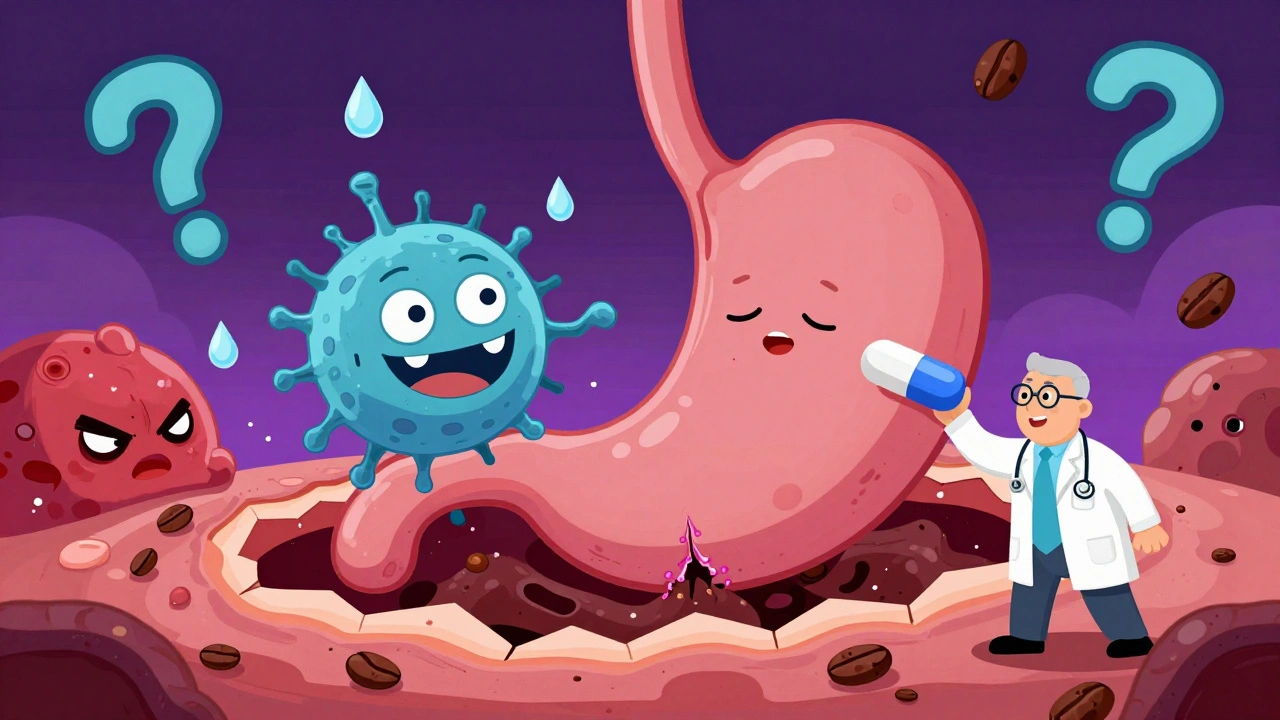
When your stomach feels like it’s on fire after eating, or you’re constantly bloated and nauseous, it’s easy to blame stress or spicy food. But if these symptoms stick around, you might be dealing with gastritis - inflammation of the stomach lining. It’s not just discomfort; it’s a sign your body’s natural defense is breaking down. And in most cases, the culprit is a tiny bacterium called Helicobacter pylori.
What Exactly Is Gastritis?
Gastritis isn’t one single disease. It’s a spectrum. At its core, it’s when the protective mucus layer of your stomach gets damaged, letting stomach acid irritate the tissue underneath. This can happen suddenly (acute) or creep up over years (chronic). The lining becomes red, swollen, and sometimes eroded. In severe cases, it can bleed or even lead to ulcers. There are two main types: erosive and nonerosive. Erosive gastritis means there are actual breaks or sores in the lining - you might see blood in your vomit or black, tarry stools. Nonerosive is trickier. The lining looks normal on an endoscope, but under the microscope, you’ll see inflammation, thinning, or even cell changes. About 30% of people with long-term H. pylori infection develop this form, which can slowly lead to loss of stomach acid production.H. pylori: The Silent Culprit Behind Most Cases
Around 70 to 90% of all gastric and duodenal ulcers are caused by H. pylori. This spiral-shaped bacterium lives in the stomach’s acidic environment - something scientists once thought was impossible. Discovered in 1982 by Barry Marshall and Robin Warren (who later won the Nobel Prize), it’s now known to infect nearly half the world’s population. In the UK and US, about 10-15% of people carry it. In parts of Asia and Africa, it’s closer to 80%. H. pylori doesn’t cause symptoms in everyone. Many people live with it for decades without knowing. But when it does trigger gastritis, it does so by burrowing into the mucus layer, releasing toxins, and provoking a chronic immune response. The longer it stays, the higher the risk of complications - including stomach cancer. Studies show that properly treating H. pylori cuts that risk by about 50%.How Do You Know If You Have It?
Symptoms vary wildly. Some people feel a burning pain right below the ribs, especially when hungry or after eating. Others get bloated, burp a lot, or feel full after just a few bites. Nausea and vomiting are common - about 60% of acute cases report them. But here’s the catch: up to half of chronic gastritis cases have no symptoms at all. Red flags you shouldn’t ignore: vomiting blood (or material that looks like coffee grounds), black or sticky stools (melena), unexplained fatigue, or dizziness. These point to bleeding or anemia from long-term irritation. If you’re over 55 and have new stomach symptoms, or if symptoms keep coming back despite over-the-counter meds, you need an evaluation.How Doctors Diagnose Gastritis
There’s no single test. Diagnosis starts with your history and symptoms. But to confirm H. pylori or rule out other causes, doctors rely on a few key tools. The gold standard is an endoscopy. A thin, flexible tube with a camera goes down your throat to look at your stomach. If the lining looks inflamed, they take tiny tissue samples (biopsies). These are tested for H. pylori under a microscope, cultured, or checked with a rapid urease test. Biopsies can also detect atrophy or early cell changes. Non-invasive tests are common too. The urea breath test is accurate - 95% sensitive and 93% specific. You drink a solution with labeled carbon, and if H. pylori is present, it breaks it down into detectable gas. Stool antigen tests check for bacterial proteins in your poop. Blood tests can show antibodies, but they can’t tell if the infection is current or past.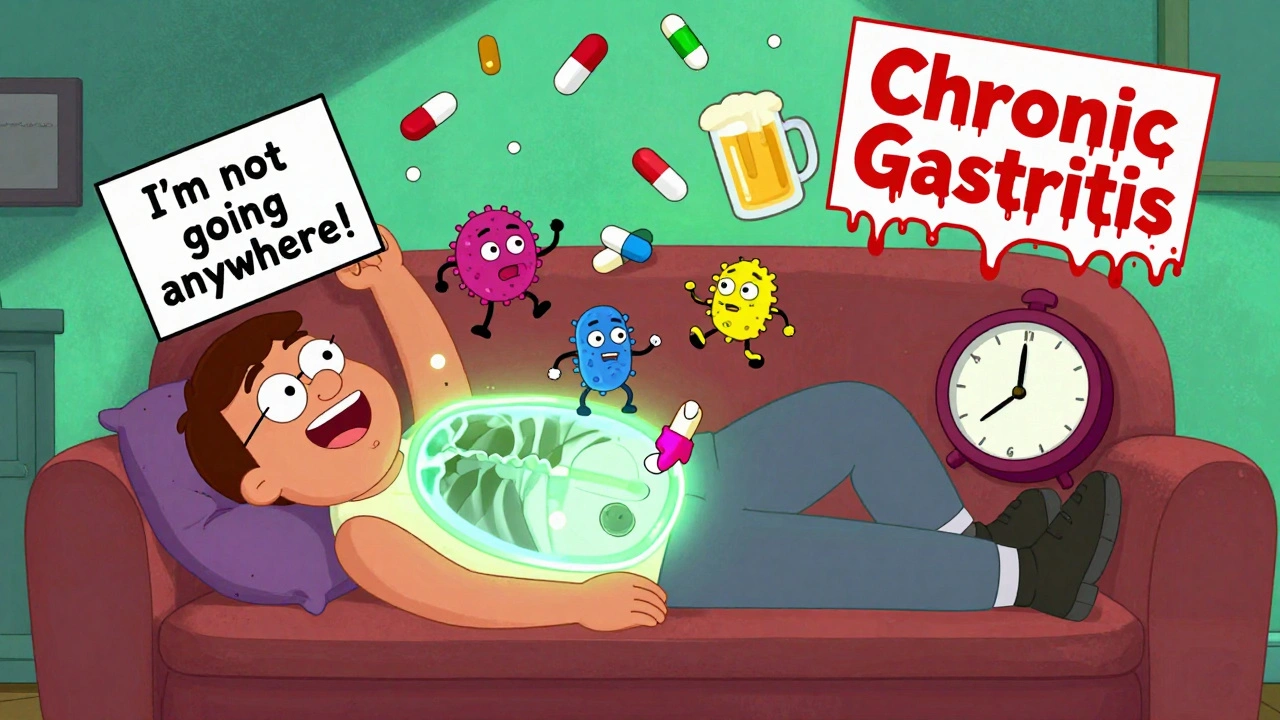
Treatment: Eradicating H. pylori
If H. pylori is found, treatment isn’t optional - it’s necessary. The goal isn’t just to feel better. It’s to stop the inflammation before it leads to ulcers, bleeding, or cancer. Standard treatment is called triple therapy: a proton pump inhibitor (PPI) like omeprazole or esomeprazole, plus two antibiotics - usually amoxicillin and clarithromycin. You take this combo for 10 to 14 days. Success rates? Around 80-90% in places where clarithromycin resistance is low. But here’s the problem: clarithromycin resistance has jumped from 10% in 2000 to 35% in the US today. In areas with high resistance, triple therapy fails more often. That’s why newer guidelines recommend alternatives. Bismuth quadruple therapy - a PPI, bismuth subsalicylate, metronidazole, and tetracycline - works better in resistant cases, with success rates of 85-92%. Another option is vonoprazan, a newer acid blocker approved in the US in 2022. In clinical trials, vonoprazan-based therapy achieved 90.3% eradication - far higher than traditional PPIs.What If It’s Not H. pylori?
Not all gastritis is bacterial. About 25-30% of cases are caused by NSAIDs - ibuprofen, naproxen, even low-dose aspirin. If you’ve been taking these regularly, stopping them is step one. Your doctor will likely prescribe a PPI to let the lining heal. Alcohol is another trigger. More than 30g a day (about two pints of beer) doubles your risk. Cutting back can reduce symptoms by 60% in just two weeks. Then there’s autoimmune gastritis - rare, but serious. Your immune system attacks the stomach cells that make acid and intrinsic factor (needed for B12 absorption). This affects 0.1% of the general population, but up to 5% of people with other autoimmune diseases like Hashimoto’s. It requires lifelong B12 injections or high-dose oral supplements.Lifestyle and Long-Term Management
Medication helps, but lifestyle changes stick. Avoiding alcohol, quitting smoking (which slows healing by 35%), and eating smaller, less spicy meals make a real difference. Stress doesn’t cause gastritis, but it can worsen symptoms. Mindfulness, sleep, and regular meals help more than you think. One big concern: long-term PPI use. Many people stay on them for months or years after H. pylori treatment. But stopping suddenly can cause rebound acid production - your stomach overcompensates and you feel worse than before. About 40% of patients report this. The fix? Taper slowly under medical supervision, not cold turkey.
What Happens After Treatment?
You don’t just finish your antibiotics and call it done. You need confirmation. A urea breath test or stool antigen test should be done at least four weeks after finishing treatment to make sure H. pylori is gone. If it’s still there, you’ll need a second-line regimen - often with different antibiotics. Follow-up isn’t just about bugs. If you had atrophic gastritis or intestinal metaplasia (cell changes), your doctor may recommend periodic endoscopies to watch for early signs of cancer. This is especially true if you have a family history or come from a high-risk region.Real Patient Experiences
Many people report dramatic relief after treatment. On review sites, 78% rate PPIs like omeprazole as “very effective” for symptom control. But the antibiotics? Not so much. About 62% of patients on triple therapy report bad side effects - metallic taste, diarrhea, nausea. Some quit early, which leads to treatment failure. One patient in Manchester, 42, tried two rounds of standard therapy with no luck. His symptoms returned every time. His gastroenterologist switched him to vonoprazan with amoxicillin and metronidazole. Within days, the burning stopped. Four weeks later, his breath test was negative. He’s been symptom-free for 18 months.What’s Next for Gastritis Treatment?
The future is personalization. Researchers are now testing treatments based on the specific strain of H. pylori you carry. Some strains produce more toxic proteins (CagA, VacA) and carry a higher cancer risk. Future tests might identify these strains and guide therapy before symptoms even appear. The American Gastroenterological Association predicts a 20% drop in H. pylori complications by 2030 - if we improve screening in high-risk groups. But antibiotic resistance is climbing. Without new drugs or vaccines, we could see a comeback of ulcers and stomach cancer in the next decade.Frequently Asked Questions
Can gastritis go away on its own?
Sometimes, especially if it’s caused by a short-term trigger like alcohol or NSAIDs. If you stop the trigger, symptoms can improve in days or weeks. But if H. pylori is the cause, it won’t go away without treatment. Left untreated, chronic gastritis can lead to ulcers, bleeding, or even stomach cancer.
Is H. pylori contagious?
Yes. H. pylori spreads through contaminated food, water, or close contact - like sharing utensils or kissing. It’s more common in crowded living conditions or areas with poor sanitation. Most infections happen in childhood. In the UK, transmission between family members is the most common route.
Can stress cause gastritis?
Stress doesn’t directly cause H. pylori gastritis. But severe physical stress - like from major surgery, burns, or critical illness - can trigger acute erosive gastritis. Emotional stress may worsen symptoms by increasing stomach acid or slowing healing, but it’s not the root cause.
Do I need to avoid spicy food if I have gastritis?
Not necessarily. Spicy food doesn’t cause gastritis, but it can irritate an already inflamed lining and make symptoms feel worse. If you notice it triggers discomfort, avoid it. But there’s no need for a strict bland diet unless your doctor recommends it. Focus on small meals and avoiding alcohol and NSAIDs instead.
How long does H. pylori treatment take to work?
Symptoms often improve within a few days of starting treatment, especially with a PPI. But the full 10-14 day antibiotic course must be completed to kill the bacteria. Don’t stop early, even if you feel better. Confirming eradication with a test four weeks later is critical - about 25% of people miss doses, leading to treatment failure.
Can I drink alcohol after H. pylori treatment?
It’s best to avoid alcohol for at least a month after finishing treatment. Alcohol irritates the stomach lining and can delay healing. Even after recovery, limiting intake to moderate levels (one drink a day for women, two for men) reduces your risk of gastritis returning.
I used to think my morning nausea was just stress, but after two years of blaming myself, I finally got tested. Turns out I had H. pylori the whole time. Triple therapy wiped me out-metallic taste, diarrhea, felt like I’d been hit by a truck-but the relief? Worth every second. My stomach hasn’t felt this calm since college. 🙌
One must interrogate the epistemological foundations of contemporary gastroenterological paradigms. The reductionist framing of gastritis as a singular bacterial pathology obscures the phenomenological lived experience of gastric dysregulation. H. pylori is not the cause-it is a symptom of a deeper systemic collapse in microbial symbiosis, amplified by neoliberal dietary regimes and pharmaceutical commodification of gastrointestinal homeostasis.
Bro, vonoprazan is the real MVP now. I was skeptical, but after two failed rounds of triple therapy, my doc put me on it with amoxicillin + metronidazole. Within 72 hours, the fire in my gut was GONE. No more midnight wake-ups gasping for air. And the eradication rate? Like 90%+. Seriously, if you’re stuck in treatment hell, ask for this. Also, skip the alcohol for a month post-treatment-your stomach will throw you a parade. 🎉
OMG i just realized my mom had this for YEARS and no one ever tested her 😭 she just took antacids till she couldnt even eat pizza. now shes on bismuth quad and says she feels like a new person. also i think i might have it too… gonna book an appt. thx for the post!! 🤞❤️
Wait-so if H. pylori is linked to stomach cancer, and we can reduce that risk by 50% with treatment… why isn’t this part of routine screening like colonoscopies? Like, we test for cholesterol, blood pressure, why not stomach bacteria? Especially in high-risk areas? This feels like a massive public health blind spot. 🤔
It’s deeply concerning how casually medical professionals dismiss chronic gastritis as ‘just stress’ or ‘bad eating habits.’ The normalization of suffering in the face of a preventable, treatable, and carcinogenic infection reflects a systemic failure in primary care. Furthermore, the overreliance on PPIs without addressing root etiology creates dependency, rebound acid hypersecretion, and long-term nutrient malabsorption-all of which are rarely disclosed to patients. You are not ‘just bloated.’ You are being slowly eroded by a silent pathogen. And yet, the system persists in treating symptoms, not causes. This is not medicine. This is negligence dressed in white coats.
Anyone who takes antibiotics for a stomach bug without a confirmed H. pylori diagnosis is a medical idiot. You’re not helping-you’re breeding superbugs. I’ve seen it too many times. People pop omeprazole like candy and think they’re ‘fixing’ it. No. You’re just hiding the fire while the house burns down. Get tested. Or don’t. But don’t pretend you know better than science.