H. pylori treatment: What works, what doesn’t, and how to get it right
When you have persistent stomach pain, bloating, or unexplained nausea, it might not be stress or spicy food—it could be Helicobacter pylori, a spiral-shaped bacterium that lives in the stomach lining and is the leading cause of peptic ulcers. Also known as H. pylori, this microbe infects half the world’s population, but most people never know they have it—until something goes wrong. Unlike random stomach bugs, H. pylori sticks around for years if untreated, slowly damaging the protective lining of your stomach and duodenum. That’s why proper H. pylori treatment isn’t just about feeling better today—it’s about preventing ulcers, bleeding, and even stomach cancer down the line.
Effective H. pylori treatment almost always means a combination of medicines. Doctors don’t just hand out one antibiotic and call it a day. The standard approach is called triple therapy: two antibiotics (like clarithromycin and amoxicillin or metronidazole) plus a proton pump inhibitor (PPI) like omeprazole or esomeprazole. The PPI shuts down stomach acid so the antibiotics can work better. Some patients get quadruple therapy, adding bismuth subsalicylate (like Pepto-Bismol) for extra punch. It’s not glamorous, but it works—when taken exactly as prescribed. Skipping doses or stopping early lets the toughest bacteria survive and come back stronger. And yes, this treatment can mess with your gut—diarrhea, metallic taste, nausea—but those side effects are temporary compared to the damage H. pylori does if left alone.
It’s not just about pills. Your doctor will likely ask you to avoid alcohol and NSAIDs like ibuprofen during treatment—they irritate the stomach lining and make healing harder. After treatment, a follow-up test (breath, stool, or endoscopy) confirms the bacteria are gone. Too many people skip this step, assuming they feel better means they’re cured. They’re not. H. pylori can hide and return. And if your first round fails, there are second-line options—different antibiotics, longer courses, or newer combinations. This isn’t a one-shot deal. It’s a process.
The posts below cover real-world details you won’t find in brochures: how insurance handles H. pylori meds, why generic antibiotics sometimes fail, how diet choices affect recovery, and what to do if your symptoms don’t improve after treatment. You’ll also see how H. pylori connects to broader issues like antibiotic resistance, gut health, and long-term digestive risks. No fluff. Just what you need to understand your treatment, avoid mistakes, and get real results.
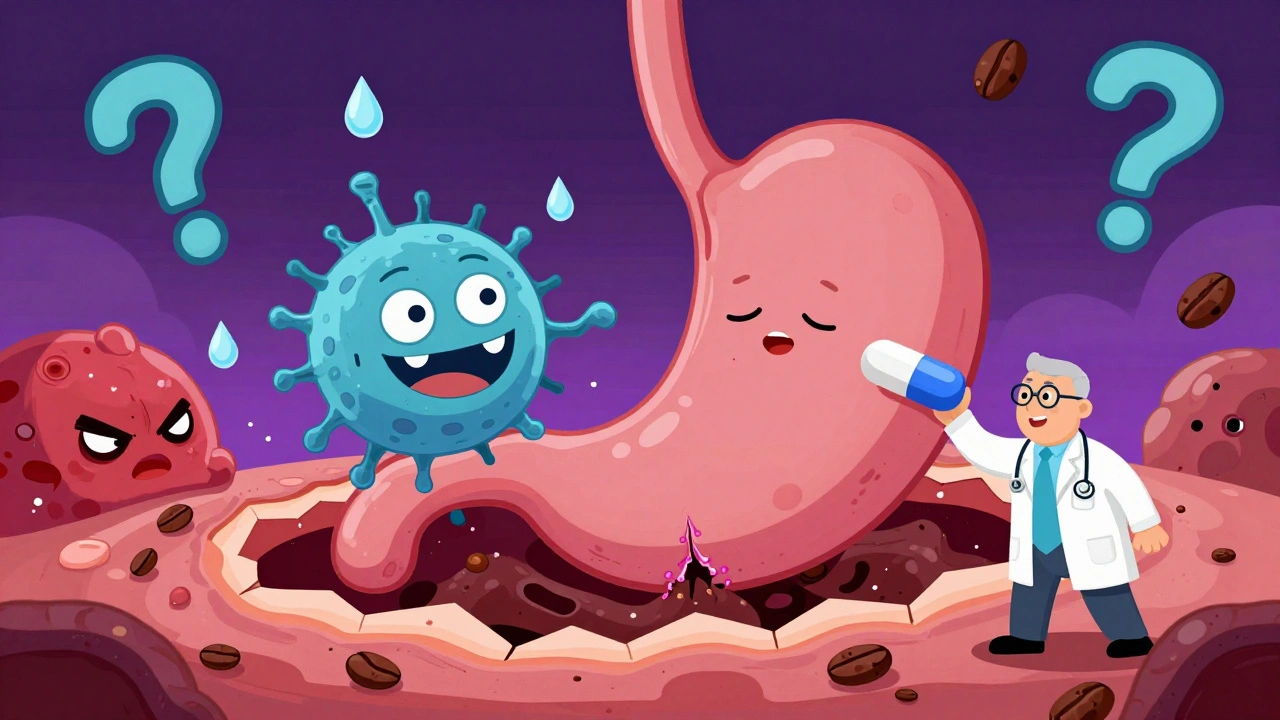
Gastritis and H. pylori: Understanding Stomach Lining Inflammation and Effective Treatment
Gastritis is stomach lining inflammation often caused by H. pylori bacteria. Learn how it's diagnosed, treated with antibiotics and acid blockers, and why eradication prevents ulcers and cancer.