H. pylori eradication: How to beat the stomach bacteria causing ulcers and pain
When your stomach hurts, burns, or feels bloated after eating, it might not be stress or spicy food—it could be H. pylori, a type of bacteria that lives in the stomach lining and is linked to ulcers, chronic inflammation, and even stomach cancer. Also known as Helicobacter pylori, this germ infects half the world’s population, but most people never know they have it—until something goes wrong. H. pylori eradication isn’t just about taking a pill. It’s a targeted fight using a combo of antibiotics and acid-reducing drugs to wipe out the bacteria before it damages your gut long-term.
This isn’t a one-size-fits-all fix. The standard treatment, called triple therapy, pairs two antibiotics—like clarithromycin and amoxicillin—with a proton pump inhibitor, a drug that shuts down stomach acid production to help the antibiotics work better. Some people need quadruple therapy with bismuth if the first round fails. Resistance is growing, especially to clarithromycin, so doctors now often test for antibiotic sensitivity before starting treatment. And no, yogurt or garlic won’t cut it—you need the right combo of prescription meds, taken exactly as directed, for 10 to 14 days. Skipping doses or stopping early? That’s how resistant strains survive.
After treatment, you don’t just feel better and call it done. A follow-up test—usually a stool antigen test or breath test—is critical to confirm the bacteria is gone. If it’s still there, you’ll need a second round with different antibiotics. And while diet won’t cure H. pylori, avoiding alcohol, smoking, and overly acidic foods helps your stomach heal faster. People who’ve had ulcers or stomach cancer in their family should be especially careful—this bug is a known risk factor.
What you’ll find below are real, practical guides on how H. pylori eradication works in practice: which drug combos are most effective today, why some treatments fail, how to manage side effects like diarrhea or taste changes, and what to do if your symptoms come back. No fluff. Just clear, tested info from posts that cover everything from antibiotic resistance to long-term monitoring after treatment.
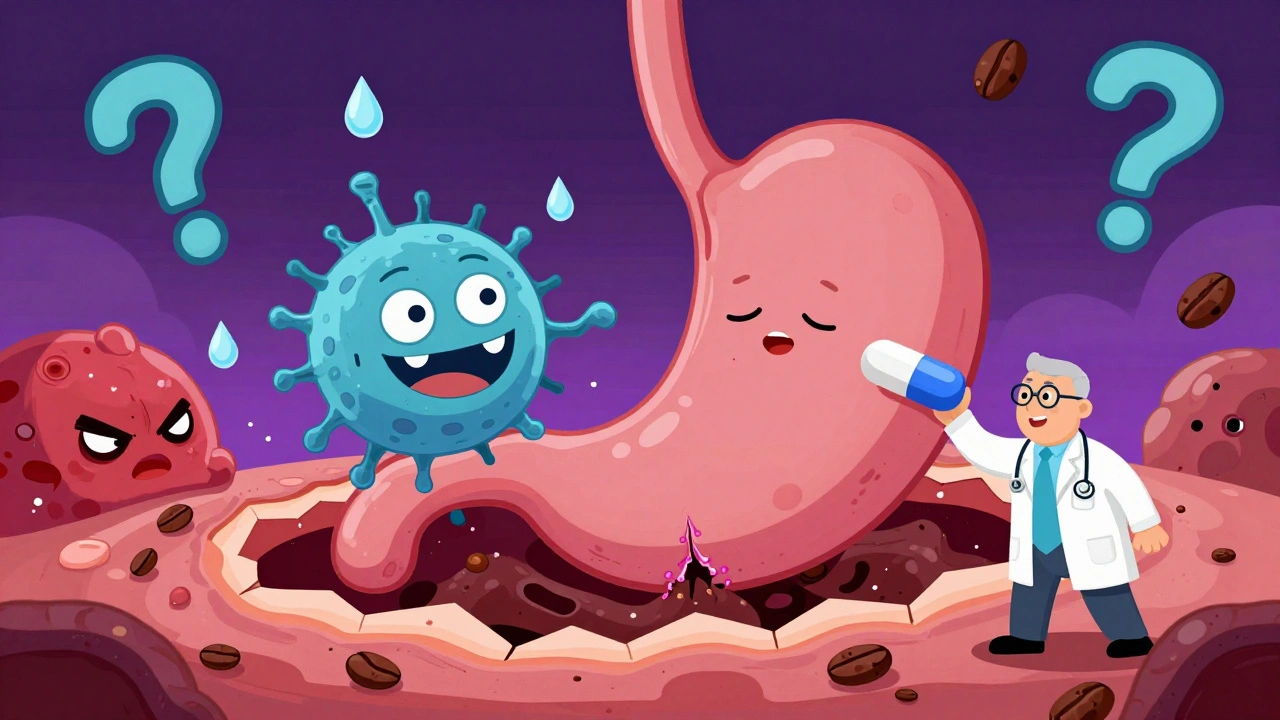
Gastritis and H. pylori: Understanding Stomach Lining Inflammation and Effective Treatment
Gastritis is stomach lining inflammation often caused by H. pylori bacteria. Learn how it's diagnosed, treated with antibiotics and acid blockers, and why eradication prevents ulcers and cancer.