Chemotherapy Verification Steps: Safe Drug Handling and Patient Protection
When it comes to chemotherapy verification steps, a series of checks designed to ensure cancer drugs are prepared, labeled, and given correctly to avoid fatal errors. Also known as chemotherapy safety protocols, these steps are not optional—they’re the last line of defense between a patient and a life-threatening mistake. One wrong dose, one mislabeled vial, one skipped double-check, and the consequences can be irreversible. Unlike most medications, chemotherapy drugs are toxic by design. They kill fast-growing cells—cancer cells, yes, but also healthy ones in the gut, hair follicles, and bone marrow. That’s why every step in handling them must be locked down.
These chemotherapy verification steps start long before the drug reaches the patient. They begin with the prescription: is the dose calculated correctly based on body surface area? Is the drug compatible with the patient’s kidney or liver function? Then comes the pharmacy: who prepares it? Who checks it? Who labels it? In most hospitals, two licensed pharmacists independently verify the drug, dose, route, and patient details. This is called a double-check system, a mandatory dual-verification process used in high-risk medication handling. It’s not just a suggestion—it’s required by standards from the Institute of Medicine and the Oncology Nursing Society. Even then, some places add a third layer: barcode scanning at the bedside, matching the drug to the patient’s wristband and electronic order.
It’s not just about the numbers. The chemotherapy preparation area, a controlled, sterile environment designed to protect staff and drugs from contamination must be clean, ventilated, and free from distractions. Staff wear gloves, gowns, and sometimes respirators—not for show, but because these drugs can be absorbed through skin or inhaled. Even a tiny spill needs a special cleanup kit. And the labels? They’re not your standard pharmacy stickers. They’re bright red, bold, and include warnings like "CYTOTOXIC" and "Hazardous Drug." If a nurse walks into a room and sees a plain white label on a chemo bag, she stops. She questions it. That’s culture. That’s training. That’s how mistakes get caught.
These steps exist because they’ve been forged in real tragedy. Studies show that up to 25% of chemotherapy errors are caught before reaching the patient—thanks to these verification layers. But the ones that slip through? They’re often preventable. A misread decimal. A confused drug name like doxorubicin and daunorubicin. A wrong patient ID. The system isn’t perfect, but it’s built to catch the human slip-ups that no algorithm can predict.
What you’ll find in the posts below aren’t abstract theories. These are real-world guides from oncology pharmacies, nurses, and pharmacists who live these steps every day. You’ll see how they handle drug interactions, what they do when a patient’s weight changes mid-treatment, how they train new staff, and why even the smallest detail matters when the stakes are this high.
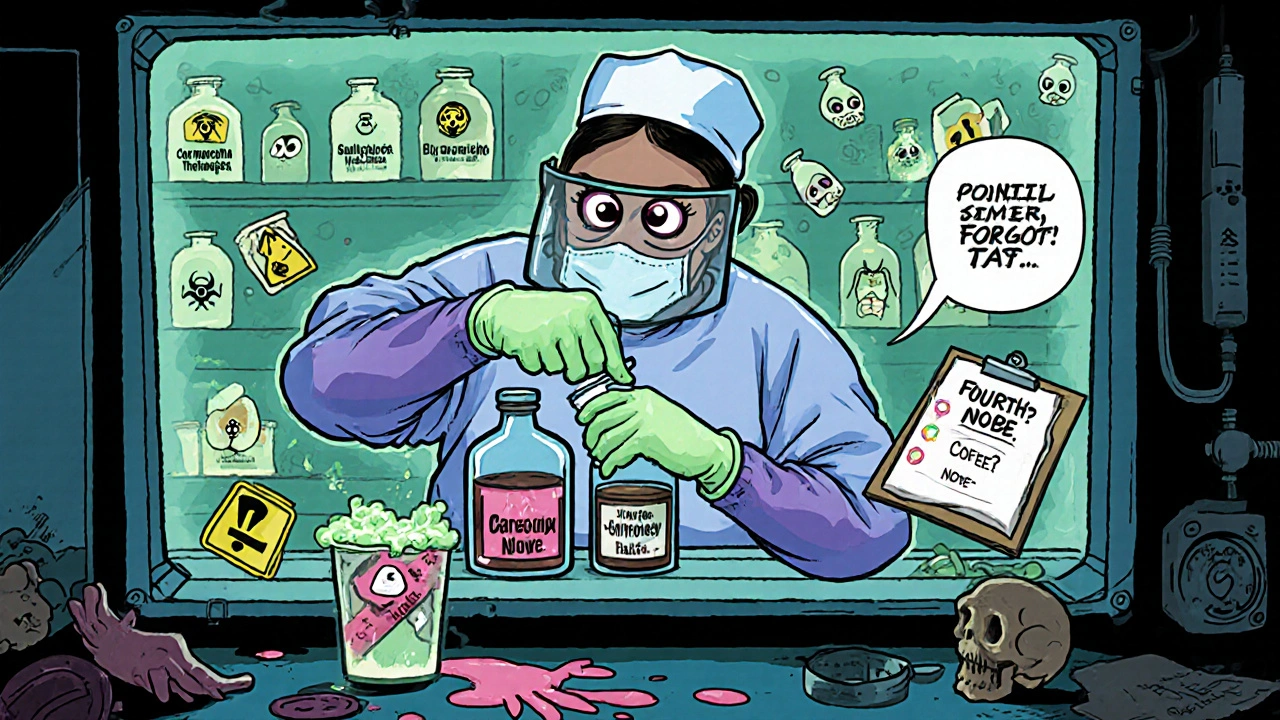
Cancer Chemotherapy Safety: How to Handle and Administer Antineoplastic Drugs Correctly
Learn the latest chemotherapy safety protocols for handling and administering antineoplastic drugs. Discover mandatory PPE, the 4-step verification process, CRS management, and how to protect patients and staff from toxic exposure.