Chemotherapy Safety: Protecting Patients and Caregivers During Cancer Treatment
When someone is undergoing chemotherapy, a powerful drug treatment used to kill cancer cells. Also known as cancer chemotherapy, it works by targeting fast-growing cells—but it doesn’t just affect tumors. These drugs are toxic, and even small amounts can harm healthy people if not handled properly. That’s why chemotherapy safety, the set of practices designed to prevent accidental exposure to cancer drugs isn’t optional—it’s essential for patients, nurses, family members, and even pets.
Chemotherapy drugs don’t just stay inside the body. They can be found in sweat, urine, vomit, and even on surfaces if cleanup isn’t done right. Caregivers who change bed linens, clean the bathroom, or help with medication without gloves are at risk. Healthcare workers face this daily, which is why hospitals use special ventilation, sealed containers, and protective gear. But most people get treatment at home, and that’s where mistakes happen. A single splash of spilled liquid, a flushed pill down the toilet, or touching a pill bottle without washing hands can lead to skin irritation, nausea, or worse. The oncology care, the medical approach to managing cancer and its treatments team doesn’t just prescribe drugs—they teach you how to live safely with them.
It’s not just about the patient. Kids, pregnant partners, and elderly roommates need protection too. Simple steps like flushing the toilet twice, washing clothes separately, and storing meds in locked containers make a huge difference. Even the way you dispose of empty syringes or pill bottles matters. Some drugs stay active for days after treatment. You don’t need to be a scientist to do this right—just follow clear, step-by-step rules. The posts below give you real advice from people who’ve been there: how to handle pills safely, what to do if a dose spills, how to talk to your pharmacy about disposal, and why some home remedies can actually be dangerous during chemo. These aren’t theory pages—they’re practical guides written for families who need to protect themselves while supporting someone through treatment.
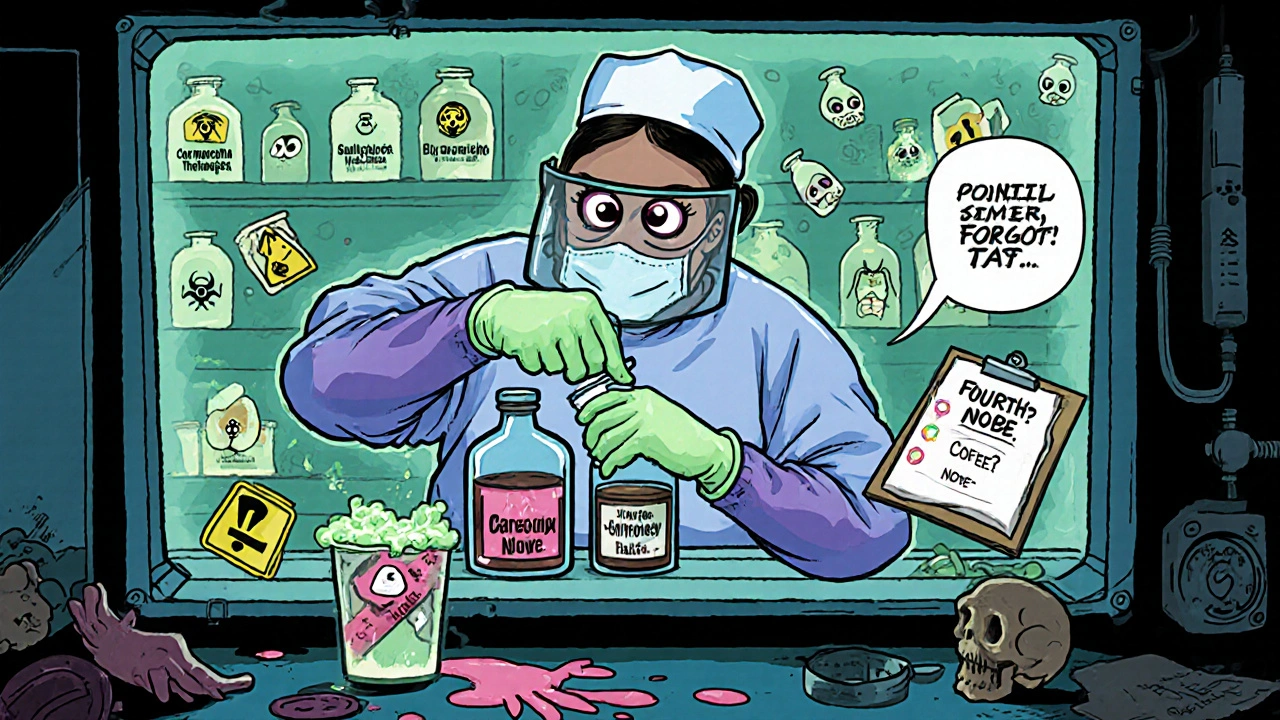
Cancer Chemotherapy Safety: How to Handle and Administer Antineoplastic Drugs Correctly
Learn the latest chemotherapy safety protocols for handling and administering antineoplastic drugs. Discover mandatory PPE, the 4-step verification process, CRS management, and how to protect patients and staff from toxic exposure.