Chemotherapy Administration: How It Works and What to Expect
When you hear chemotherapy administration, the process of delivering cancer-fighting drugs into the body through specific methods to target malignant cells. Also known as cancer chemotherapy, it's not just one thing—it's a set of carefully planned treatments that can be given in many ways, depending on the cancer type, stage, and patient health. Some people get it through an IV in a clinic, others swallow pills at home. The goal is always the same: stop cancer from growing, spread, or come back. But how it’s done makes a big difference in how you feel, how often you go to the hospital, and even how long the treatment lasts.
IV chemotherapy, a common method where drugs are delivered directly into the bloodstream through a vein. Also known as intravenous infusion, it’s often used for aggressive cancers because it gets the drugs into your system fast and evenly. But it also means you’ll spend hours in a chair, hooked up to a bag of medicine, and you might feel tired, nauseous, or get a headache right after. Then there’s oral chemotherapy, cancer drugs taken as pills or liquids at home. Also known as chemo tablets, it gives you more freedom—but it’s easy to forget a dose, or take it wrong, which can make treatment less effective or even dangerous. That’s why doctors give strict instructions and often require you to log your doses. Other methods exist too—like injections into muscles, under the skin, or even directly into the spinal fluid for certain brain or blood cancers. Each one has risks, benefits, and special handling rules. Nurses and pharmacists are trained to prepare these drugs safely, because even a tiny mistake can harm you.
It’s not just about the drug. It’s about timing, dosage, and how your body reacts. Some people need chemo every week. Others get it every three weeks. Some treatments last minutes. Others take hours. Blood tests before each round check if your liver, kidneys, and bone marrow can handle it. If your white blood cell count drops too low, they’ll delay treatment. That’s not a setback—it’s protection. Side effects like hair loss, nausea, or numbness in fingers and toes happen because chemo doesn’t just kill cancer cells. It hits fast-growing healthy cells too. But new tools help manage these: anti-nausea meds, cooling caps, nerve-protecting drugs, and even special diets. And now, many clinics use portable pumps or wearable devices that deliver chemo slowly over days, so you don’t have to sit still for hours.
What you’ll find in the posts below aren’t just stories—they’re real-world insights from people who’ve been through it, doctors who’ve seen the patterns, and researchers who’ve figured out what works best. You’ll see how insurance covers chemo drugs, how generics are changing access, what to do when side effects get worse, and why some treatments work better for certain people based on age, sex, or genetics. This isn’t theory. It’s what happens in clinics, at kitchen tables, and in hospital rooms every day. Whether you’re a patient, caregiver, or just trying to understand, this collection gives you the facts without the fluff.
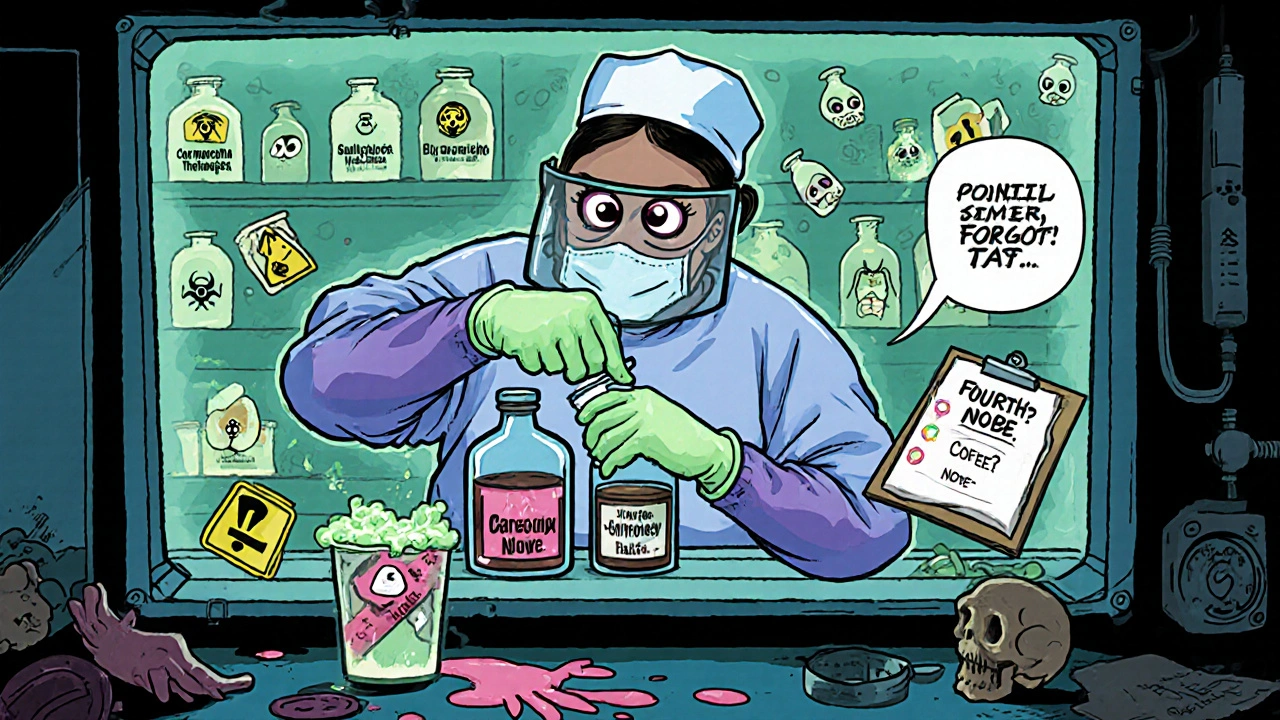
Cancer Chemotherapy Safety: How to Handle and Administer Antineoplastic Drugs Correctly
Learn the latest chemotherapy safety protocols for handling and administering antineoplastic drugs. Discover mandatory PPE, the 4-step verification process, CRS management, and how to protect patients and staff from toxic exposure.