Benzodiazepines: What They Are, How They Work, and What You Need to Know
When doctors prescribe benzodiazepines, a class of central nervous system depressants used to treat anxiety, seizures, and insomnia. Also known as benzos, they work by boosting the effect of GABA, a natural brain chemical that calms nerve activity. That’s why they help with panic attacks, muscle spasms, or trouble sleeping—but they’re not meant to be taken for months or years.
Many people start with a short prescription after a stressful event, but it’s easy to keep taking them because they feel good in the moment. The problem? Your brain adapts. Over time, you need more to get the same effect, and stopping suddenly can trigger withdrawal, a dangerous reaction that includes seizures, extreme anxiety, and even hallucinations. That’s why tapering off under medical supervision isn’t optional—it’s critical. And it’s not just about physical dependence. Long-term use is linked to memory issues, falls in older adults, and even a higher risk of dementia, according to studies tracking patients over decades.
Not all benzodiazepines, are the same. Some, like alprazolam, kick in fast but wear off quickly, making them more likely to cause rebound anxiety. Others, like diazepam, last longer and are often used for tapering. Then there’s clonazepam, sometimes used for seizure control, and lorazepam, preferred in hospitals for its predictable action. Each has its own profile, risks, and best uses—but none are safe for indefinite use.
What’s missing from most prescriptions is a clear exit plan. People are told to take it "as needed," but without guidance on when to stop, many stay on it for years. And if you’re taking benzodiazepines with other sedatives like alcohol, opioids, or sleep aids, the risks multiply. Overdose can slow your breathing to dangerous levels—or stop it entirely. That’s why it’s so important to know what you’re taking, why you’re taking it, and how to get off it safely.
The posts below cover real-world experiences and science-backed advice about using these drugs. You’ll find what works for anxiety without relying on benzos, how to recognize signs of dependence, what alternatives exist, and how to talk to your doctor about reducing your dose. No fluff. No hype. Just clear, practical info from people who’ve been there and experts who’ve studied it.
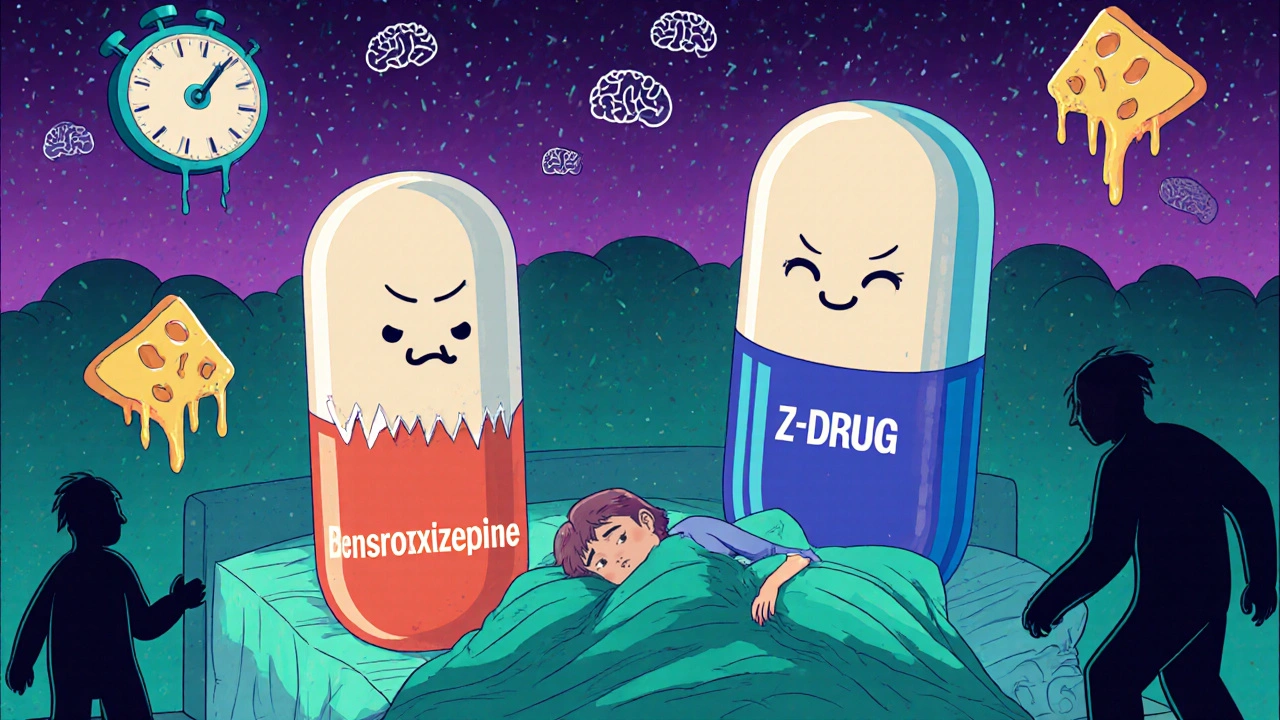
Sedative-Hypnotics: Benzodiazepines vs. Non-Benzodiazepines for Sleep
Benzodiazepines and non-benzodiazepines are commonly prescribed for insomnia, but both carry serious risks including memory loss, falls, and addiction. Learn why experts now recommend therapy over pills.