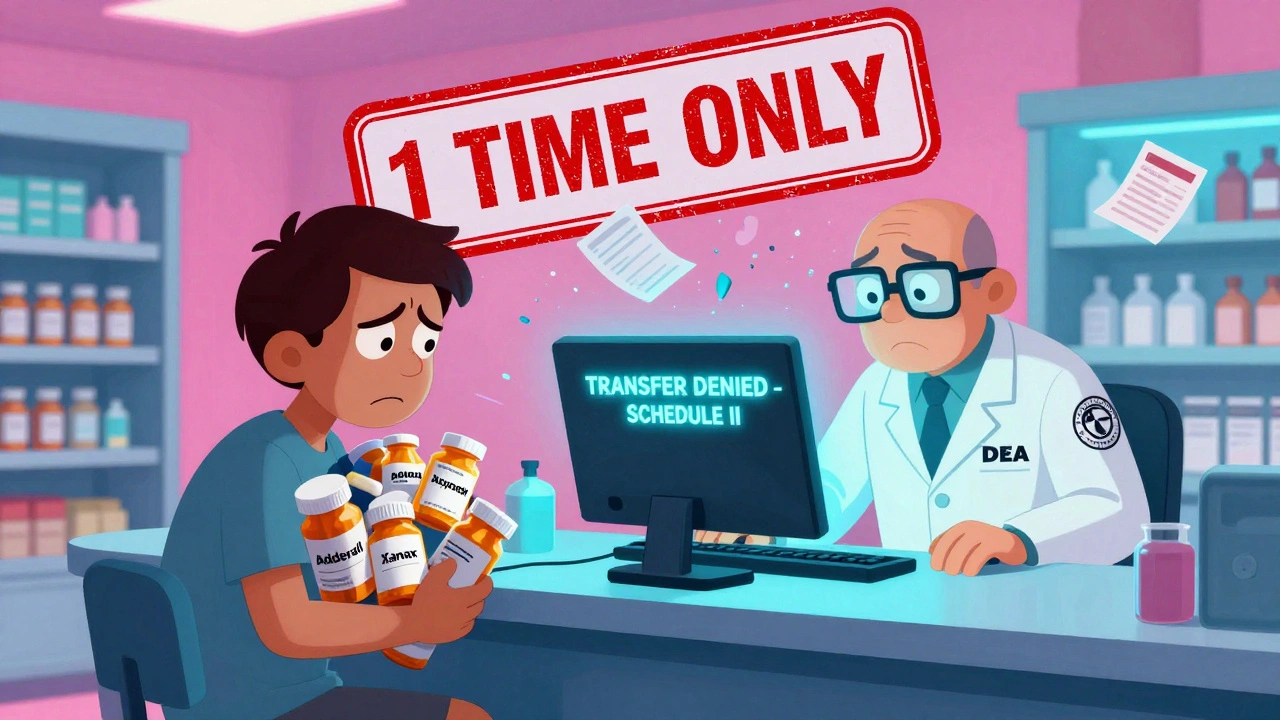
Changing pharmacies sounds simple-just walk in, hand over your pill bottles, and walk out with your meds. But if you’re on controlled substances like painkillers, ADHD meds, or anxiety medications, the process is far more complex than it looks. The rules changed in August 2023, and if you don’t know what to give the new pharmacy, your transfer could get stuck-or worse, denied. This isn’t about bureaucracy. It’s about safety, legality, and making sure you don’t go without your medicine.
What You Absolutely Need to Give the New Pharmacy
No matter what medication you’re switching, you’ll need to give the new pharmacy your full legal name, date of birth, and current address. That’s the baseline. But here’s what most people miss: you also need the exact name of the medication, the dosage, the prescriber’s name, and the prescription number. If you don’t have the prescription number, give them the name of your old pharmacy and the date you last filled it. Pharmacists can look it up-but only if you give them enough to go on.For non-controlled medications-like blood pressure pills, statins, or antibiotics-this is usually enough. The new pharmacy calls the old one, verifies the prescription, and transfers it. Refills carry over. You can do this as many times as you want, as long as refills remain. Simple.
Controlled Substances Are a Different Story
If your prescription is for a Schedule III, IV, or V controlled substance-think oxycodone, Adderall, Xanax, or tramadol-things get strict. Under the DEA’s 2023 Final Rule, you can only transfer these prescriptions one time between pharmacies. After that, you must get a new prescription from your doctor.And here’s the kicker: Schedule II drugs-like fentanyl patches, high-dose oxycodone, or methadone-cannot be transferred at all. Not even once. If you switch pharmacies and your Schedule II prescription still has refills, you’re out of luck. You must go back to your prescriber, explain you’re changing pharmacies, and get a new written or electronic prescription. No exceptions.
Why this rule? It’s to stop people from “pharmacy hopping” to get more pills. The DEA cracked down because bad actors were exploiting old rules. Now, every transfer is tracked. The transferring pharmacy must mark the original prescription as “VOID” in their system. The receiving pharmacy must record the name of the transferring pharmacist, their DEA number, the date of transfer, and the original prescription number. All of it. And they have to keep those records for two years.
How the Transfer Actually Happens
You don’t need to call your old pharmacy. You don’t need to fax anything. You just tell the new pharmacy you want to transfer your prescriptions. They handle the rest-over a secure electronic system, phone, or fax. But here’s the catch: the prescription data itself must stay electronic. No screenshots, no photos of paper prescriptions. If your old pharmacy still uses paper for controlled substances, the transfer can’t happen electronically, and the DEA doesn’t allow paper transfers for Schedule III-V drugs anymore.So if your old pharmacy is still printing out prescriptions for your Adderall, you might hit a snag. Ask them if they’re using an EPCS (Electronic Prescription for Controlled Substances) system. If they’re not, you’ll need to get a new electronic prescription from your doctor before switching.
Most major chains-CVS, Walgreens, Rite Aid-updated their systems by August 28, 2023. But smaller, independent pharmacies? About 37% took extra weeks to get their software in line. If you’re switching to a small local pharmacy, call ahead. Ask: “Do you accept electronic transfers of controlled substances under the DEA’s 2023 rule?” If they hesitate, you might need to wait or go elsewhere.
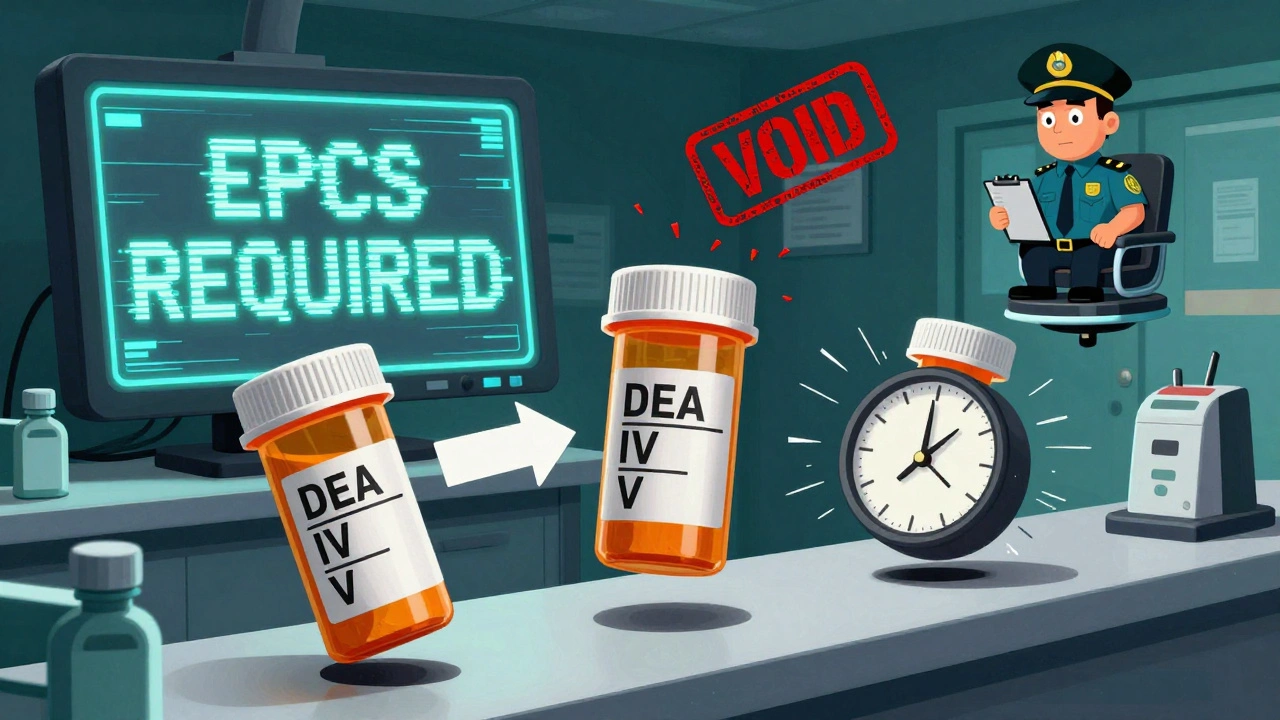
What Happens If a Transfer Gets Denied?
It happens more than you think. A Consumer Reports survey in September 2023 found that 68% of people who tried to transfer prescriptions ran into problems. The biggest reasons? Missing information (31%) and controlled substance transfer rules (42%).One common mistake: patients think they can transfer a prescription that’s out of refills. They can’t. If your last refill was used up, the prescription is expired-even if it’s still in your bottle. You need a new one from your doctor. No pharmacy can refill it, even if they want to.
Another issue: state laws. The DEA rule says transfers must be “allowed under existing state or other applicable law.” That means some states have tighter rules. In New York, for example, pharmacists must document even more details than the federal minimum. In Texas, some pharmacies refuse transfers across state lines unless both pharmacies are part of the same chain. If your transfer is denied, ask for the reason in writing. Pharmacies are required to give you one.
Transferring Multiple Prescriptions
If you’re on five different meds, don’t panic. You can transfer them all at once. But each prescription counts separately. So if you have two Schedule IV prescriptions-say, one for sleep and one for anxiety-you can transfer both, one time each. You’re not limited to one transfer per patient. You’re limited to one transfer per prescription.Expect the whole process to take 1 to 3 business days per prescription. Controlled substances take longer because pharmacists have to verify more details. If you’re switching on a Friday, don’t expect your meds to be ready by Monday. Give yourself time.
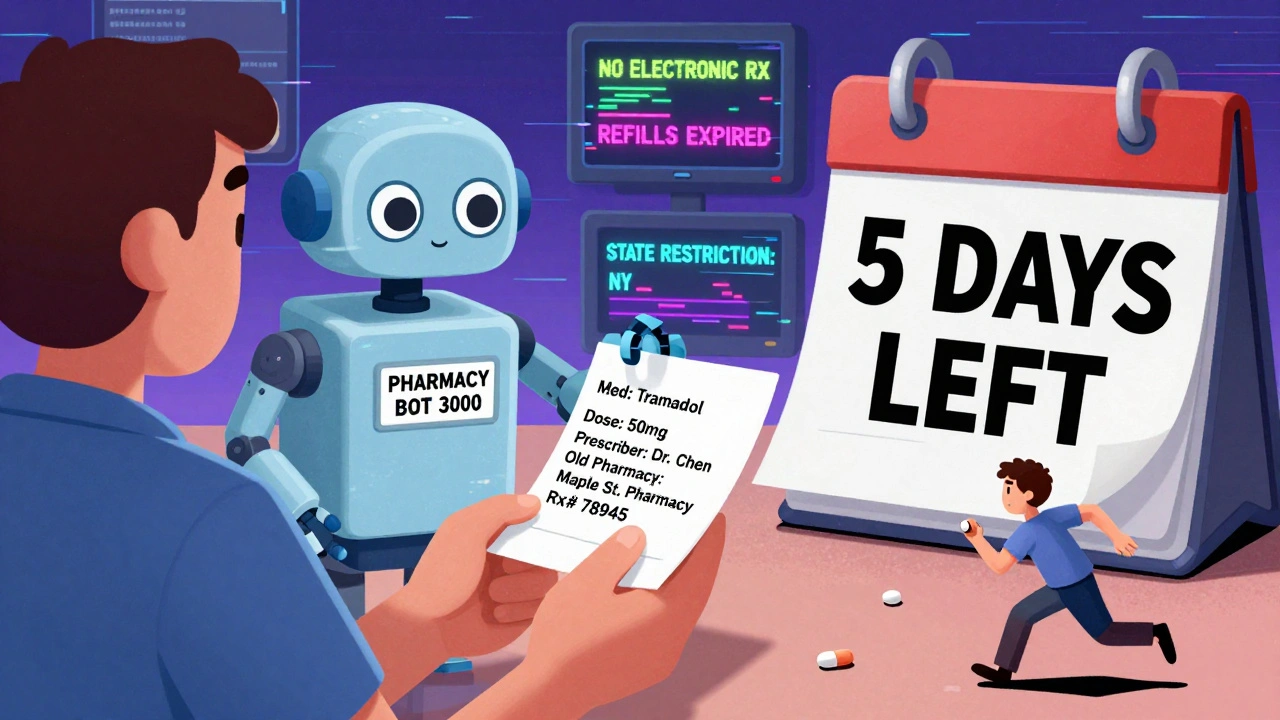
What You Should Do Before You Switch
1. Know your meds. Check your pill bottles or your pharmacy app. Is it listed as a Schedule III, IV, or V? If you’re not sure, ask your pharmacist or look up the drug on the DEA’s website. 2. Check your refills. If you’re out of refills on a controlled substance, call your doctor before you switch pharmacies. Don’t wait until you’re at the new one. 3. Call the new pharmacy first. Ask: “Do you accept electronic transfers of controlled substances under the DEA’s 2023 rule?” If they say yes, ask what info they need from you. 4. Don’t wait until your last pill is gone. Start the transfer at least 5 days before you run out. Pharmacies get busy. Delays happen. 5. Keep a list. Write down: medication name, dosage, prescriber, pharmacy name, phone number, and prescription number. Bring it with you when you switch.What’s Coming Next
The DEA is watching how this rule plays out. They’re collecting data through 2025. Some experts think the one-time transfer limit might be relaxed by 2026-especially for patients on long-term pain management or mental health meds. But for now, it’s one and done.Meanwhile, more than 92% of controlled substance prescriptions in the U.S. are now electronic. That’s up from 65% in 2020. The system is getting better. But it’s still fragile. If you’re not careful, you can fall through the cracks.
Final Tip: Be the Advocate
Pharmacists are busy. They’re not mind readers. If you’re switching pharmacies, especially for controlled meds, don’t assume they’ll know what to do. Be clear. Be prepared. Bring your info. Ask questions. If they say no, ask why-and ask if they can check with another pharmacist. Most of the time, it’s just a paperwork hiccup. Fix it, and you’re good to go.Can I transfer a Schedule II prescription like oxycodone to a new pharmacy?
No. Schedule II controlled substances, including high-dose oxycodone, fentanyl, and methadone, cannot be transferred under any circumstances. You must get a new prescription from your prescriber before switching pharmacies, even if refills remain.
How many times can I transfer a Schedule III-V prescription like Adderall or Xanax?
Only once. Under the DEA’s 2023 rule, each prescription for a Schedule III, IV, or V controlled substance can be transferred between pharmacies one time only. After that, you must get a new prescription from your doctor.
What if my old pharmacy doesn’t use electronic prescriptions?
For controlled substances, the transfer must be electronic. If your old pharmacy still uses paper prescriptions for Schedule III-V drugs, the new pharmacy cannot accept the transfer. You’ll need to ask your prescriber to issue a new electronic prescription (EPCS) before switching.
Can I transfer prescriptions across state lines?
Yes, but it’s not guaranteed. Some states have reciprocity agreements, while others impose stricter rules than federal law. If you’re moving states, call the new pharmacy first and ask if they accept out-of-state transfers for controlled substances.
What if the new pharmacy refuses to transfer my prescription?
Ask for the reason in writing. Pharmacies are required to provide a valid explanation under federal law. Common reasons include missing information, expired refills, or state-specific restrictions. If the refusal seems incorrect, ask to speak with the pharmacist-in-charge or contact your state’s board of pharmacy.
Do I need to give my new pharmacy my old pharmacy’s DEA number?
No-you don’t need to provide it. The new pharmacy will request it directly from the old pharmacy during the electronic transfer. Just give them the name and location of your old pharmacy. They handle the rest.
How long does a prescription transfer take?
Non-controlled prescriptions usually take 24 hours. Controlled substances can take 1-3 business days because of extra verification steps. If you’re switching near the end of the week, plan ahead-transfers often don’t process over weekends.
Can I transfer a prescription that’s already been partially filled?
Yes, as long as refills remain and it’s not a Schedule II drug. The new pharmacy will receive the original prescription details, including how many refills are left. But remember: Schedule III-V prescriptions can only be transferred once, even if you’ve only used one refill.
So basically if you need real pain relief you’re just screwed now 🤷♂️
lol i just went to a new pharmacy last week and they were like ‘uhhh we cant transfer your adderall’ and i was like ‘but i have 3 refills??’ and they said ‘not anymore u cant’ and i just sat there staring at my pill bottle like it betrayed me 😭
This is why America’s broken. You can’t even get your meds without jumping through 17 hoops. The DEA doesn’t care about patients. They care about control.
Wait, so if I switch pharmacies and my Xanax transfer gets denied, I’m supposed to just call my doctor and say ‘hey can you write me another script because the government said so’? Like, what if my doctor’s on vacation? Or if they’re like ‘nope, you’re fine’? What then? This rule is a joke.
Let me be clear: this is not overregulation-it’s necessary. The opioid crisis didn’t happen because people were inconvenienced. It happened because pharmacies and doctors were lax. Every transfer is tracked now. That’s not tyranny. That’s responsibility. If you’re taking controlled substances, you accept the burden. You don’t get to treat your prescription like a Netflix password.
they’re using this to track us… you think they don’t know who’s taking what? the DEA’s building a database with every pill you’ve ever touched. next thing you know, your insurance will deny you coverage because ‘you transferred a controlled substance’… they’re conditioning us to be afraid of our own medicine
I had to switch pharmacies after moving across state lines. Took three weeks. The new one kept saying ‘we need the DEA number from the old one’ but the old one didn’t have EPCS. So I had to wait for my doctor to send a new script. I cried in the parking lot. I’m not exaggerating.
My mom’s on tramadol. She’s 72. She can’t figure out how to call her doctor to get a new script. She just sits there with an empty bottle wondering why nobody helps. This system isn’t protecting anyone. It’s punishing the elderly and the chronically ill.
Just want to say: if you’re reading this and you’re struggling with this process-you’re not alone. I’ve been there. I’ve sat in pharmacies for an hour, holding a printed list of meds, begging them to help. They’re overwhelmed too. Bring your list. Be calm. Ask for the pharmacist-in-charge. Most of them want to help. It’s the system that’s broken. Not you.
It is imperative that all individuals undergoing pharmaceutical transitions adhere strictly to the federal guidelines delineated by the Drug Enforcement Administration under the 2023 Final Rule, as noncompliance may result in regulatory violations, potential legal ramifications, and, most critically, compromised therapeutic continuity. Please ensure that all documentation is electronically verified, and that prescriber credentials are accurately recorded. Thank you for your diligence in maintaining public health integrity.
so if i move and my adderall runs out before the new pharmacy gets it, i just dont get it? no backup? no emergency script? no mercy?
Let’s be honest-this isn’t about safety. It’s about control. The government doesn’t trust people to manage their own health. They don’t trust doctors. They don’t trust pharmacists. They only trust paperwork. And if you’re someone who needs these meds to function, to sleep, to breathe, to not spiral into a depressive abyss-you’re just collateral damage in their war on ‘drug abuse.’ Meanwhile, the real problem-the pharmaceutical companies that pushed these drugs in the first place-walk away scot-free. You think this rule was written to protect patients? No. It was written to make you feel powerless. And that’s exactly what they want.