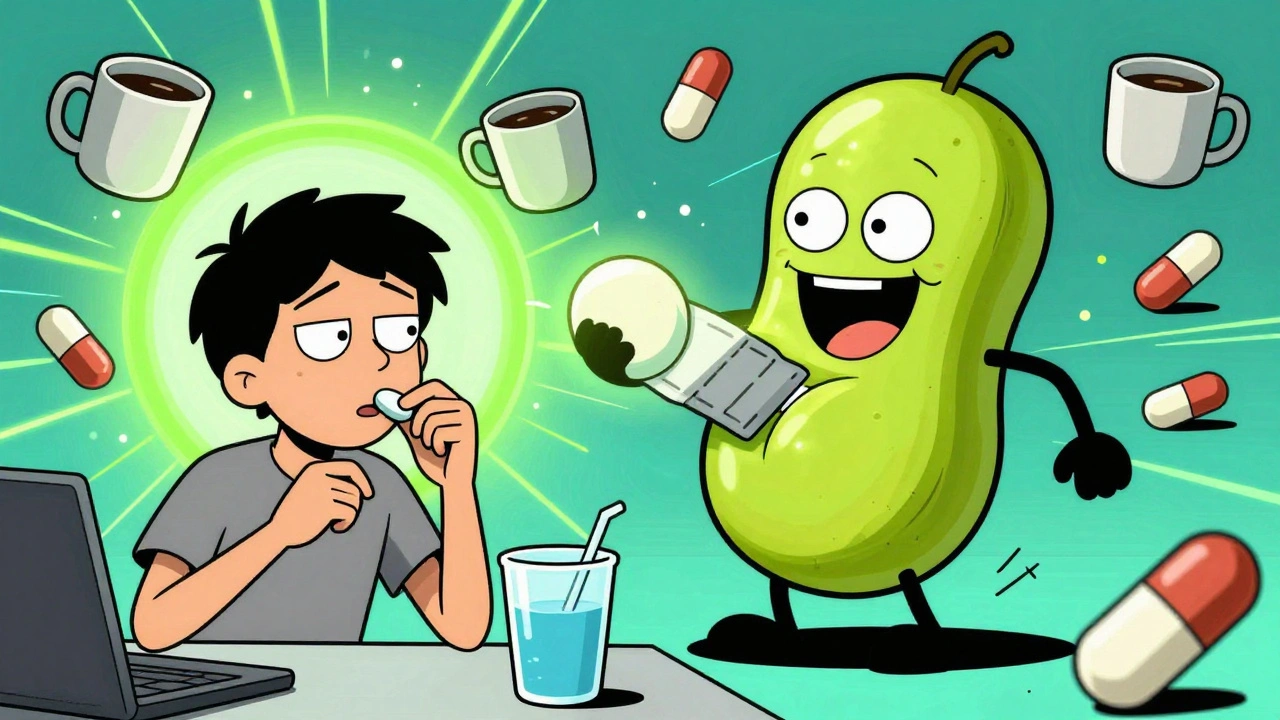
When you're taking levothyroxine for hypothyroidism, what you eat can make a real difference - and soy is one of the biggest culprits. It’s not that soy is bad for your thyroid. In fact, for most people without thyroid issues, soy is perfectly fine. But if you’re on thyroid medication, eating soy at the wrong time can block your body from absorbing the drug properly. That means your TSH levels can creep up, you might feel more tired, gain weight, or notice your symptoms coming back - even if you’re taking your pill exactly as prescribed.
Why Soy Interferes with Thyroid Medication
Soy contains compounds called isoflavones - mainly genistein and daidzein - that bind to levothyroxine in your gut. Think of it like Velcro: the soy sticks to the medication and stops it from being absorbed into your bloodstream. This isn’t a myth or a rumor. It’s been studied since the 1960s. One 2006 case report showed a woman who was taking 200 micrograms of levothyroxine daily because she drank soy protein shakes with her pill. Her dose had to be doubled just because of soy.It’s not just supplements. Whole soy foods like tofu, edamame, soy milk, and tempeh do the same thing. A 2004 study found that soy reduced levothyroxine absorption by up to 30%, while fiber supplements like psyllium only cut it by 9%. That’s a big difference. And it’s not just about how much soy you eat - it’s when you eat it.
How Much Does Soy Actually Affect Your TSH?
A 2019 meta-analysis of 18 studies involving over 3,600 people found that soy caused only a tiny rise in TSH - about 0.35 mIU/L on average. That sounds small, but for someone already struggling to keep their TSH stable, even that little jump can matter. The real problem shows up in people with hypothyroidism who are already on medication. Their bodies are already working hard to stay balanced. Adding soy at the wrong time throws that balance off.Here’s the catch: if you’re euthyroid - meaning your thyroid is working normally - soy doesn’t hurt you. But if you’re on levothyroxine, your body is depending on that pill to do what your thyroid can’t. So when soy blocks absorption, your body thinks it’s still hypothyroid, even though you’re taking the medicine. That’s why your doctor might see your TSH climb and think you need a higher dose - when really, you just need to change when you eat your tofu.
How Long Should You Wait After Taking Levothyroxine Before Eating Soy?
This is where timing becomes your best friend. The old rule was to wait 4 hours. But new research from 2023 changed that.Dr. Elena Rodriguez’s study in the European Thyroid Journal showed that waiting just 2 hours after taking levothyroxine before consuming soy milk brought absorption interference down to almost nothing - a TSH change of less than 0.1 mIU/L. That’s practically no effect. Based on this, the Mayo Clinic updated their guidelines in March 2023 to recommend at least 2 hours between your pill and soy products for most adults.
But here’s the nuance: infants and children still need the longer 3-4 hour window. Their digestive systems are smaller and more sensitive. And if you’re eating a big soy-heavy meal - like a tofu stir-fry with soy sauce and edamame - go for 3 hours to be safe. For soy protein powders or supplements, 2 hours is usually enough. The key is consistency. Don’t mix and match.
What About Other Foods and Supplements?
Soy isn’t the only thing that interferes. Calcium supplements can cut absorption by 25-36%. Iron is even worse. Coffee? It knocks out about 20%. Fiber, like oatmeal or bran, also gets in the way.Here’s a quick ranking from most to least disruptive:
- Calcium supplements
- Iron supplements
- Soy products
- High-fiber foods
- Coffee
Calcium and iron need a full 4-hour gap. Coffee? Wait 60 minutes. Soy? Two to three hours. That’s why many endocrinologists recommend taking levothyroxine first thing in the morning - with water only - and waiting at least an hour before eating anything else. Then, you can have your coffee, your oatmeal, and your soy yogurt later in the day.
Real People, Real Results
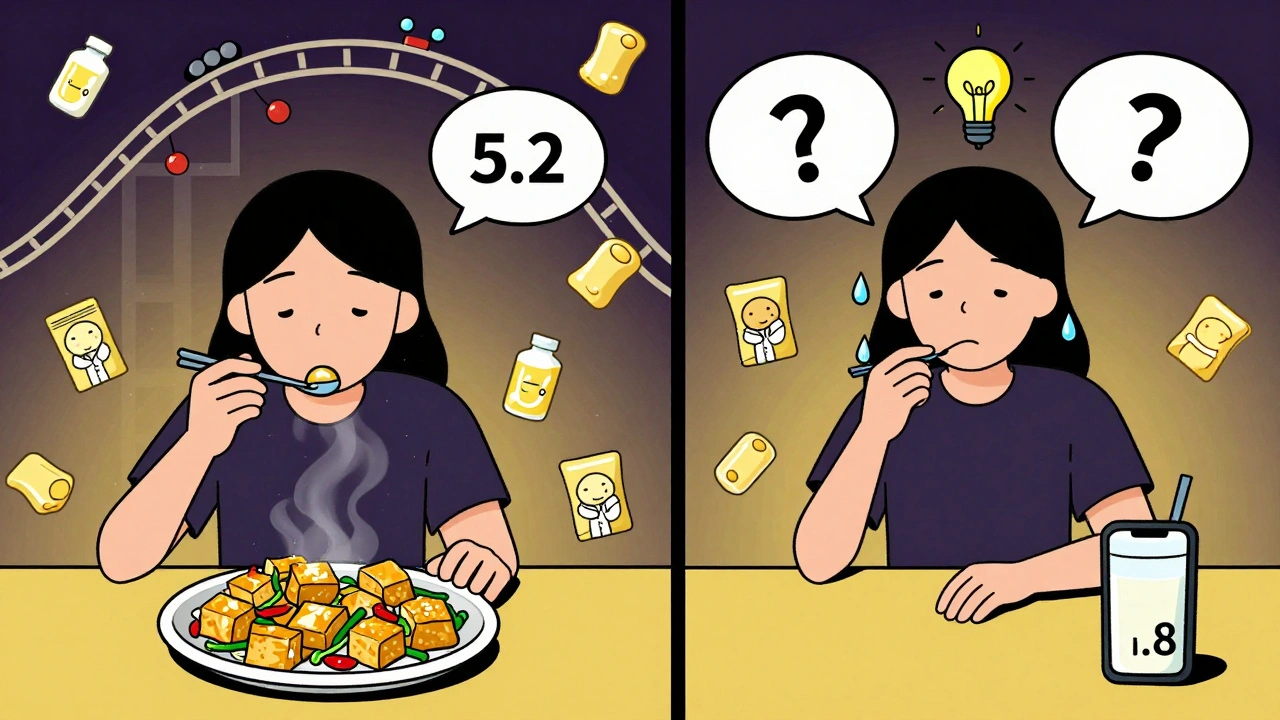
On Reddit’s r/Thyroid, one user, HypoWarrior42, said their TSH jumped from 1.8 to 5.2 after switching to soy milk with breakfast. Their dose had to go up from 75 mcg to 100 mcg. Another user, SoyLoverHypo, said they’ve taken Synthroid with soy milk for five years with no issues - because they take their pill at bedtime and eat soy at lunch. Both are right. It’s not about avoiding soy. It’s about timing.A 2023 survey of 1,200 hypothyroid patients showed:
- 42% had no problems with soy when they waited 2+ hours
- 31% needed a dose increase after eating soy within an hour of their pill
- 27% avoided soy entirely out of fear - even though they didn’t need to
The biggest mistakes? Taking levothyroxine with breakfast that includes soy milk or tofu. Or grabbing a soy protein shake right after your pill. That’s when things go wrong.
Best Practices: Simple Rules That Work
You don’t need to give up soy. You just need to plan around it. Here’s what works for most people:- Morning routine: Take your levothyroxine with a full glass of water as soon as you wake up, before eating or drinking anything else. Wait 60 minutes before having coffee, juice, or breakfast. Wait 2-3 hours before eating soy.
- Bedtime option: If mornings are chaotic, take your pill at night - at least 2-3 hours after your last meal. This avoids most food interference, including soy. Just make sure you’re not eating anything else right before bed.
- Be consistent: If you take it in the morning one day and at night the next, your levels will swing. Pick one time and stick with it.
- Track your soy: Keep a simple log: what you ate, when you took your pill, and your TSH results over time. You’ll start to see patterns.
Many endocrinologists now use visual guides - like charts showing which foods need 2, 3, or 4 hours - to help patients. The Thyroid Patient Advocacy group offers free printable timing charts online. Use them.

Special Cases: Vegans, Vegetarians, and Infants
If you’re vegan or vegetarian, soy is probably a big part of your diet. That’s okay - you just need to be smarter about timing. A 2022 survey found that 74% of plant-based eaters with hypothyroidism have been told by their doctor to manage soy timing. Most adjust without issue once they get the rhythm down.For babies on soy formula and levothyroxine? This is serious. A 2001 study of 78 infants showed they needed 15-30% more medication than those on non-soy formula. For infants, wait at least 3-4 hours after the pill before giving soy formula. Always check with your pediatric endocrinologist. Don’t guess.
What About Soy Supplements?
Soy isoflavone pills? They’re more concentrated than food. But the evidence on them is mixed. The European Food Safety Authority says they don’t affect thyroid function in healthy women. Yet some doctors still recommend avoiding them altogether if you’re on levothyroxine. If you take them, wait at least 2 hours after your pill. Better yet - talk to your doctor. They might suggest switching to a non-soy supplement.Bottom Line: You Don’t Have to Give Up Soy
You don’t need to become a soy-free dietitian. You just need to know when to eat it. Levothyroxine works best when your body can absorb it fully. Soy doesn’t make your thyroid worse - it just gets in the way of your medicine. Once you fix the timing, your TSH will stabilize, your energy will come back, and you won’t have to wonder why your dose keeps changing.Take your pill first. Wait two hours. Then enjoy your tofu stir-fry, soy yogurt, or soy latte without guilt. That’s the secret. Simple. Scientific. And it works.

Let me get this straight - we’re now treating soy like it’s radioactive plutonium because it *might* interfere with a pill you’re supposed to take on an empty stomach? I mean, if you’re taking levothyroxine and then immediately chugging a soy latte, yes, you’re gonna have issues. But the real problem here is poor medication hygiene, not soy. The science says 2 hours. Not 4. Not 6. Two. That’s it. Stop overcomplicating it.
Also, calling soy a ‘culprit’? That’s not medical language. That’s fearmongering with a side of vegan guilt.
Thanks for laying this out so clearly. I’ve been taking my pill at night for about a year now and switched from soy milk to almond milk just because I was worried - but honestly, I didn’t realize how little interference there actually was if you just spaced it out. I’ve been eating tofu at lunch and my TSH has been rock solid since. Maybe I didn’t need to give up soy after all.
Appreciate the practical tips - especially the log suggestion. I’m gonna start one tomorrow.
Have you ever stopped to think that this whole soy thing is just a Big Pharma distraction? The real reason your TSH is off is because the government is secretly poisoning our water with fluoride to suppress thyroid function - and soy? It’s just the scapegoat. They want you to believe it’s the tofu, not the chemtrail residue in your oat milk.
I’ve been taking my levothyroxine with a shot of apple cider vinegar and a pinch of Himalayan salt - and my TSH is now lower than it’s been since 1998. Coincidence? Maybe. But I’m not buying the corporate narrative anymore. The truth is out there. And it’s in the soybeans.
P.S. I also stopped using aluminum pans. And Wi-Fi. And wearing socks. All part of the plan.
OMG YES. I took my pill with my soy smoothie for 3 years and thought I was fine… until my doctor said my dose was ‘way too high.’ Turns out I was just absorbing 30% of it. I thought I was doing everything right! Now I take it at 6am, wait until 8am for coffee, and save my edamame for lunch. Life changed.
Also, coffee is the real villain. Don’t let them fool you. ☕️
Thank you for this. As a vegan with Hashimoto’s, I’ve been terrified of soy for years - even though I’ve never had an issue when I waited two hours. I’ve had doctors tell me to avoid it entirely, others say it’s fine. This is the first time I’ve seen a clear, evidence-based breakdown. I’m printing this out and taping it to my fridge.
Also, the chart suggestion? Genius. I’ll be sharing it with my support group. Thank you for not just saying ‘avoid soy’ - you actually gave us a way to live.
One thing missing here is the distinction between fermented and unfermented soy. Traditional fermented products like miso, tempeh, and natto have lower isoflavone bioavailability due to microbial breakdown - meaning they’re less likely to interfere. Modern soy milk and tofu, however, are highly processed and retain high concentrations of genistein.
So if you’re going to consume soy, lean into fermentation. It’s not just about timing - it’s about form. Also, organic, non-GMO is ideal, but that’s a separate conversation.
And yes - consistency matters more than perfection. One missed window won’t ruin your month.
Ugh. Another ‘soy is fine if you time it right’ article. Have you met the average person? They can’t even remember to take their pill at the same time every day, let alone wait two hours before eating. This is just giving people false hope. Most of us are just going to give up and stop taking the medication altogether - which is what the pharmaceutical companies want.
Also, why is everyone so obsessed with soy? There are 100 other things in your diet that interfere. Why single out tofu? It’s because it’s trendy. It’s not science - it’s marketing.
Oh, so now we’re giving medical advice based on a 2023 study that hasn’t been replicated? And you’re telling people they can safely eat soy after two hours? That’s irresponsible. The FDA hasn’t updated guidelines. The American Thyroid Association hasn’t endorsed this. You’re playing doctor with people’s health because you read a blog post.
And don’t get me started on ‘bedtime dosing’ - that’s not FDA-approved for levothyroxine. You’re lucky if your body absorbs it at all when you’re lying down.
Stop giving people permission to be lazy. Take your pill on an empty stomach. Wait four hours. End of story.
So let me get this straight - you’re telling people it’s fine to eat soy as long as they wait two hours… but you’re not telling them that the levothyroxine they’re taking is synthetic, patented, and possibly contaminated with endocrine disruptors? You’re blaming soy, not the drug.
And why is no one talking about how the FDA allows 10% variation in generic levothyroxine? That’s why people’s TSH swings. Not soy. Not coffee. Not fiber. It’s the fact that your ‘Synthroid’ might be a different pill every month.
Stop scapegoating tofu. The real villain is Big Pharma.
Did you know that soy isoflavones mimic estrogen? And estrogen suppresses thyroid function? So even if you wait two hours, the soy is still in your system for 12+ hours. You’re not just timing meals - you’re dealing with a hormonal cascade.
And don’t get me started on how soy is 90% GMO and sprayed with glyphosate. That’s not just interfering with absorption - it’s damaging your gut lining, which is where absorption happens.
So yes, maybe two hours helps with the pill… but your gut is still being poisoned. And your hormones? Still out of whack.
It’s not just timing. It’s the whole system.
There’s something deeply human here - we’re all trying to optimize our bodies, to control the uncontrollable. We blame soy because it’s tangible. We can measure it. We can avoid it. But the truth is, we’re trying to fix a broken system with dietary tweaks.
What if the real issue isn’t soy, but the fact that we’ve outsourced our thyroid function to a pill? That we’ve become dependent on synthetic hormones because our environment - stress, toxins, sleep deprivation - has overwhelmed our biology?
Timing soy matters. But so does healing the soil, the soul, and the system. Maybe we need less control… and more surrender.
Let me tell you about my cousin. She took levothyroxine with her soy yogurt every morning for ten years. Her TSH was always 7. She was exhausted, gained 50 pounds, cried for no reason. Then she switched to taking her pill at 6am, water only, waited until 9am for breakfast - and within six weeks, she could run a 5K. She didn’t change her diet. She didn’t go gluten-free. She just waited.
It’s not magic. It’s physics. Chemistry. Biology.
And now? She eats tofu every day. With a smile.
Timing isn’t just advice - it’s liberation.