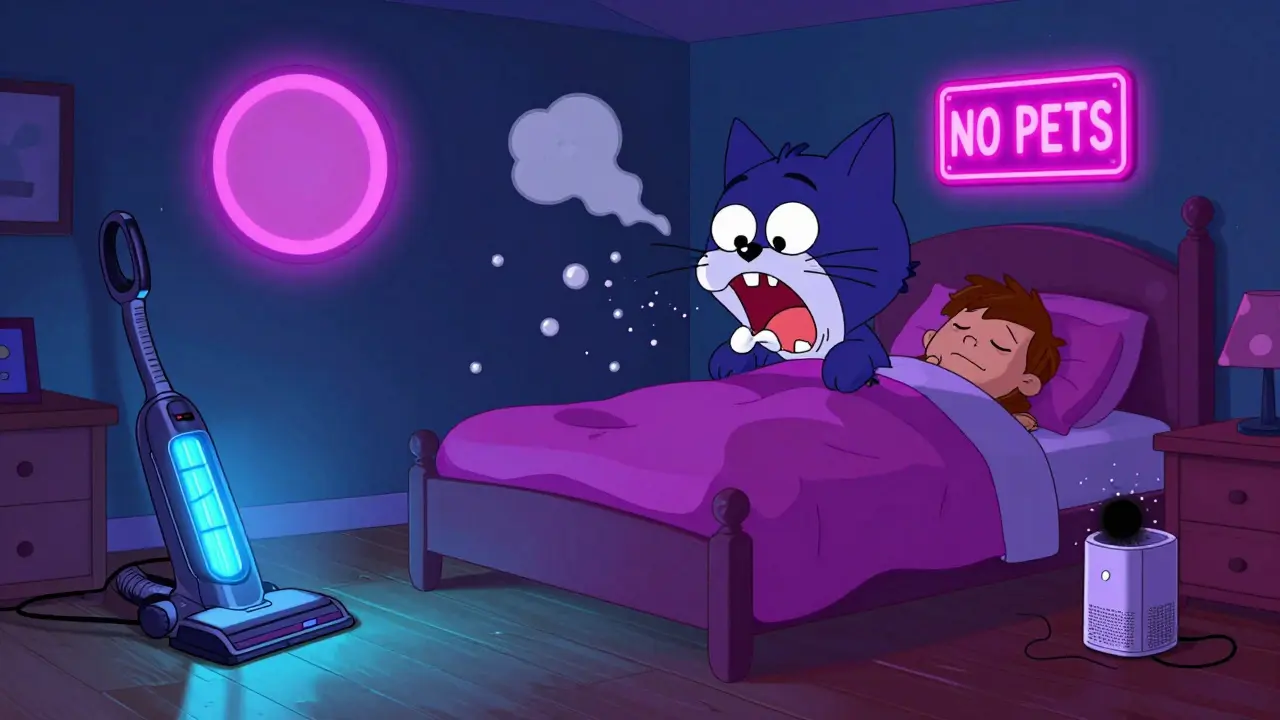
Living with pets and allergies doesn’t have to mean saying goodbye to your furry friend. Millions of people in the UK and beyond manage pet allergies every day - not by giving up their cats or dogs, but by making smart, science-backed changes around the house. The real culprit isn’t pet hair. It’s pet dander: microscopic flakes of skin, plus proteins from saliva and urine that stick to everything. These particles float in the air, cling to your clothes, and settle deep into carpets and couches. And once they’re there, they can hang around for months - even after the pet is gone.
Why Pet Dander Is So Hard to Beat
Cat and dog allergens are tiny, sticky, and light. The main one in cats is called Fel d 1, found in their skin glands and saliva. In dogs, it’s Can f 1. These proteins don’t just sit still. They get kicked up when your pet moves, cling to fabric, and travel on your clothes. That’s why you might sneeze in a room your dog hasn’t been in for days. Standard vacuums barely touch them. Most filters let particles under 5 microns slip through. But pet dander is often less than 2 microns - invisible to the naked eye and too small for regular filters to catch.Start with the Bedroom: The #1 Move That Works
The single most effective thing you can do is make your bedroom a pet-free zone. Studies show this cuts nighttime allergy symptoms by up to 40%. Why? Because you spend a third of your life there - and that’s when your body is trying to recover. If your pet sleeps on your bed, you’re breathing in allergens all night. Even if they only come in for a quick cuddle, the dander lingers on pillows, blankets, and sheets. Keep pets out completely. Use washable bedding and change it weekly at 130°F (54°C). That temperature kills allergens dead.Upgrade Your Vacuum: Not All Are Created Equal
If you’re still using a basic vacuum, you’re losing the battle. HEPA filters are the only ones that trap 99.97% of particles down to 0.3 microns - exactly the size of pet dander. Regular vacuums just blow allergens back into the air. A good HEPA vacuum can reduce allergens in your home by 30-50% compared to standard models. Look for sealed systems that prevent leaks. Vacuum at least twice a week, focusing on carpets, upholstery, and under furniture. Don’t forget the stairs and car seats. If your pet sheds heavily, daily vacuuming in high-traffic zones helps.Use an Air Purifier Where It Matters
Air purifiers with true HEPA filters don’t just clean the air - they pull allergens out of it. In a typical living room or bedroom, a properly sized unit can drop airborne pet allergens by 40-60%. Place it near where your pet spends most time, or in your bedroom if you can’t keep them out. Avoid ionizers or ozone generators - they don’t remove dander and can irritate lungs. Stick with HEPA-only models. Replace filters every 6-12 months. A good one costs between £100 and £250, but it pays off in fewer sneezes and better sleep.
Swap Carpets for Hard Floors
Carpet is a dander trap. Studies show it holds 50-75% more allergens than hardwood, laminate, or tile. If you can’t replace all your flooring, start with bedrooms and living areas. Use washable rugs instead. Sweep or damp-mop hard floors at least twice a week. Dry sweeping just stirs dust up. A slightly damp microfiber mop traps dander instead of spreading it. If you have area rugs, wash them weekly in hot water.Bathe Your Pet - Regularly
Washing your pet once a week removes up to 80% of allergens from their fur and skin. It sounds simple, but most people don’t do it. Cat owners say their pets hate baths - and they’re right. About 60% of cat owners skip weekly washing because it’s stressful. But there are alternatives: wet wipes designed for pets, dry shampoo sprays, or even brushing with a damp cloth daily. For dogs, regular baths with an allergen-reducing shampoo work well. Look for products labeled “anti-allergen” or “dander control.” Don’t use human shampoo - it strips natural oils and can make skin flake more.Control Dander on Furniture and Clothes
Your sofa and jacket are allergen magnets. Use lint rollers daily - they remove 70-85% of surface dander. Cover furniture with washable throws or slipcovers. Wash them weekly. Keep pet-free zones on the couch - maybe just one end where you sit. Change clothes after playing with your pet, especially before bed. Wash your hands right after touching them. That one habit cuts allergen transfer to your face by 90%.

OMG YES this is life-changing 😭 I used to wake up every morning like I’d been hit by a sneeze-bomb… then I made my bedroom pet-free and got a HEPA purifier. My sinuses are actually calm now. Also, wet-wiping my cat daily? Game. Changer. 🐱✨
Really solid advice here. I never realized how much dander clings to clothes until I started changing after playing with my dog. Now I keep a jacket by the door just for pet time. Small habit, huge difference.
Let me guess… the government’s been hiding the truth about pet dander since ’98. They don’t want you to know that allergens are just a distraction from the real issue: 5G microchips in pet food. 🧠📡 The real cure? Unplug your router, stop buying HEPA filters, and let your cat sleep on your face. It’s the only way your immune system wakes up. #WakeUpSheeple
Y’all need to stop overcomplicating this. I’ve got three dogs, a cat, and a toddler - and I just wipe everything down with a damp towel every morning, wash bedding in hot water, and keep the vacuum on a timer. No fancy gadgets. No stress. Just consistency. You don’t need to spend $500 - you just need to show up. 💪
Okay… but have you considered that maybe… the real problem is that humans shouldn’t have pets at all? 🤔 Like… we invented allergies because we’re just too lazy to live without emotional support creatures. Also, ‘hypoallergenic breeds’? LOL. That’s just marketing for people who think they can outsmart biology. 😒
It’s irresponsible to encourage people to keep pets when they’re allergic. You’re not just suffering - you’re exposing your body to chronic inflammation. That’s not ‘living with it’ - that’s self-harm dressed up as love. If you truly cared about your pet, you’d let it go to a home where it won’t be the cause of your suffering.
There’s a deeper truth here: we treat pets like furniture. We want them close, but we don’t want to clean up after them - emotionally or physically. The dander isn’t the problem. Our attachment is. We cling to the idea of unconditional love, but we won’t do the work to make that love sustainable. Maybe the real allergen is our denial.
Good tips! I live in India, and many people here think pets are only for rich families. But I have a small dog and I do all these things - wet mop daily, wash his paws after walks, no bed-sharing. It works. You don’t need expensive tools. Just care and routine. Everyone can do this.
HEPA filters? Yeah right. That’s just Big Pet’s way of keeping you hooked. Real Americans don’t need fancy vacuums - they just open a window and let the wind blow the ‘allergens’ away. Also, why are we letting cats dictate our home policies? Next they’ll tell us to ban dogs from the White House. 🇺🇸😤
Wait… you’re telling me I need to wash my cat? Like… every week? That’s not a solution, that’s a prison sentence. Also, why is the article written like a Walmart ad? ‘Buy this filter, save your life!’ Nah. Just move to Antarctica. No pets. No allergies. Problem solved.
Stop lying. Dander is a hoax. You’re allergic to stress. Get a dog. Be happy. End of story.