AUD Medication Relapse Risk Assessment
This assessment helps you understand your relapse risk when taking medication for alcohol use disorder. Medications like naltrexone, acamprosate, and disulfiram work best when combined with therapy and support. Your results will show your risk level and actionable steps to reduce relapse risk.
Your Relapse Risk Assessment
0
Why Taking Medication for Alcohol Use Disorder Can Backfire
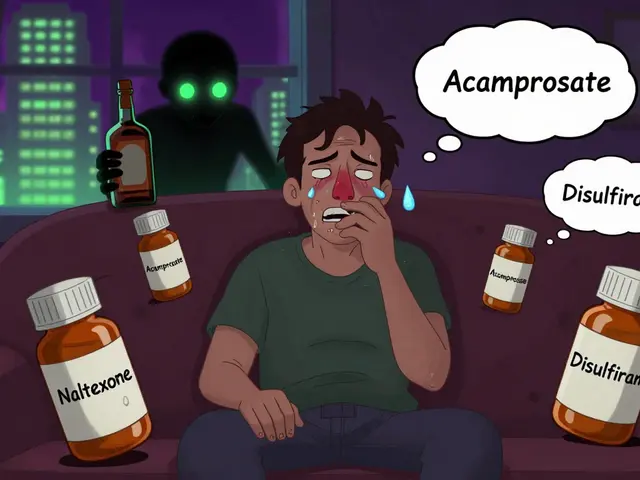
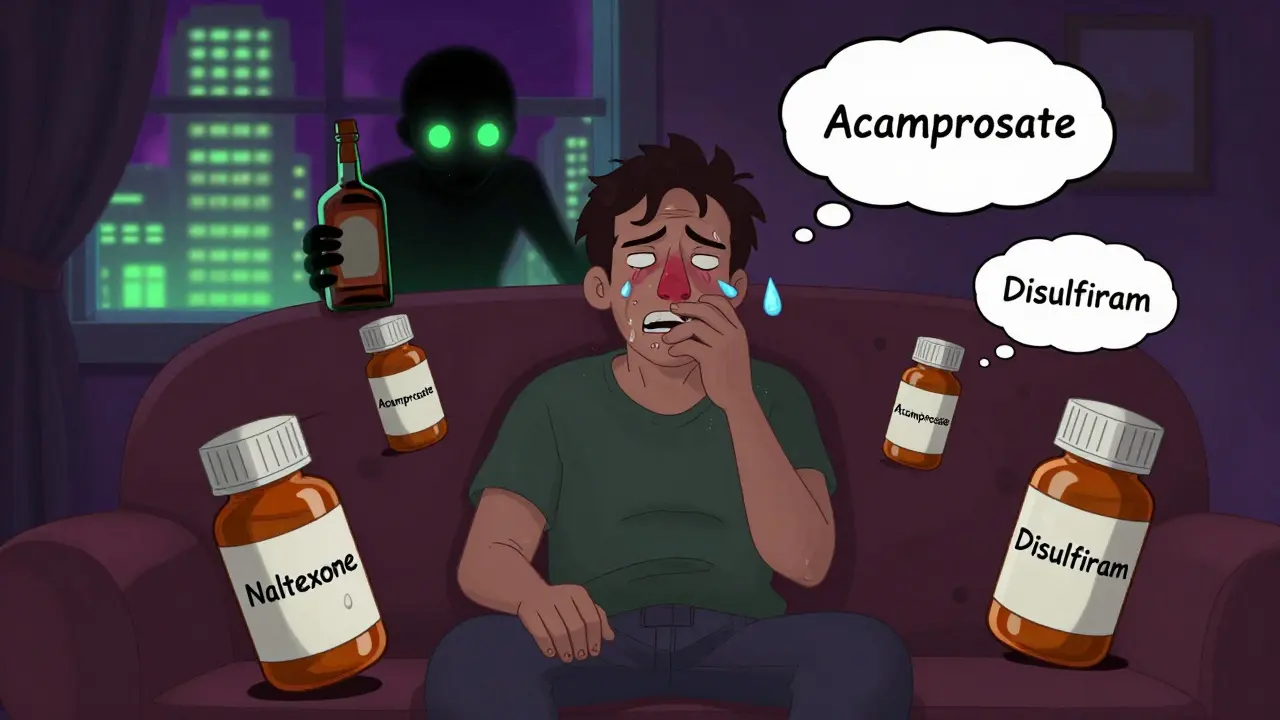
If you’re taking medication for alcohol use disorder, you might think you’re on the safe path to recovery. But here’s the hard truth: medications for AUD don’t guarantee success. In fact, for many people, they can make relapse more likely-if used the wrong way.
It’s not that the drugs don’t work. They do. Naltrexone, acamprosate, and disulfiram are FDA-approved, backed by decades of research, and shown in large studies to reduce heavy drinking and increase abstinence. But here’s what no one tells you: these medications only help when they’re used correctly. Miss a dose? Drink while on them? Skip therapy? The risk of falling back into old patterns spikes.
How the Main AUD Medications Actually Work
Not all AUD meds are the same. They don’t just "stop you from drinking." Each one works differently-and that changes who it helps the most.
Naltrexone blocks the pleasurable effects of alcohol by targeting opioid receptors in the brain. If you drink while on it, you don’t get that rush. That reduces cravings and cuts heavy drinking days by about 5-10%. It’s taken daily as a pill or as a monthly shot (Vivitrol). But if you stop taking it-even for a few days-your brain goes back to expecting that high. And when you drink again, the craving hits harder.
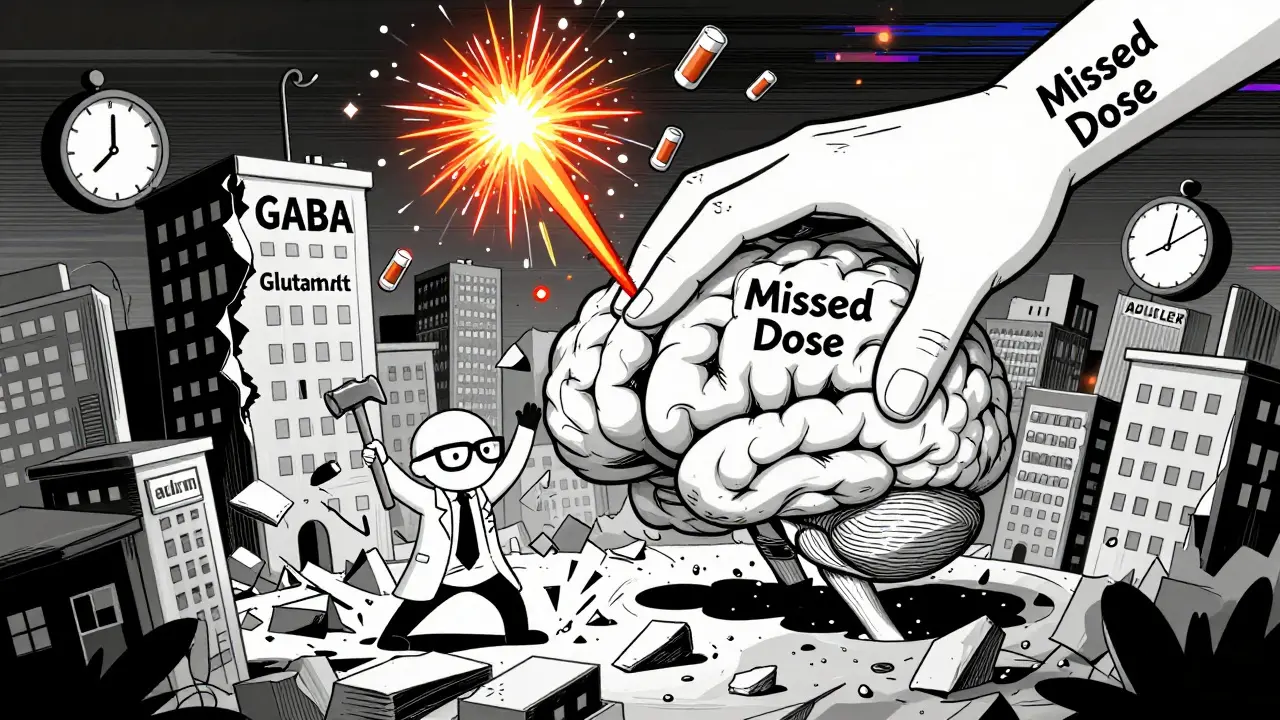
Acamprosate doesn’t block pleasure. It tries to fix the brain’s chemical imbalance after you stop drinking. Alcohol messes with glutamate and GABA. Acamprosate helps reset those systems. It’s most effective for people who’ve already stopped drinking and want to stay stopped. But here’s the catch: you can’t start it until you’ve been alcohol-free for 3-5 days. If you try to use it while still drinking, it does nothing. And if you miss doses, the brain doesn’t get the steady support it needs.
Disulfiram is the oldest option-and the most extreme. It makes your body react violently to alcohol: flushing, nausea, pounding heart, even low blood pressure. The idea? Make drinking so unpleasant you won’t do it. But this only works if you’re scared enough to avoid alcohol completely. And if you drink anyway? The reaction can be dangerous. Worse, many people stop taking it because of side effects like metallic taste or drowsiness. One study found nearly 3 out of 10 people quit disulfiram within the first month.
The Biggest Mistake People Make
The biggest reason these medications fail? People think they’re magic pills. They take them like vitamins-with no plan, no support, no change in habits.
Let’s say you’re on naltrexone. You take your pill every day. But you still go to the same bar. Still hang out with the same friends who drink. Still use alcohol to cope with stress. What happens? The craving doesn’t vanish. It just gets quieter. And when life gets hard-job loss, breakup, family fight-you reach for a drink. The medication didn’t protect you from your environment. It didn’t fix your coping skills. So you relapse.
Same with acamprosate. You take it religiously. But if you never go to counseling, never build a sober support network, never learn to sit with discomfort? The brain’s imbalance returns. And without tools to manage it, you drink again.
Studies show that people who take AUD meds and get therapy are twice as likely to stay sober as those who just take pills. The National Institute on Alcohol Abuse and Alcoholism found that only 8.6% of people with AUD even get prescribed medication. But even among those who do, only about a third are still taking it after three months. Why? Because it’s hard. And no one told them it’s not supposed to be easy.
When Medication Makes Relapse Worse
There’s a dangerous myth: "If I take the pill, I can drink a little." That’s not just wrong-it’s risky.
With naltrexone, some people think they can have one or two drinks because the pill will "block" the high. But the blocking effect isn’t perfect. And if you drink enough, the brain still gets the signal. You feel like the medication failed. You feel guilty. You think, "If this doesn’t work, nothing will." And that’s when you go all-in on drinking again.
With disulfiram, the risk is even more immediate. Some people think, "I’ll just take the pill and have one drink on the weekend." But the reaction can happen even with tiny amounts of alcohol-found in mouthwash, cough syrup, or even food cooked with wine. One man in a UK recovery group told me he ended up in the ER after eating a meal with a splash of soy sauce that had trace alcohol. He didn’t know. He didn’t think it counted.
Acamprosate users sometimes believe they can drink again once they’ve been sober for a while. But stopping the medication without a plan? That’s like turning off a life support machine. The brain doesn’t magically stay balanced. Without therapy, without structure, without new habits, the urge comes roaring back.
Who These Medications Work Best For
Not everyone benefits equally. Your history, your brain chemistry, your lifestyle-all of it matters.
Acamprosate works best for people who are highly motivated to quit completely, have already detoxed, and are willing to take it daily for months. It’s not for people who want to cut down-it’s for people who want to stop.
Naltrexone is better for people who still drink occasionally but want to cut back on heavy episodes. It’s also good for those who can’t commit to daily pills-monthly injections help with adherence. But you need to be willing to avoid binge triggers.
Disulfiram only works for people who are terrified of drinking again. It’s not for the ambivalent. It’s for the ones who’ve tried everything else and are desperate enough to fear alcohol more than they crave it. And even then, it needs constant supervision.
There’s also gabapentin-an off-label option gaining traction. It’s especially helpful for people with a history of severe withdrawal or anxiety. A 2020 trial showed 45% of high-symptom patients stayed abstinent on gabapentin, compared to 28% on placebo. And unlike naltrexone, it’s safe for people with liver damage. But it’s not FDA-approved for AUD, so most doctors won’t prescribe it unless other options fail.
What No One Tells You About Side Effects and Costs
People stop taking these meds because of side effects-and they’re not always minor.
Acamprosate causes diarrhea in over 10% of users. Nausea? That’s common with naltrexone. Disulfiram? Metallic taste, drowsiness, liver damage. One patient in Manchester told me he quit because he felt like he was "constantly sick" and couldn’t work.
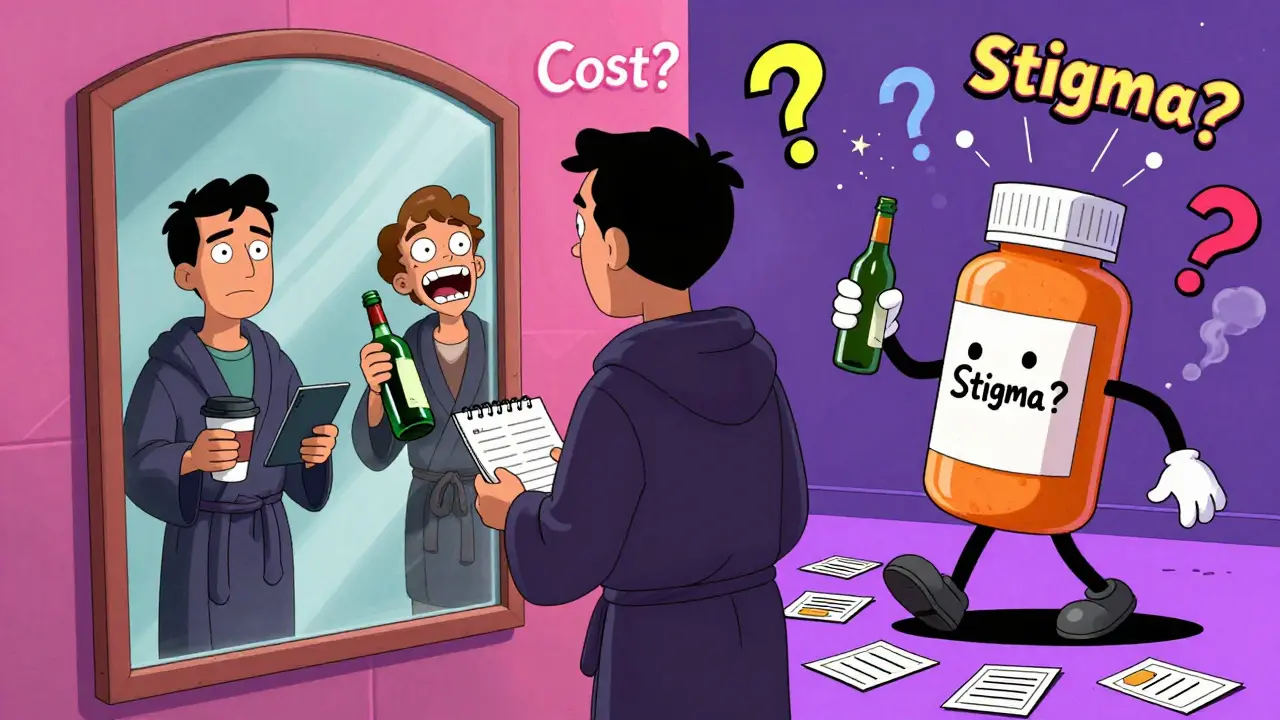
And cost? It’s a hidden barrier. Acamprosate and naltrexone cost $200-$400 a month-even as generics. That’s not cheap. Disulfiram is cheap-$20-$50 a month-but it’s the least used. Why? Because the real cost isn’t the pill. It’s the time, the therapy, the lost wages, the social isolation. And insurance? Many plans don’t cover AUD meds well. Or they require prior authorization. Or they won’t cover the monthly shot unless you’ve tried the pill first.
A 2021 study found that 42% of people who stopped taking AUD meds did so because of cost. That’s not laziness. That’s financial stress.
What Actually Works: The Real Recipe for Success
Here’s the secret: medication is just one piece. The real magic happens when you combine it with something else.
- Therapy: Cognitive behavioral therapy (CBT) helps you recognize triggers and build new responses. Motivational interviewing helps you find your own reason to stay sober.
- Support groups: Whether it’s AA, SMART Recovery, or a local group, being around people who get it changes everything.
- Structure: A daily routine-wake up, eat, exercise, meet a sponsor, go to a meeting-creates safety. Chaos invites relapse.
- Monitoring: Regular check-ins with your doctor. Liver tests for naltrexone. Kidney checks for acamprosate. No one should be on these meds without them.
One study showed that patients who got medication + weekly counseling had a 58% lower relapse rate than those who got medication alone. That’s not a small difference. That’s life-changing.
And here’s the kicker: the longer you stay on the medication, the better your odds. Acamprosate studies show benefits lasting up to a year after stopping. But only if you’ve built new habits by then.
What to Do If You’re Struggling
If you’re on a medication and you’re thinking about drinking again-don’t wait. Don’t feel ashamed. Don’t think you’ve failed.
Call your doctor. Talk to your counselor. Reach out to a support group. There are options.
Maybe you need a different medication. Maybe you need a higher dose. Maybe you need to switch from pills to the monthly shot. Maybe you need to add therapy you haven’t tried yet.
Or maybe you need to stop the medication-and start something else. Gabapentin. N-acetylcysteine. Even ketamine infusions, which are now being tested in clinical trials in the UK. There are more tools than ever.
But you don’t have to figure it out alone. The treatment gap isn’t just about access. It’s about stigma. It’s about thinking you’re weak for needing help. You’re not. You’re human.
Final Thought: Medication Isn’t the Finish Line
Recovery isn’t about taking a pill. It’s about rebuilding your life. Medications can help you get there. But they won’t carry you.
If you’re taking one of these drugs, ask yourself: Am I just trying to avoid the consequences of drinking? Or am I building something new?
The answer will tell you more about your risk of relapse than any blood test or prescription ever could.
Can I drink while taking naltrexone or acamprosate?
You shouldn’t. Naltrexone reduces the pleasurable effects of alcohol but doesn’t block all of them. Drinking while on it can lead to stronger cravings later. Acamprosate only works if you’re already abstinent-drinking while on it makes it useless. Neither medication protects you from alcohol’s damage to your body or brain.
Why do so many people stop taking AUD medications?
Cost, side effects, and lack of support. Many people don’t realize these meds need therapy to work. Others quit because they feel better and think they don’t need it anymore. But AUD is a chronic condition. Stopping too soon is one of the biggest reasons people relapse.
Is disulfiram safe if I have liver problems?
No. Disulfiram can cause serious liver damage, especially in people with existing liver disease. Doctors avoid prescribing it if you have cirrhosis or elevated liver enzymes. Safer alternatives like gabapentin or naltrexone (with monitoring) are preferred in these cases.
How long should I stay on AUD medication?
Most experts recommend at least 6-12 months. Some people benefit from longer use-up to several years. AUD is not a short-term problem. Medication is a tool to help you build lasting change. If you stop too early, your brain may revert to old patterns.
Can I switch from one AUD medication to another?
Yes, but not without medical guidance. Switching from naltrexone to acamprosate requires a clean break from alcohol first. Switching from disulfiram to naltrexone requires waiting at least 48 hours after your last disulfiram dose. Never switch on your own-there are risks of interaction or withdrawal.
What if my doctor won’t prescribe AUD medication?
You’re not alone. Only 28% of primary care doctors feel trained to prescribe these drugs. Ask for a referral to an addiction specialist or a clinic that focuses on substance use. You can also contact organizations like Alcohol Change UK or SAMHSA’s helpline for help finding providers who do.
What Comes Next
If you’re on medication for AUD, the next step isn’t just taking your pill. It’s asking: What else do I need to stay sober?
Find a therapist. Join a group. Talk to someone who’s been there. Build a routine. Monitor your progress. Don’t wait until you’re in crisis.
Recovery isn’t about perfection. It’s about persistence. And sometimes, the most powerful medicine isn’t the one in the bottle-it’s the one you build every day.