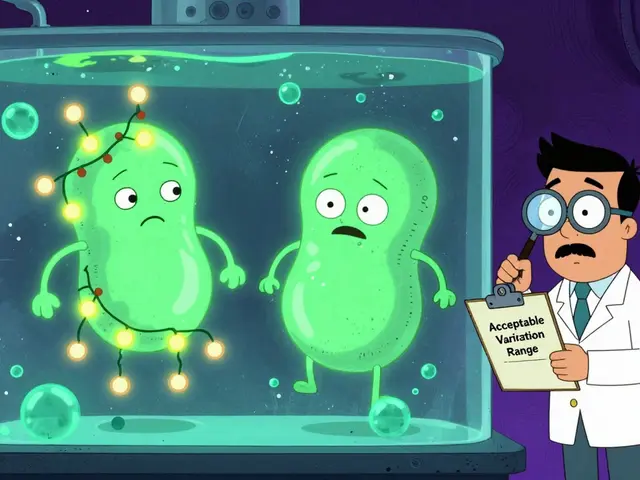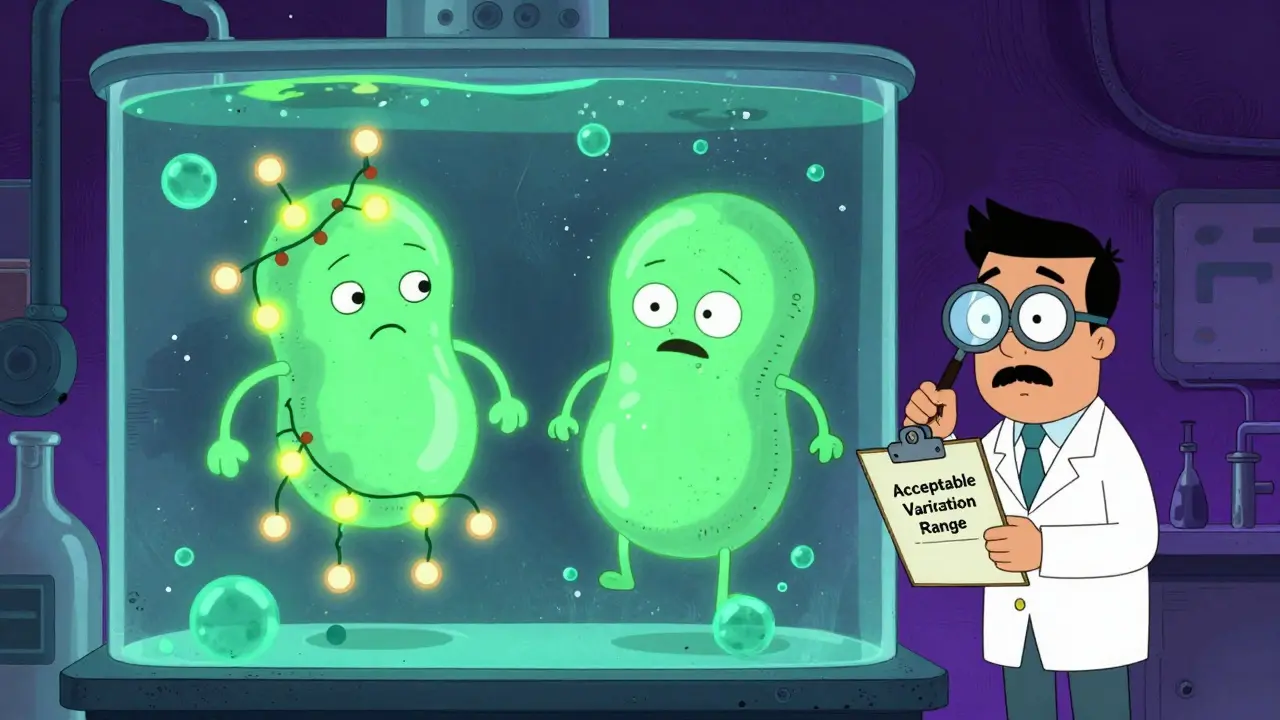
When you take a medication, you expect it to work the same way every time. But with biologics and biosimilars, that’s not about getting identical pills-it’s about getting consistent results from products that are naturally different from one batch to the next. This isn’t a flaw. It’s how these medicines are made.
What Is Lot-to-Lot Variability?
Lot-to-lot variability means that two batches of the same biologic drug-made months apart, in different tanks, with slightly different cell cultures-won’t be chemically identical. They’ll be highly similar, but not exact copies. That’s because biologics aren’t made in a chemistry lab like aspirin. They’re grown inside living cells-human or animal cells engineered to produce proteins like antibodies. These cells are alive, and they’re messy. They don’t produce one perfect copy. They produce millions of slightly different versions of the same protein.
The differences show up in tiny changes: extra sugar molecules stuck to the protein (called glycosylation), small shifts in amino acid chains, or minor folding errors. These aren’t random defects. They’re natural outcomes of biological systems. The U.S. Food and Drug Administration (FDA) says this variation is inherent-built into the process. A single lot of a biologic can contain millions of slightly altered versions of the same antibody. That’s normal. That’s expected.
Biosimilars vs. Generics: Why They’re Not the Same
If you’ve heard that biosimilars are like generics, you’ve been misled. Generics for pills like metformin or lisinopril are exact copies. Their chemical structure is simple, made from a single formula, and every tablet is identical. That’s why the FDA lets pharmacists swap them out without asking the doctor.
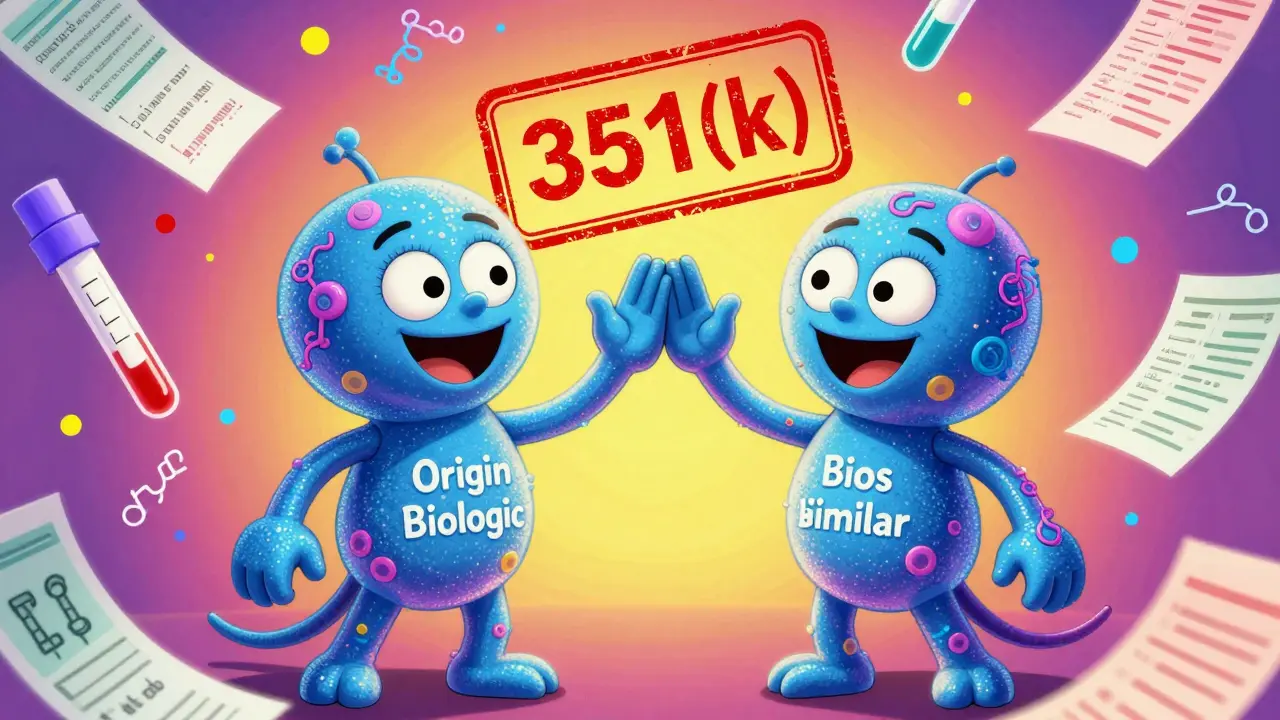
Biosimilars are different. They’re not copies-they’re similar. Think of them like identical twins. They look alike, have the same DNA, but one might have a slightly different hairline, or a different birthmark. The same goes for biosimilars. They’re made from living cells, so they naturally vary. The FDA requires manufacturers to prove their biosimilar matches the original biologic in structure, function, and clinical effect-despite the natural variation.
That’s why biosimilars go through a whole different approval path: the 351(k) pathway. It’s not just about showing the drug works. It’s about showing that the pattern of variation is the same as the original. That includes hundreds of analytical tests measuring things like sugar attachments, protein shape, and how the drug binds to its target.
How Do Regulators Make Sure These Variations Are Safe?
The FDA doesn’t ignore variability. They use it. They require manufacturers to prove they can control it. That means showing their manufacturing process is stable, consistent, and tightly monitored. Each lot must fall within a narrow range of variation-like a range of acceptable colors for a paint brand. Not every shade is identical, but they all look like the same color under normal light.
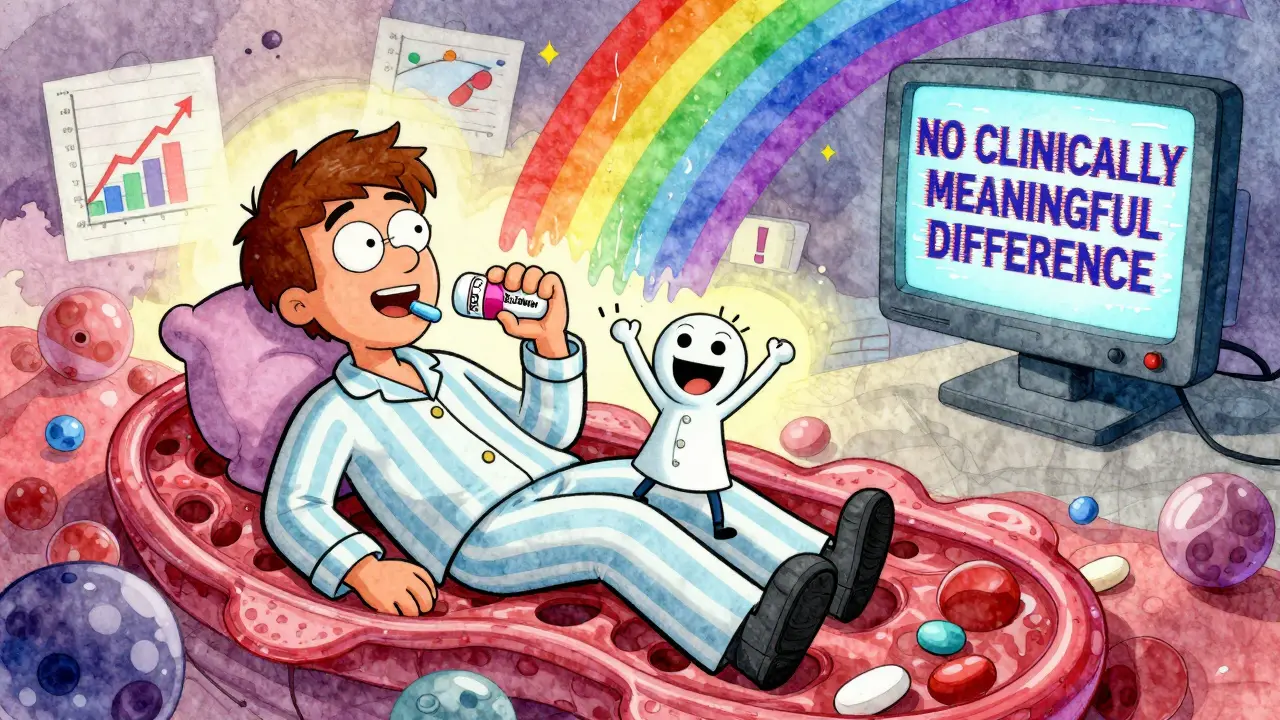
For a biosimilar to be approved, the FDA compares its entire profile to the reference product. They look at how the molecules behave in the lab, how they interact with immune cells, and how they perform in clinical trials. The goal isn’t perfection. It’s no clinically meaningful difference. That means: if a patient switches from the original biologic to the biosimilar, their blood sugar, inflammation levels, or tumor response shouldn’t change.
And it works. As of May 2024, 53 biosimilars are approved in the U.S., with 12 of them labeled “interchangeable.” That means pharmacists can swap them without a doctor’s permission-just like generics. That’s only possible because the data shows switching doesn’t hurt patients.
What Happens in the Lab? Real-World Challenges
Lot-to-lot variation isn’t just a drug issue. It’s a lab issue too. Diagnostic tests-like those measuring HbA1c for diabetes or cholesterol levels-rely on reagents that can change between lots. A 2022 survey found that 78% of lab directors see this as a major challenge. Why? Because the quality control samples used to check accuracy don’t always behave the same way as real patient samples.
Imagine this: a lab switches to a new reagent lot. The control samples look fine. But when they test actual patient blood, the results shift by 0.5%. That might seem tiny, but for someone managing diabetes, that could mean misclassifying their risk. Labs combat this by testing at least 20 patient samples with duplicate measurements before switching reagents. They also use moving averages-tracking the average result for a test over months-to spot slow drifts.
Smaller labs struggle most. Verifying a new reagent lot can take up to 20% of a technician’s time each quarter. That’s hours spent not doing other critical work. But skipping verification? That’s risking patient care.
Why This Matters for Patients
Some patients worry: if every batch is different, how do I know my medicine still works? The answer is simple: it does. Because variability is controlled, not ignored.
Take adalimumab, the original biologic used for rheumatoid arthritis. Its biosimilars-like Humira’s copies-are now widely used. Patients who switched reported no change in symptoms. No increase in side effects. No drop in effectiveness. That’s because the variation between the original and the biosimilar is smaller than the variation within the original’s own batches.
And the trend is clear: biosimilars now make up 32% of all biologic prescriptions in the U.S. by volume. They’re saving billions. More patients are getting access to life-changing treatments they couldn’t afford before. That’s only possible because science has learned to live with, and manage, natural variation.
The Future: More Complex, More Controlled
The next wave of biologics will be even more complex: antibody-drug conjugates, cell therapies, gene therapies. These aren’t just proteins-they’re living systems inside the body. Their variability will be greater, not less. But so will our ability to measure it.
Advanced tools like high-throughput mass spectrometry and AI-driven analytics are now spotting differences once invisible. The FDA’s “totality of evidence” approach means regulators don’t just look at one test. They look at hundreds-analytical, functional, clinical-to build a full picture.
By 2026, 70% of new biosimilar applications are expected to include data proving interchangeability. That’s up from 45% in 2023. It means more confidence. More switches. More savings. And yes-more acceptance of the fact that biological products aren’t meant to be perfect. They’re meant to be reliable.
Bottom Line: Variation Isn’t a Flaw-It’s a Feature
Lot-to-lot variability isn’t something to fear. It’s something to understand. It’s why biologics can treat diseases that small-molecule drugs can’t. It’s why biosimilars exist. And it’s why regulators don’t demand perfection-they demand proof that the variation stays within safe, predictable limits.
When you take a biosimilar, you’re not getting a cheap knockoff. You’re getting a medicine that’s been proven to work just as well as the original-even if it’s not chemically identical. That’s science. That’s safety. And that’s the future of affordable biologic care.