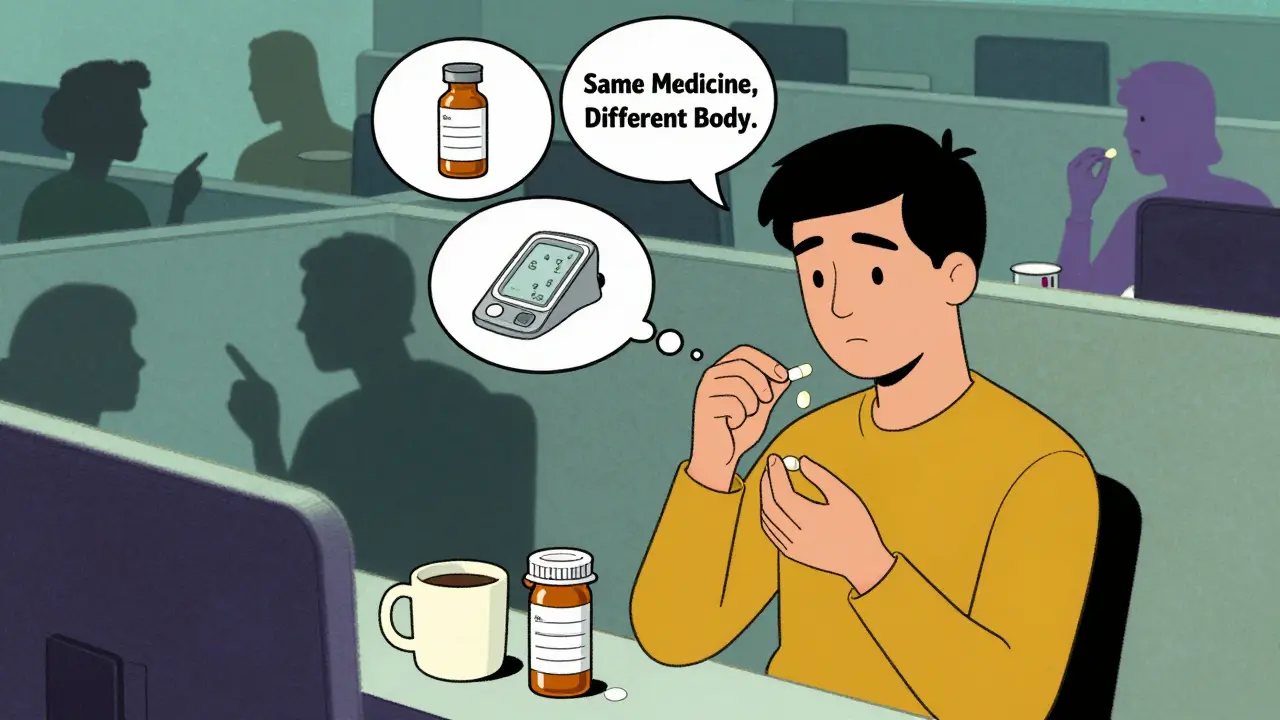
When someone says they take medication for anxiety or depression, too often the response isn’t support-it’s silence, judgment, or worse, a joke. This isn’t just awkward. It’s dangerous. Stigma around mental health medications stops people from getting the care they need. And it’s not just out there in the world-it shows up in doctor’s offices, workplaces, even in our own heads.
Why Mental Health Medications Are Stigmatized
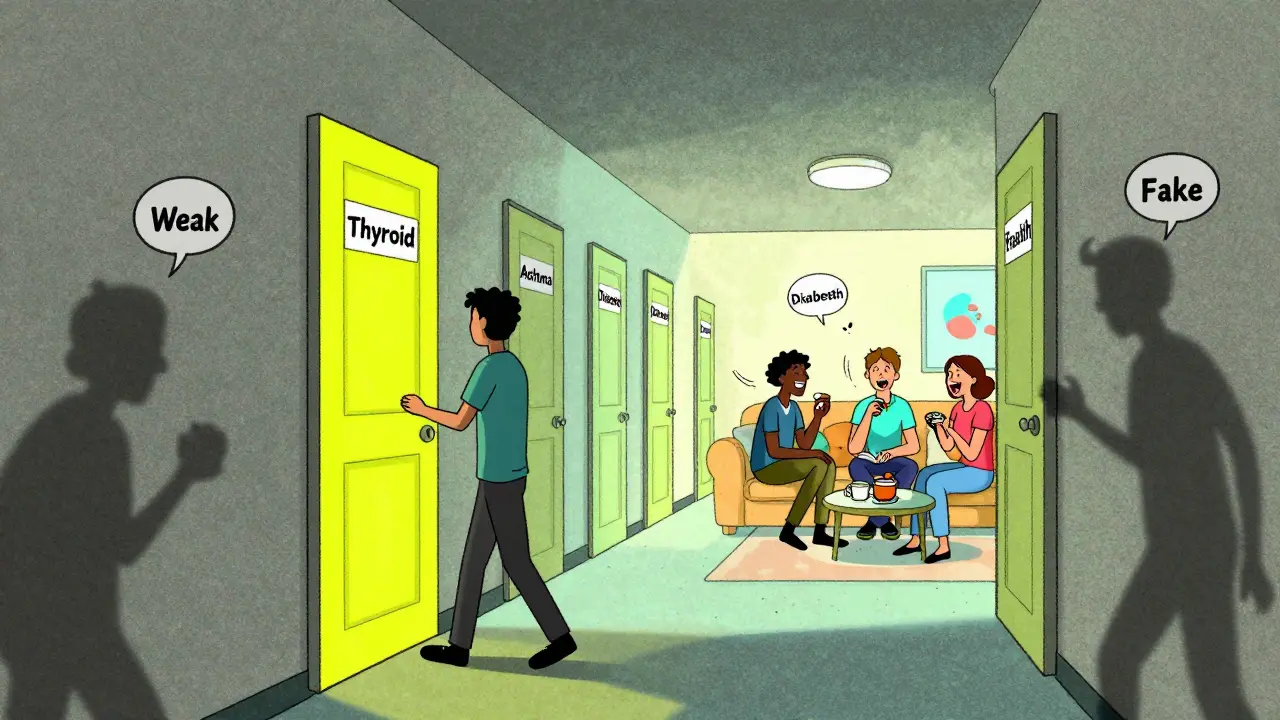
People don’t usually mean to be cruel. But many still believe taking pills for depression or bipolar disorder means you’re weak, broken, or somehow not trying hard enough. Some think these medications are like street drugs-something you take to escape, not heal. Others worry they’ll change your personality, make you numb, or turn you into someone you’re not. The truth? Psychiatric medications work like insulin for diabetes or blood pressure pills for heart disease. They correct chemical imbalances in the brain. Over 150 of them are FDA-approved. For moderate to severe depression, studies show 70-80% of people need medication plus therapy to get better. Yet, 56% of adults with mental illness don’t get treatment at all-and stigma is the top reason. Here’s what’s really happening: people feel ashamed. They hide their pills. They skip doses. They avoid telling coworkers, friends, even family. A 2023 study found 25% of people stop antidepressants within 30 days because they’re embarrassed. Another found 68% won’t tell their employer they’re on medication-even if it helps them show up to work.Language Matters More Than You Think
The words we use shape how we feel. Saying “I’m on meds” sounds casual. But “I’m taking medication for my depression” sounds like medical care. Research shows that just swapping “meds” or “drugs” for “medication” or “treatment” reduces stigma by 41% in conversations. Think about how you talk about other chronic conditions. You don’t say, “I’m on heart pills.” You say, “I take medication for high blood pressure.” Same thing applies here. When you say “brain health,” not “mental breakdown,” it changes the whole tone. Doctors and nurses are learning this too. A 2022 study found that providers who used person-first language-“a person with depression,” not “a depressed person”-saw 27% less patient shame. The American Psychiatric Association now trains staff to say: “You’re taking medication to help balance your brain chemistry,” not “You need to get off these drugs.”How to Normalize It in Everyday Conversations
You don’t need to give a speech. You don’t need to go public on social media. Small, honest phrases make the biggest difference. Try these:- “I take medication for my anxiety. It’s like how some people take pills for their thyroid.”
- “My brain needs extra support sometimes. That’s okay.”
- “I’m not taking this because I’m weak-I’m taking it because I want to feel better.”
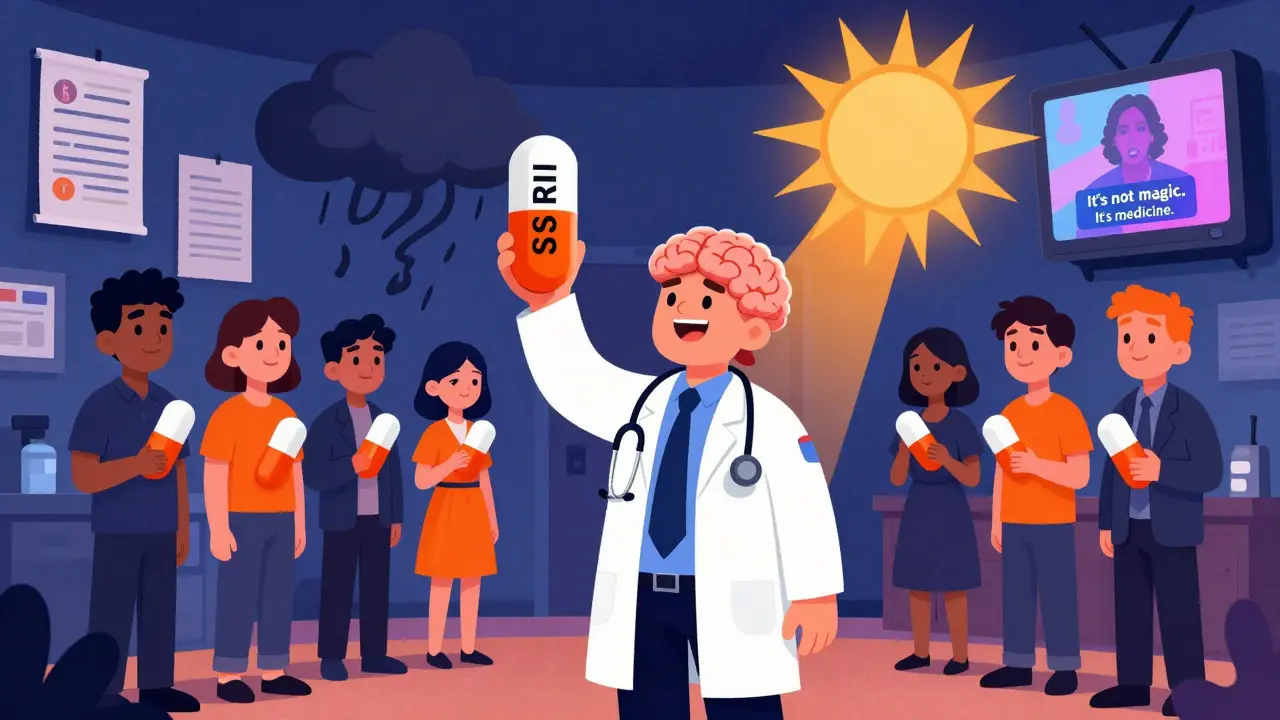
- “It’s not magic. It’s medicine.”
What Providers Can Do (And Should Be Doing)
Healthcare providers hold a lot of power here. When a doctor says, “This is part of your treatment plan,” it carries weight. When they say, “Lots of people take this,” it normalizes it. The Mayo Clinic recommends a simple three-step approach:- Normalize: “Many people take medication for mental health. It’s as common as taking blood pressure pills.”
- Educate: “This helps your brain chemistry return to balance-like how insulin helps your body use sugar.”
- Personalize: “For me, it means I can get through the day without feeling overwhelmed.”
When You’re the One Taking the Medication
If you’re on medication and you’re scared to talk about it, you’re not alone. Young adults (18-25) are the most likely to feel embarrassed-57% admit they hide their pills in public. Here’s what helps:- Keep your medication in its original bottle. It looks medical, not suspicious.
- Practice saying it out loud. Say it in the mirror. Say it to a friend. Say it like you’re talking about a vitamin.
- Remember: you’re not asking for permission to be sick. You’re claiming your right to be well.
What Doesn’t Work (And Why)
Not every “awareness” campaign helps. Some well-meaning efforts backfire. For example, simulation exercises that try to make people “feel what it’s like” to hear voices or have hallucinations sometimes increase fear-not empathy. One study showed stigma rose by 15% after these sessions because they focused on extreme symptoms instead of daily life. Also, telling people “mental illness is just like cancer” can feel dismissive. It’s not the same. It’s not better or worse. It’s different. And that’s okay. The real fix? Show real stories. Real people. Real results. YouTube creator John Green, with over 2 million subscribers, talks openly about his SSRIs. His audience survey found 68% of viewers felt less ashamed after watching. Why? Because he didn’t preach. He just shared his life.What’s Changing-And What’s Next
The tide is turning. The CDC launched a “Medications as Medicine” campaign that reframes psychiatric drugs as part of chronic disease care. In pilot communities, positive attitudes rose by 21%. More antidepressants are being prescribed in primary care than ever before. By 2026, 65% of these prescriptions will come from general doctors-not psychiatrists. That’s huge. When your GP prescribes your medication, it stops feeling like “mental health care.” It becomes part of your health care. Digital tools are helping too. The SAMHSA “Medication Conversation Starter” app has been downloaded over 150,000 times. It gives you ready-to-use lines for when someone says something hurtful: “I know it’s not what you’re used to, but this helps me function.” And now, researchers are testing “Medication Normalization Training” in 15 community clinics. Early results show staff stigma dropped by 29% after just 6 weeks.It’s Not About Being Perfect
You don’t have to be loud. You don’t have to post on Instagram. You don’t have to convince everyone. You just have to start talking-quietly, honestly, consistently. Because every time you say, “I take medication for my brain,” you’re not just speaking for yourself. You’re making space for someone else to say it too. The goal isn’t to end stigma overnight. It’s to chip away at it-one conversation at a time.Why is there so much stigma around mental health medications?
Stigma comes from old myths-that these medications are addictive, make you weak, or aren’t "real" medicine. Many people confuse them with recreational drugs. But research shows they work like insulin or blood pressure pills: they fix chemical imbalances. Still, 32% of people avoid treatment because of this stigma, and 25% quit meds within a month due to shame.
How can I talk about my medication without feeling ashamed?
Start by comparing it to other health treatments: "I take medication for my brain the way someone else takes it for their heart." Use the word "medication," not "pills" or "drugs." Practice saying it out loud. Keep your meds in the original bottle. You’re not asking for permission-you’re claiming your right to care.
Do doctors still judge patients who take psychiatric meds?
Some still do. A 2021 study found 22% of primary care doctors held negative views about patients requesting psychiatric meds. But training changes that. Providers who complete 8+ hours of cultural competency training reduce stigma by 29%. Normalizing language and integrating mental health into primary care are making a big difference.
Is it safe to tell my employer I’m on mental health medication?
It’s your choice. But 43% of people who disclosed their meds faced some form of discrimination-like being passed over for promotions. You’re not legally required to tell them. If you do, frame it as part of managing your health: "I take medication to stay focused and healthy, just like I would for any other condition."
What’s the most effective way to reduce stigma?
Contact-based education works best-when people hear real stories from others who take medication. A 2023 study showed 22% more people intended to stick with treatment after hearing lived experiences. Normalizing language, integrating care into primary settings, and provider training are also proven strategies. Avoid fear-based tactics like hallucination simulations-they can make stigma worse.
Can I still take my medication if I’m worried about side effects?
Yes. Side effects are common, but they’re often temporary. Most people find what works after trying one or two options. Talk to your doctor about your concerns. Don’t stop because of stigma. Medication isn’t a last resort-it’s a tool. Many people feel better within weeks. And for moderate to severe depression, 70-80% need it to fully recover.
Interesting piece. I’ve worked in mental health services in the UK for over a decade, and the language shift from "drugs" to "medication" really does change the tone. Patients respond better when it’s framed as treatment, not weakness. It’s subtle, but it matters.
One nurse I trained used to say, "This helps your brain do what it’s meant to do," and suddenly people stopped hiding their prescriptions in their sock drawers.
Small changes, big impact.
Let me tell you something real-my sister was on SSRIs for three years. She didn’t tell anyone except her therapist until she started saying "I take medication for my brain chemistry" instead of "I’m on antidepressants."
Her mom stopped crying. Her coworkers stopped asking if she was "fixed" yet. Her boss gave her a raise. Not because she worked harder-but because she stopped sounding like she was apologizing for existing.
This isn’t just semantics. It’s survival.
And yeah, 70-80% of people with moderate depression need meds. That’s not a statistic. That’s your cousin. Your roommate. Your damn brother.
OMG I’m so done with people acting like taking meds is cheating. I’ve been on anxiety pills since I was 19 and I still get told "just meditate more." Like my brain is a glitchy phone and I just need to restart it. UGH.
There’s something poetic about the fact that we treat brain chemistry like it’s less real than blood sugar. We’ll hand out insulin like candy but act like SSRIs are some kind of spiritual failure.
It’s not that people are evil-they’re just misinformed. And misinformation thrives in silence.
That’s why I say "I take medication to regulate my neurotransmitters" at dinner parties. Not to impress. To disrupt. And sometimes, someone will whisper back, "Me too." And that’s the moment the stigma cracks.
My dad used to say, "If your pancreas needs help, you take insulin. If your brain needs help, you take meds. Same thing, different organ."
He didn’t know about studies or statistics. He just knew his daughter was alive again after three years of hiding in bed.
That’s all it takes sometimes-someone who doesn’t treat your brain like it’s a dirty secret.
Look, I get why people say this stuff. But let’s be real-pharma is pushing these meds like candy. They don’t care if you feel better, they care if you stay on them forever.
I’ve seen people go from "I’m on a low dose" to "I’m on five different psych meds" in six months. Who’s really helping here?
And don’t even get me started on how doctors just hand out prescriptions like they’re free samples. This isn’t medicine-it’s a business model wrapped in woke language.
In India, we don’t talk about this at all. My cousin took pills for depression for two years in silence. Her family thought she was "lazy." When she finally told her aunt, the aunt said, "You just need more prayer."
But last year, my nephew started saying, "My brain needs support like my body needs water." He’s 14. He learned it from a YouTube video.
Change doesn’t come from speeches. It comes from kids who refuse to be ashamed.
Y’all are acting like this is some revolutionary idea. In America, we’ve been told to take pills for everything since the 90s. ADHD, anxiety, depression, insomnia-you name it, Big Pharma’s got a pill for it.
And now you want us to feel good about it? Like it’s normal? It’s not normal. It’s a symptom of a broken system where therapy costs $200/hour and the only thing accessible is a script.
Stop romanticizing pills. Fix the system.
Oh please. "I take medication for my brain chemistry"-how cute. You think saying it nicely makes it less pathetic? You’re not fixing your brain, you’re outsourcing your emotional labor to a chemical.
And don’t get me started on the people who treat SSRIs like a personality upgrade. You’re not a better version of yourself-you’re a chemically altered version.
Real growth doesn’t come in a bottle. It comes from facing your trauma. Not masking it.
There is a profound dignity in acknowledging one’s vulnerability and choosing to treat it with care. To say, "I need help to function," is not weakness-it is the quiet courage of a soul refusing to surrender.
Stigma arises not from ignorance alone, but from the fear that if we accept this, we must also accept our own fragility.
Perhaps the greatest act of healing is not the medication, but the moment we stop pretending we don’t need it.
Thank you for this. It is not just informative-it is an act of communal grace.
My mate took meds for depression and now he’s like a totally different bloke. Happy, focused, even laughs at his own jokes. Used to be a zombie on the couch. Now he’s running marathons.
So yeah, I’m gonna say it loud: pills ain’t the enemy. Silence is.