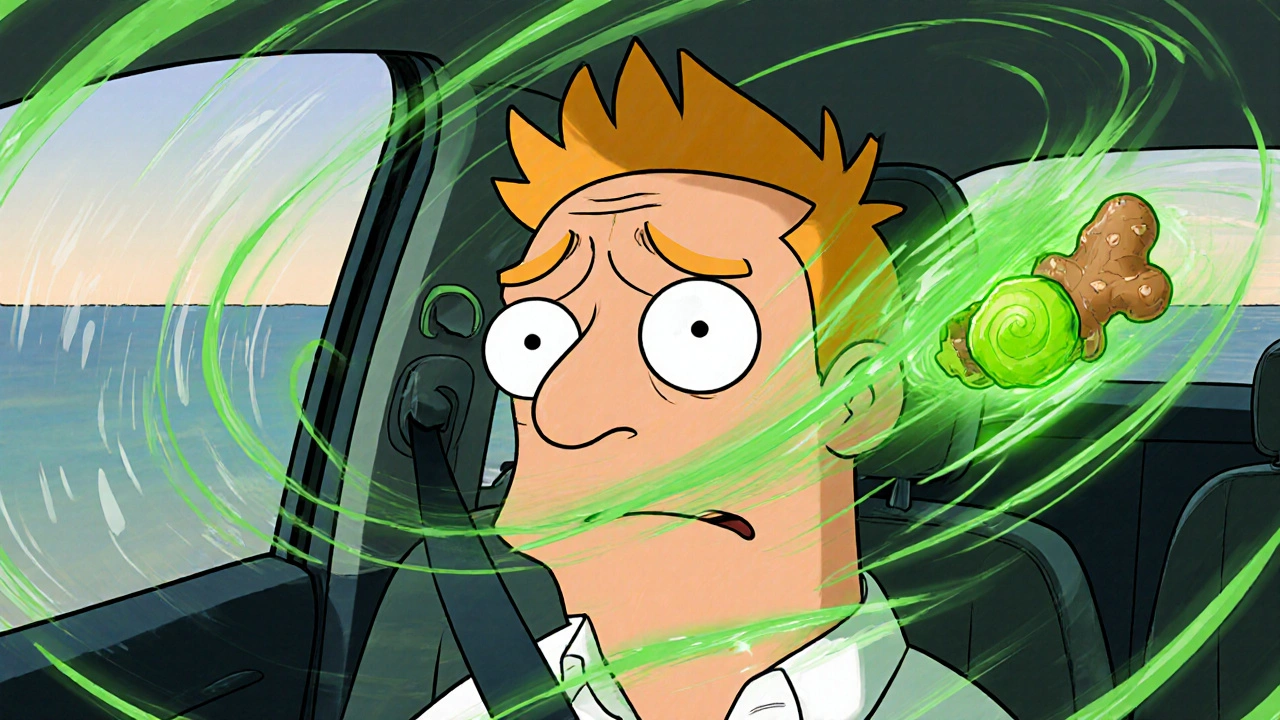
Halfway through the drive, your stomach turns. Your head feels heavy. The scenery blurs. You’re not alone-motion sickness affects up to 30% of travelers on road trips, and it doesn’t care if you’re a seasoned driver or a first-time passenger. The good news? You don’t have to suffer through it. With the right strategies, you can stop motion sickness before it starts-or at least make it bearable.
Understand Why Motion Sickness Happens
Motion sickness isn’t just "feeling queasy." It’s your brain getting mixed signals. Your eyes see the inside of the car, your inner ear feels the motion, and your body feels still. That mismatch confuses your brain, triggering nausea, sweating, dizziness, and sometimes vomiting. It’s not weakness. It’s biology. Kids between 2 and 12 are most affected, but adults aren’t immune-especially if they’re tired, stressed, or haven’t eaten.
Choose the Right Seat
Where you sit makes a huge difference. Front seats are better than back seats. Why? You get a clearer view of the road ahead. Your eyes and inner ear sync up. If you’re driving, you’re even less likely to get sick because you’re actively controlling the motion.
If you’re riding shotgun, sit in the front passenger seat. Keep your eyes focused on the horizon-on the road ahead, not on your phone or book. If you must sit in the back, choose the middle seat. It moves the least. Avoid the rear-facing seats entirely. They make motion sickness worse because your body feels movement your eyes can’t see.
Keep Your Eyes on the Horizon
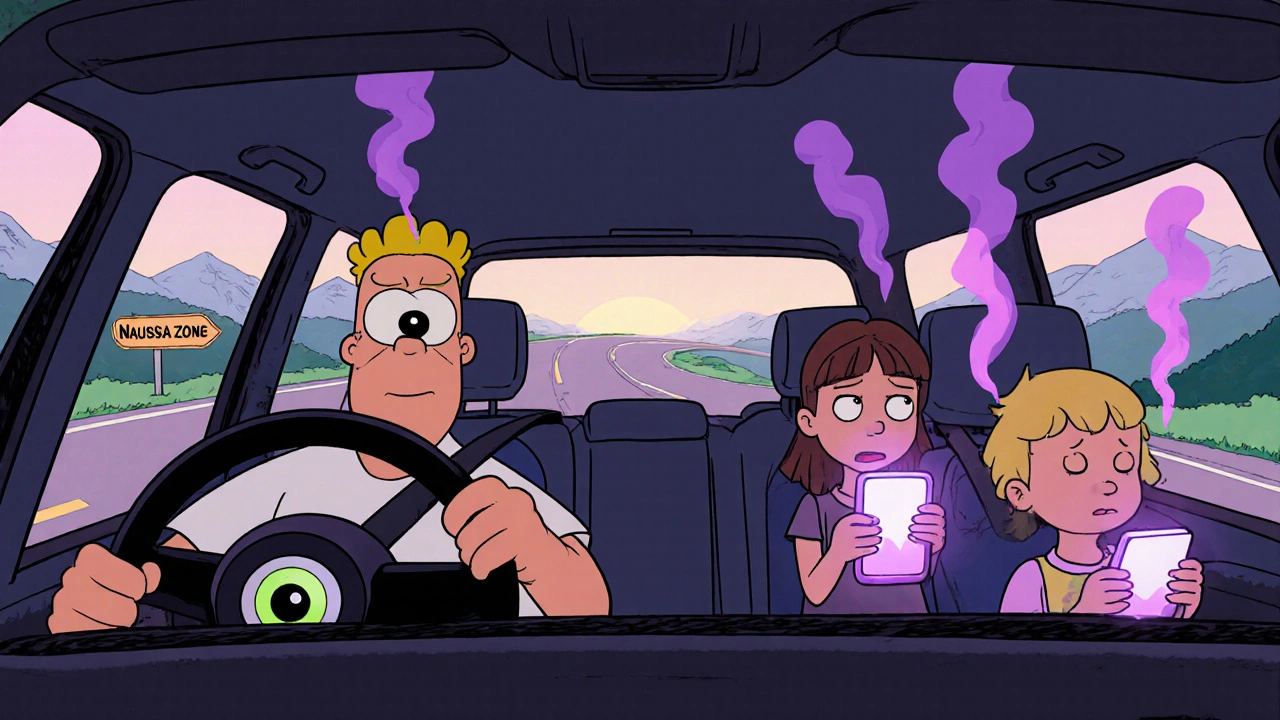
Looking at your phone, tablet, or book is the #1 trigger for motion sickness. Your eyes are locked on a stationary object while your body feels the car moving. That’s the exact mismatch your brain hates.
Instead, stare at something far away-the road, the mountains, the sky. If you’re a passenger, tilt your head back slightly and look straight ahead. This helps your visual system match what your inner ear is sensing. Even closing your eyes helps some people, because it removes the conflicting visual input. But don’t read. Don’t scroll. Don’t play games. That’s the rule.
Control the Airflow
Stale air makes nausea worse. Fresh air is one of the simplest, free remedies. Open a window-even just an inch. Let cool air flow across your face. It helps reset your senses and reduces the stuffy, claustrophobic feeling that triggers nausea.
If you can’t open windows, use the air conditioning on fresh air mode, not recirculate. Avoid strong smells like perfume, food, or exhaust fumes. These can trigger vomiting even if you’re not yet sick. Keep a bottle of water nearby and sip it slowly. Dehydration makes motion sickness worse.
Eat Smart Before and During the Trip
Don’t travel on an empty stomach. Don’t eat a greasy burger right before leaving, either. The sweet spot is a light, bland meal 1-2 hours before you drive. Think toast, crackers, bananas, or oatmeal. Avoid dairy, spicy food, caffeine, and alcohol. These irritate your stomach and make nausea more likely.
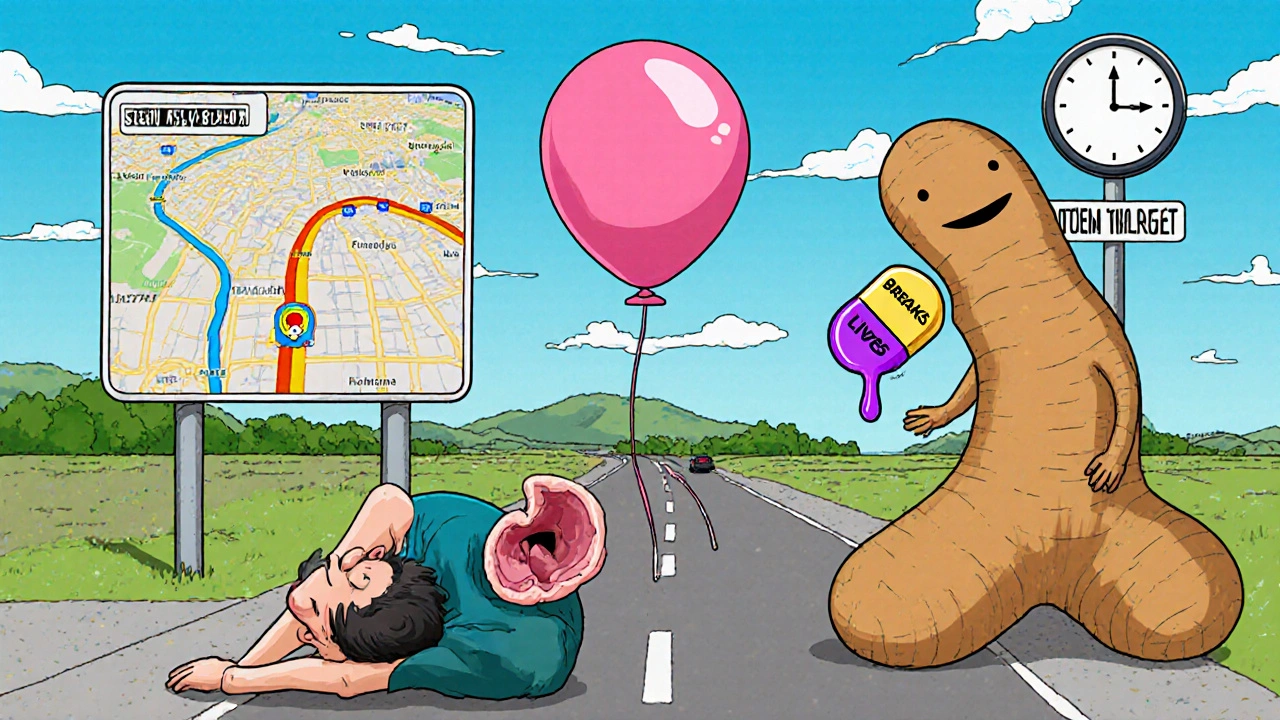
During the trip, snack on dry crackers or ginger candies. Ginger is one of the few natural remedies with real science behind it. A 2012 study in the Journal of Travel Medicine found that ginger reduced nausea in 75% of participants with motion sickness. Keep a small bag of ginger chews or a ginger tea bag handy. Sip slowly. Don’t overdo it-too much ginger can cause heartburn.
Use Pressure Points and Natural Tools
Wristbands that apply pressure to the P6 acupressure point (on the inside of your wrist, about three fingers below your palm) are widely used. Brands like Sea-Bands have been around for decades. Studies show mixed results, but many travelers swear by them. They’re drug-free, reusable, and safe for kids and pregnant women.
Try this: Press your thumb firmly into the spot between your two tendons on the inside of your wrist. Hold for 30 seconds. Do it every hour or when you feel queasy. It’s not magic, but it’s low-risk and worth trying.
Consider Medications-But Use Them Wisely
If natural methods aren’t enough, medication can help. Over-the-counter options like dimenhydrinate (Dramamine) or meclizine (Bonine) work well. But they come with trade-offs: drowsiness, dry mouth, blurred vision. Take them 30-60 minutes before you start driving. Don’t mix them with alcohol.
Scopolamine patches are stronger. They’re applied behind the ear and last up to 72 hours. They’re effective, but not for everyone. Side effects include dry mouth, dizziness, and blurred vision. Don’t use them if you have glaucoma or urinary problems. Always check with a pharmacist before using any motion sickness drug, especially if you’re pregnant, elderly, or on other meds.
Don’t rely on medication as your first line of defense. Use it as backup. The goal is to reduce your dependence on pills over time by training your body with better habits.
Plan Your Route and Breaks
Long, winding roads are the worst. If possible, choose highways with fewer curves. Avoid mountain roads if you’re prone to motion sickness. GPS apps like Google Maps now show road curvature-use that feature to pick the smoothest route.
Take breaks every 90 minutes. Get out of the car. Walk around. Stretch. Breathe deeply. Look at the sky. This resets your inner ear and gives your brain a chance to recalibrate. Even a five-minute stop can make a big difference.
Prepare for Kids and Elderly Travelers
Kids get motion sickness more often-and they can’t always explain what they’re feeling. Watch for signs: yawning, pale skin, sweating, sudden quietness. Keep them distracted with music or audiobooks, not screens. Give them ginger chews or crackers. Seat them in the middle of the back seat, where movement is minimal.
Elderly travelers may be more sensitive due to changes in balance and vision. Avoid sudden stops and sharp turns. Keep the cabin cool and quiet. If they take medications for blood pressure or vertigo, check with their doctor-some drugs can worsen motion sickness.
What Not to Do
- Don’t sit in the back seat facing backward.
- Don’t read, watch videos, or use your phone while moving.
- Don’t eat heavy, greasy, or spicy meals before driving.
- Don’t ignore early signs of nausea-act fast.
- Don’t drink alcohol or take sedatives before a trip.
What Works Best-The Quick Checklist
Here’s your simple pre-trip checklist:
- Choose the front seat or middle back seat.
- Look at the horizon-never at screens or books.
- Open a window for fresh air.
- Eat a light, bland snack 1-2 hours before leaving.
- Bring ginger chews or tea.
- Use acupressure bands if you’re prone to nausea.
- Plan breaks every 90 minutes.
- Keep meds as backup-not your first plan.
When to See a Doctor
If motion sickness happens on every trip, even short ones, or if it’s accompanied by severe dizziness, hearing loss, or double vision, it might be something else-like an inner ear disorder or vestibular migraine. Talk to a doctor. They can rule out other conditions and suggest targeted treatments.
Most people, though, just need better habits. Motion sickness isn’t a life sentence. With a few smart changes, your next road trip can be calm, comfortable, and nausea-free.
Can motion sickness be cured?
There’s no permanent cure, but most people learn to manage it well. With repeated exposure and better habits-like sitting in the front seat, avoiding screens, and using ginger-many find their symptoms lessen over time. Some adults even outgrow it completely.
Is motion sickness dangerous?
Not usually. It’s uncomfortable, but not life-threatening. However, vomiting while driving is dangerous. If you feel sick behind the wheel, pull over safely. Never ignore dizziness or loss of balance-it could signal something else, like an inner ear issue.
Do children outgrow motion sickness?
Yes, most do. Motion sickness is most common between ages 2 and 12. As the vestibular system matures, sensitivity drops. By the teen years, many no longer get sick in cars. Still, some remain sensitive into adulthood.
Can I use essential oils for motion sickness?
Some people report relief from peppermint or lavender oil, but there’s no strong scientific proof. If you use them, dab a drop on a tissue and inhale-don’t apply directly to skin. Avoid them around children and pets. Ginger and fresh air are more reliable.
Is it better to drive or ride as a passenger?
Driving is usually better. When you control the vehicle, your brain anticipates motion, which reduces the sensory conflict. Passengers are more likely to get sick, especially if they’re looking down or reading. If you’re prone to motion sickness, drive when you can.
Look i get it you wanna sound smart with your acupressure bands and ginger chews but let me tell you something the real fix is just stop being a baby and look out the window like a normal person. No one in my family ever got sick on road trips because we didn't coddle ourselves with gimmicks. You think science backs this? Nah. It's just weak people making excuses.
While the article presents a comprehensive overview of motion sickness mitigation strategies, it is imperative to note that the efficacy of non-pharmacological interventions remains empirically inconsistent. The assertion regarding acupressure bands, for instance, lacks statistical robustness in peer-reviewed literature. Furthermore, the recommendation to consume ginger lacks a controlled dosage specification, rendering it clinically ambiguous.
Okay but real talk-have you tried the trick where you put a cold washcloth on your neck? It’s not in the article but it’s been a game changer for me. Also, if you’re driving, keep the AC on 72 and blast some lo-fi beats. Don’t underestimate how much noise and temperature affect your vestibular system. I used to puke every time, now I’m fine. Just small tweaks.
This is so helpful! I’m from India and we never had this issue until we started taking long highway trips. The part about not reading in the car? 100% true. My cousin used to read novels and would collapse every time. Now we play audio stories and open the window. Also, ginger tea from the roadside stalls works better than anything bought in stores. Just sayin’.
It’s fascinating how the body interprets motion as a threat when sensory inputs conflict. The brain, in its evolutionary wisdom, interprets this mismatch as potential neurotoxin exposure-hence nausea, the body’s primitive purge mechanism. We’ve outgrown the need to vomit when misled by sensory illusions, yet our biology hasn’t caught up. The real solution isn’t just behavioral-it’s a reconciliation between ancient physiology and modern mobility.
As someone who has driven across Nigeria for over 15 years, I can confirm that fresh air and sitting in the front seat are the most reliable tools. We don’t use bands or ginger here-we just open the window, hum a song, and keep our eyes on the road ahead. Also, avoid heavy meals like yam and stew before driving. Light rice and beans are better. And always stop every two hours, even if you’re not tired. Movement resets everything.
Ugh I hate when people treat motion sickness like it’s a lifestyle choice. My sister puked in the car for 3 hours last week and everyone was like ‘just don’t look at your phone’ like it’s that easy. It’s not. It’s a neurological glitch. And yeah, I tried the ginger, the bands, the window, the front seat-still got sick. So yeah, I’m just gonna take Dramamine and pretend I’m not a failure.
Reading all these comments… I feel you. Some of you are so angry about this, like it’s a moral failing to get motion sick. But it’s not. It’s biology. I used to feel guilty for needing meds until I realized my brain just doesn’t sync up like others’. The fact that you’re trying to help each other with tips-ginger, air, breaks-that’s the real win. No shame in needing a little help to enjoy the ride.