
OINV Management Strategy Planner
Select the symptoms or triggers you are experiencing to find the recommended management strategies from the guide.
What are you experiencing?
Recommended Action Plan
Dietary Strategy: Small & Frequent
Instead of 3 large meals, aim for 6 to 8 mini-meals (150-200 calories each). This prevents both over-fullness and hunger-induced nausea.
- Include protein (cheese, Greek yogurt) to stabilize blood sugar.
- Try ginger chews or fresh ginger tea to calm the digestive tract.
Hydration Strategy: Micro-Sipping
Avoid chugging large volumes of liquid, which can distend the stomach and trigger vomiting.
- The Rule: 2 to 4 ounces of fluid every 15 to 20 minutes.
- The Fluid: Use electrolyte-enhanced beverages (Pedialyte, low-sugar sports drinks) instead of plain water.
Physical Strategy: Head Stability
Your inner ear's semicircular canals are likely creating a sensory mismatch.
- Primary Action: Keep your head still during waves of nausea.
- Benefit: This can reduce the incidence of nausea by as much as 35-40%.
- Closing your eyes may also provide minor relief.
Medical Strategy: Clinical Review
Since you've passed the 14-day adjustment window, this is considered Chronic OINV.
- Discuss Opioid Rotation: Ask your doctor about switching molecules to "reset" tolerance.
- Anti-emetics: Discuss options like Prochlorperazine or Ondansetron.
- Diary: Keep a 1-week nausea diary to identify specific triggers.
Mental Strategy: Breaking the Cycle
The "nausea-anxiety cycle" can amplify physical symptoms.
- Practice grounding techniques.
- Focus on the physical routine of micro-sipping to regain a sense of control.
- Acknowledge that the anxiety is a physiological response, not just "in your head."
It is a frustrating cycle: you take medication to manage severe pain, but then you spend your day fighting a wave of nausea that makes it impossible to eat or even move your head. For many, this isn't just a "startup" problem that goes away after a few days. While most people develop a tolerance to the nausea caused by opioids, about 15-20% of patients deal with Chronic Opioid-Induced Nausea (OINV) that persists for weeks or even years. This isn't just a minor annoyance-it's one of the top reasons people stop their pain treatment altogether.
The good news is that you aren't stuck with it. Whether it's tweaking how you eat, changing your hydration strategy, or discussing a drug switch with your doctor, there are concrete ways to quiet the stomach distress. Let's look at why this happens and the actual steps you can take to feel better.
Why the Nausea Won't Go Away
To fix the problem, you have to understand that opioids don't just hit one spot in your body. They trigger nausea through three different pathways. First, they stimulate the Chemoreceptor Trigger Zone is a region in the brainstem that detects toxins and triggers the vomiting reflex . Second, they slow down your gut, which is why constipation often comes along for the ride. Third, and perhaps most annoyingly, they affect your inner ear.
Research has shown that opioids can interfere with the semicircular canals in your ear. This creates a "sensory mismatch"-your brain thinks you're moving even when you're still, or vice versa. This is why a simple tilt of the head can suddenly make you feel sick. When these triggers don't fade after the typical 3-to-7 day adjustment period, you've moved into the realm of chronic OINV.
Dietary Tweaks That Actually Work
Standard medical advice often suggests a bland, low-fat diet. However, real-world data from patients often tells a different story. Many people find that the traditional "BRAT" diet (bananas, rice, applesauce, toast) isn't enough to sustain them or stop the nausea.
Instead, try these practical shifts:
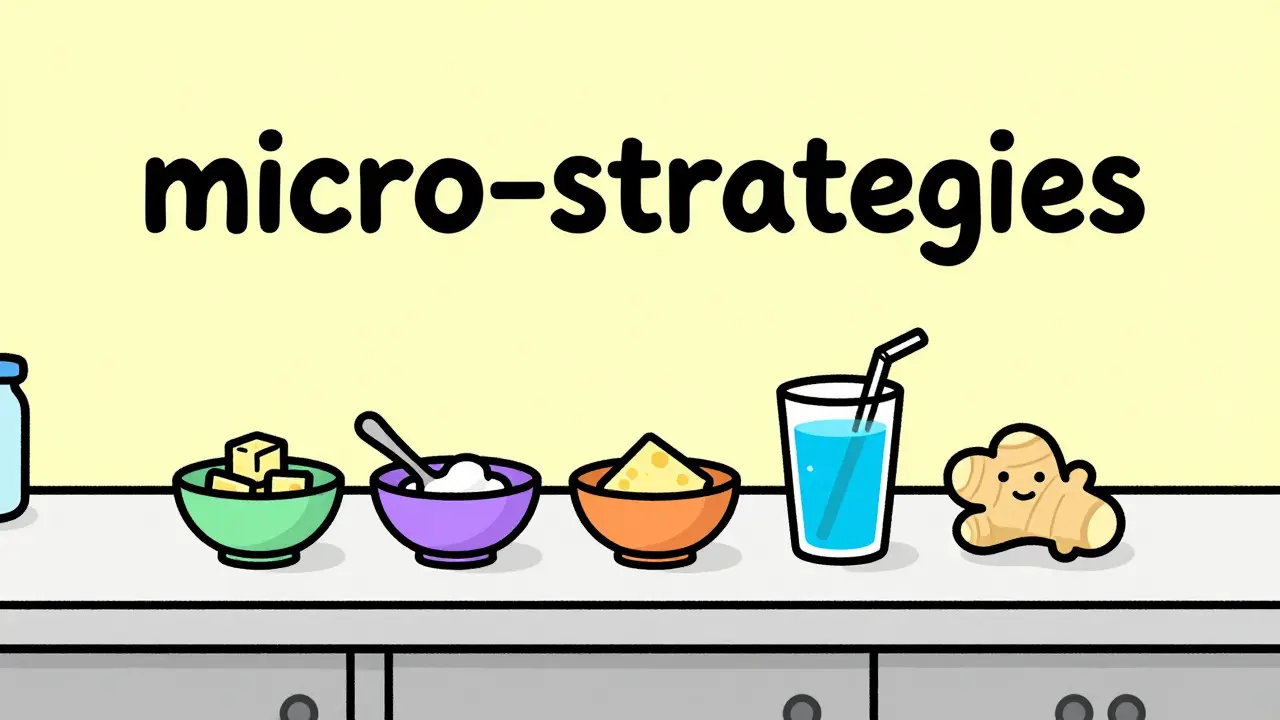
- Small, Frequent Hits: Instead of three big meals, aim for 6 to 8 mini-meals. Think 150-200 calories each. This prevents the stomach from becoming too full (which triggers nausea) or too empty (which can cause "hunger nausea").
- Protein-Rich Snacks: While some doctors suggest bland carbs, many chronic pain patients report better success with small amounts of protein, like a few cubes of cheese or a spoonful of Greek yogurt, to stabilize blood sugar.
- Ginger Support: Ginger is a classic for a reason. Using ginger chews or fresh ginger tea can provide moderate relief by calming the digestive tract.
The Right Way to Hydrate
Drinking eight glasses of water a day sounds healthy, but when you're dealing with OINV, chugging a full glass of water can feel like a mistake. Large volumes of liquid can distend the stomach and trigger a vomiting reflex.
The more effective strategy is "micro-sipping." Try taking 2 to 4 ounces of fluid every 15 to 20 minutes. This keeps you hydrated without overwhelming your system. Additionally, plain water isn't always the best choice. Electrolyte-enhanced beverages-like Pedialyte or low-sugar sports drinks-are often easier on the stomach and help replace the minerals you lose if you've already been vomiting.
Medication Options and Opioid Rotation
When diet and hydration aren't enough, it's time to look at the pharmacy. Not all anti-nausea meds are created equal, and not all opioids cause the same level of sickness.
| Medication | Primary Use | Estimated Efficacy | Key Trade-off |
|---|---|---|---|
| Prochlorperazine | Phenothiazine (General nausea) | 65-70% | Generally well-tolerated |
| Metoclopramide | Prokinetic (Speeds up gut) | 60% | Risk of restlessness/drowsiness |
| Ondansetron | 5-HT3 Antagonist (Breakthrough) | High | Higher cost per dose |
| Dexamethasone | Corticosteroid | 40-50% | Variable results |
Beyond anti-nausea meds, the most powerful tool is Opioid Rotation is the process of switching from one opioid medication to another to reduce side effects while maintaining pain control . Because different opioids bind to receptors differently, switching can "reset" your tolerance. For example, some patients find that switching from morphine to Oxycodone is a semi-synthetic opioid analgesic used for moderate to severe pain or using a Fentanyl Patch is a transdermal delivery system for a potent synthetic opioid significantly reduces nausea. If you're switching to Methadone is a long-acting synthetic opioid used for chronic pain and addiction treatment , remember that your doctor will likely reduce the dose by 50-75% to account for a lack of full cross-tolerance.

Daily Habits to Lower the Burden
Since the vestibular system (your inner ear) is often the culprit, how you move your body matters. If you feel a wave of nausea coming on, try keeping your head still. Research suggests that resting your head can reduce the incidence of OINV by as much as 35-40%. Closing your eyes helps a little, but keeping your head stable is the real winner.
Also, be aware of the "nausea-anxiety cycle." It's very common to start feeling anxious about when the next wave of nausea will hit, and that anxiety actually makes the nausea worse. Simple grounding techniques or focusing on the "micro-sipping" routine can help break this loop.
How long does it normally take to get used to opioid nausea?
Most people develop a tolerance within 3 to 7 days of starting a consistent dose. If your nausea lasts longer than 14 days despite a stable dose, it is generally considered chronic OINV and may require a change in medication or a rotation strategy.
Can I use over-the-counter ginger for OINV?
Yes, ginger chews or teas are widely reported by patients to provide moderate relief. They work by calming the stomach lining and improving gastric motility, making them a safe first-line complementary approach.
Is it safe to take Metoclopramide long-term?
You should be cautious. The FDA has issued boxed warnings for metoclopramide regarding the risk of tardive dyskinesia (uncontrollable muscle movements) if used for more than 12 weeks. Always discuss the duration of use with your doctor.
Why does moving my head make the nausea worse?
Opioids can affect the semicircular canals in your inner ear. This creates a mismatch between what your eyes see and what your inner ear feels, triggering a motion-sickness-like response whenever you move your head.
What is the difference between a prokinetic and a standard antiemetic?
Standard antiemetics (like prochlorperazine) primarily block the signals in the brain that trigger vomiting. Prokinetics (like metoclopramide) actually help the stomach empty faster, moving food and fluid into the intestines to prevent the backup that causes nausea.
Next Steps for Relief
If you're currently struggling, start with the low-hanging fruit: switch to 6-8 tiny meals a day and start micro-sipping electrolytes. If that doesn't move the needle, keep a "nausea diary" for one week. Note when the nausea hits (e.g., right after a dose, or when tilting your head) and what specifically helped. Bring this diary to your next appointment. Your doctor can use this data to decide if you need a specific antiemetic or if it's time for a full opioid rotation to a different molecule altogether.