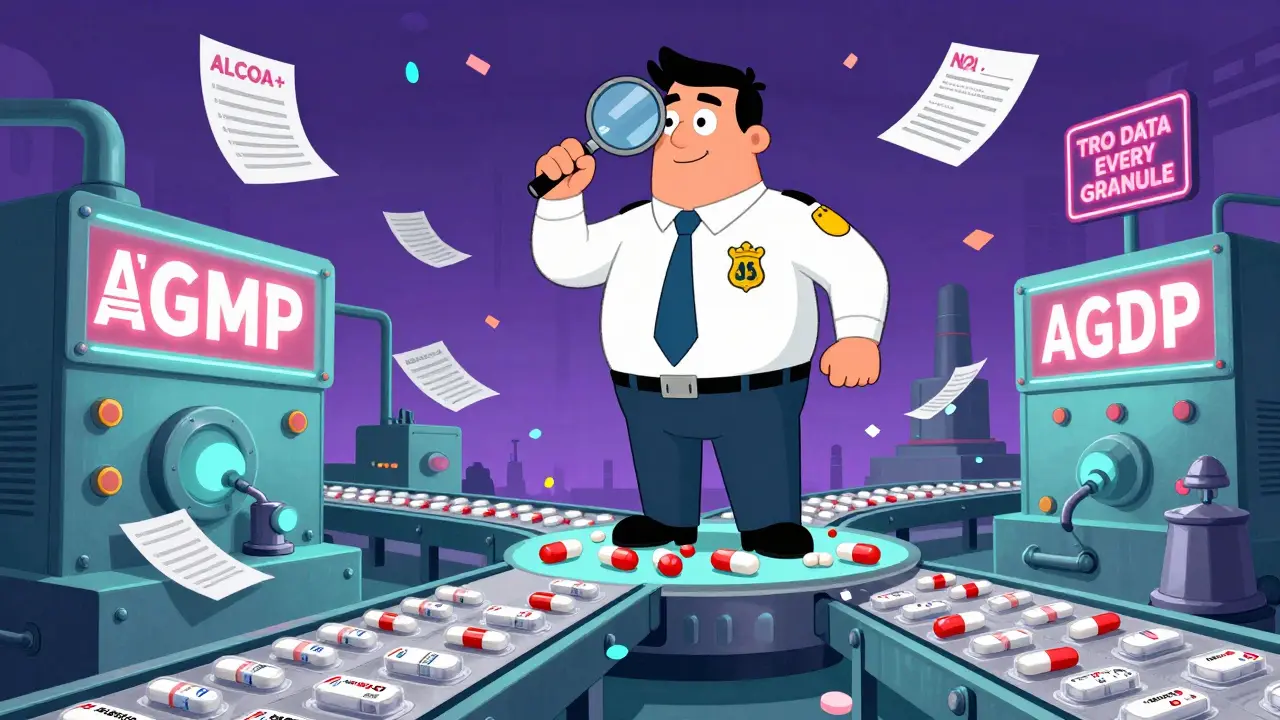
The U.S. Food and Drug Administration doesn’t wait for a bad batch of generic pills to hit the shelves before acting. Instead, it builds quality into every step of the manufacturing process - from the raw chemicals arriving at the factory to the final blister pack leaving the warehouse. This isn’t luck. It’s a system designed over decades to make sure a generic drug you pick up at the corner pharmacy works just as well - and as safely - as the brand-name version, even if it costs 85% less.
Why Quality Can’t Be Tested at the End
In the 1960s, the FDA tested 4,600 drugs and found that about 8% of them didn’t deliver the right amount of active ingredient. Some had too much - risking overdose. Others had too little - leaving patients untreated. That’s when the agency made a major shift: stop relying on testing the final product and start controlling how the product is made. This became the foundation of Current Good Manufacturing Practices, or cGMP, under Title 21 of the Code of Federal Regulations.Think of it this way: you can’t test every single pill in a bottle to make sure it’s perfect. But you can make sure every machine, every step, every worker follows the same exact rules - so every pill turns out right. That’s the core of FDA’s strategy.
The Five Pillars of Generic Drug Quality
The FDA doesn’t just give a checklist. It demands a system. Here are the five non-negotiable pillars that every generic drug manufacturer must follow:- Control of Materials: Every ingredient, even the smallest one, must be traced back to its source. The FDA requires detailed documentation showing where the active pharmaceutical ingredient (API) came from, how it was stored, and how it was handled. No guessing. No shortcuts.
- Production and Process Controls: Every step of manufacturing - mixing, granulating, compressing, coating - must have a written procedure. Machines are monitored in real time. If a temperature swings too high or a mixer runs too slow, the system flags it. And it’s documented. Every time.
- Quality Control and Laboratory Testing: Before a batch leaves the plant, it’s tested for identity, strength, purity, and dissolution. The tests must be validated, meaning they’ve been proven to work every time. And every result must follow the ALCOA+ standard: attributable, legible, contemporaneously recorded, original or true copy, accurate, complete, consistent, enduring, and available.
- Packaging, Labeling, and Distribution: A mislabeled bottle can kill. The FDA checks that the right drug is in the right bottle, with the right strength, and the right instructions. Packaging must protect the drug from moisture, light, and heat. Shipping conditions are monitored, especially for temperature-sensitive drugs.
- Documentation and Record Keeping: This isn’t paperwork for the sake of paperwork. Every log, every signature, every test result must be kept for years. If the FDA shows up for an inspection, they can pull any record from the last five years and trace every pill back to its origin.
Inspections: No Notice, No Mercy
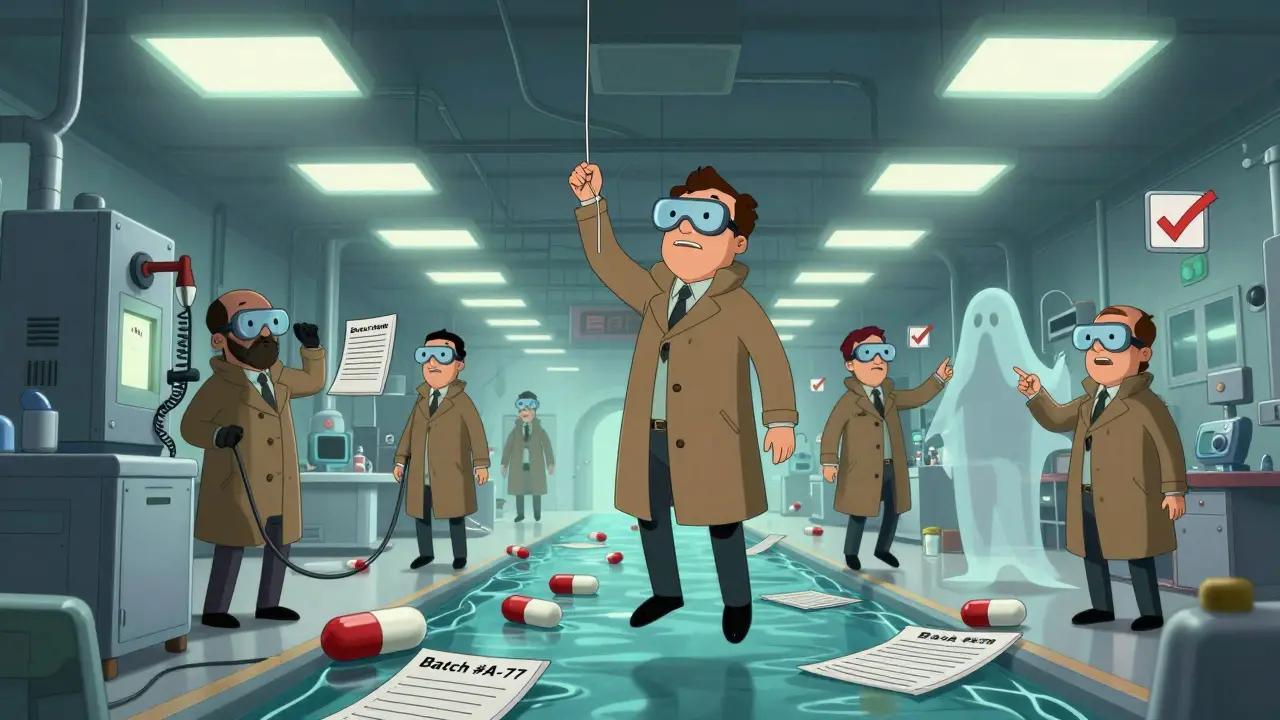
The FDA doesn’t call ahead. Inspectors show up unannounced - sometimes for days, sometimes for weeks - and stay until they’re satisfied. The Office of Manufacturing Quality (OMQ) leads these inspections, which can happen at any of the 1,700 global facilities that make generic drugs for the U.S. market. In 2023 alone, the FDA conducted about 1,200 inspections.Domestic facilities had an 8% violation rate. Foreign facilities? 17%. That’s not because foreign plants are worse - it’s because supply chains are longer, regulations vary, and communication gaps are easier to hide. The FDA’s inspectors look for red flags: missing records, uncalibrated equipment, inconsistent cleaning procedures, or data that looks edited.
One common violation? Data integrity. In 2022, 42% of FDA Form 483 observations - the official list of problems found during inspections - were about records being altered, deleted, or never written down. That’s a big deal. If you can’t prove you did something right, the FDA assumes you didn’t.
How Generic Drugs Get Approved - And Why It Takes So Long
To get FDA approval, a generic drug maker must file an Abbreviated New Drug Application (ANDA). It’s called “abbreviated” because it doesn’t require new clinical trials. But don’t be fooled - it’s still complex.Manufacturers must submit three separate batches of the drug’s intermediate form. One batch is used to make the standard strength. The other two are used to make the lowest and highest strengths. Why? Because a drug that works at 10 mg might behave differently at 50 mg. The FDA needs proof that every strength is consistent.
Each ANDA goes through multiple review cycles. The first round might take six months. If the FDA has questions - and they almost always do - the manufacturer has to respond. That can add another six to 12 months. The whole process often takes 12 to 24 months. That’s longer than in Europe or Canada. But it’s also why U.S. generics are trusted worldwide.
What Makes the FDA Different
The European Medicines Agency (EMA) has similar rules. But the FDA goes further. It uses a risk-based approach: if a company changes its supplier of an active ingredient, the FDA doesn’t wait for complaints. It demands data before the change even happens. That’s proactive, not reactive.The FDA also uses remote inspections more than ever. Since the pandemic, about 35% of inspections in 2022 were done partially or fully online - reviewing digital records, watching live video of equipment, and interviewing staff via video call. It’s not a replacement for in-person visits, but it’s a powerful tool.
And then there’s GDUFA III - the Generic Drug User Fee Amendments. Since October 2022, the FDA has had $650 million over five years to hire more inspectors, upgrade labs, and improve data systems. That money is helping reduce inspection backlogs and speed up reviews without cutting corners.
Real-World Impact
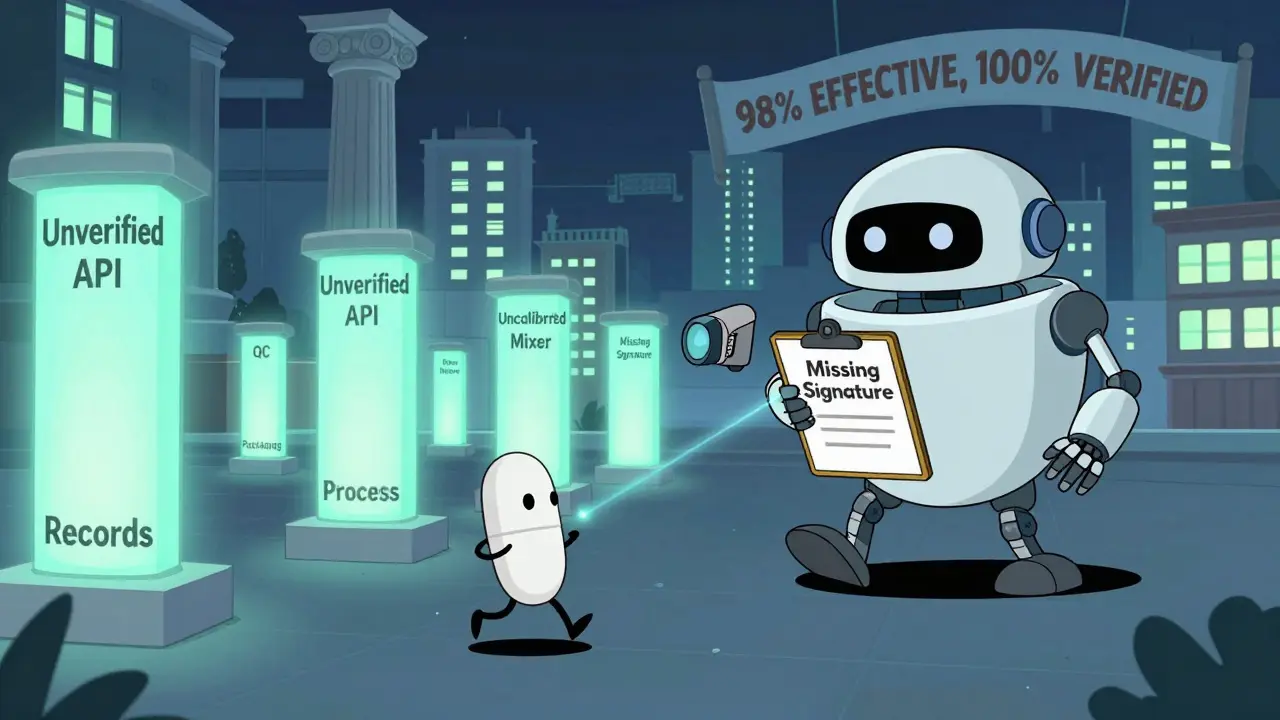
Over 90% of all prescriptions filled in the U.S. are for generic drugs. That’s 6.8 billion prescriptions a year. And in 98-99% of cases, they work just like the brand-name version. That’s not accidental. It’s the result of a system that treats quality like a science, not a suggestion.During the pandemic, when supply chains broke down and critical drugs like antibiotics and anesthetics were in short supply, the FDA’s Office of Pharmaceutical Quality stepped in. They worked directly with manufacturers to fix production issues before they caused shortages. That kind of intervention saved lives.
Challenges and Criticisms
It’s not perfect. Smaller manufacturers say the cost of compliance is crushing. Setting up a cGMP-compliant facility can cost $2 million to $5 million before you even submit your first application. Documentation alone eats up 30-40% of development time for some companies.Some experts, like Dr. Arthur Caplan from NYU, argue that the system still relies too much on self-reported data. If a company says its equipment is calibrated, the FDA has to trust it - until an inspector shows up. And with only 1,200 inspections for 1,700 facilities, not every plant gets checked every year.
But here’s the thing: the FDA doesn’t need to inspect every plant every year. It uses data to target the highest-risk ones. A company with past violations? Higher priority. A new factory in a country with weak oversight? Higher priority. A facility with a history of clean inspections? Lower priority. That’s smart, not lazy.
What’s Next
The FDA is moving toward advanced manufacturing. Think continuous production lines instead of batch processing. Real-time testing that confirms quality as the drug is made - not days later in a lab. Draft guidance for these new methods is expected in 2024.By 2025, new rules will require manufacturers to document every source of active ingredients - down to the country and facility. That’s transparency. That’s accountability.
The goal isn’t to make it harder for companies. It’s to make sure that when you take a generic pill, you don’t have to wonder if it’s real. You can trust it - because the FDA built that trust into every step.
Are generic drugs as safe as brand-name drugs?
Yes. The FDA requires generic drugs to have the same active ingredient, strength, dosage form, and route of administration as the brand-name version. They must also be bioequivalent - meaning they’re absorbed into the body at the same rate and extent. Every generic drug must meet the same strict quality standards as brand-name drugs, including manufacturing, testing, and labeling rules.
How often does the FDA inspect generic drug factories?
The FDA inspects about 1,200 manufacturing facilities each year - both domestic and foreign. Inspections are unannounced and can last days or weeks. High-risk facilities, like those with past violations or those producing critical drugs, are inspected more frequently. On average, a facility may be inspected every 2-3 years, but some get checked annually if they’re flagged for risk.
Why do generic drugs cost so much less than brand-name drugs?
Generic drugs cost 80-85% less because manufacturers don’t have to repeat expensive clinical trials. They only need to prove their product is bioequivalent to the brand-name drug. However, they still pay millions to meet FDA’s cGMP standards, hire trained staff, and build compliant facilities. The savings come from avoiding R&D costs, not cutting corners on quality.
Can a generic drug be made in a different country and still be FDA-approved?
Yes. About 70% of generic drugs sold in the U.S. are made overseas, mostly in India and China. But they must meet the same FDA standards as U.S.-made drugs. The FDA inspects foreign factories just as rigorously as domestic ones. A drug made in India is held to the same cGMP rules as one made in New Jersey.
What happens if a generic drug fails an FDA inspection?
If serious violations are found, the FDA can issue a warning letter, block the drug from entering the U.S., or even refuse to approve new applications from that facility. In extreme cases, the FDA can seize products or shut down production. Companies have to fix the problems and prove compliance before they can resume shipping. Some never recover.
So many people think generics are cheap because they're low quality but this post just blew my mind 😮
Like... I literally took my grandma's blood pressure med for a week when hers ran out and didn't notice a difference. Guess that's why they're called bioequivalent.
Also why does everyone assume Indian factories are sketchy? My cousin works at one and they have more sensors than my Tesla.
The rigor of the FDA's oversight is not merely commendable-it is essential to public health. The systematic implementation of cGMP ensures that every pill, regardless of origin, meets the same scientific and ethical standard. This is a model for global pharmaceutical regulation.
Let’s be real-this is all performative compliance wrapped in regulatory jargon. The FDA doesn’t ‘ensure’ quality; it just makes sure the paperwork looks good until someone dies. It’s the same game everywhere: capitalism with a lab coat. cGMP? More like ‘costly greenwashing masquerading as protocol.’
And don’t get me started on GDUFA-$650 million to inspect 1,700 plants? That’s not oversight, that’s a public relations campaign with a clipboard.
People think FDA is strict but in India we make generics for the whole world and no one checks us properly. My cousin’s factory in Hyderabad makes 50 million pills a day and they don’t even have temperature sensors in the mixing room. They just rely on the guy who says ‘it feels right.’ But still FDA approves it because they need cheap meds. So this whole thing is a lie. You think they test every batch? No. They test one batch and pretend the rest are same. That’s how it works everywhere.
70% of our meds come from China and India and you’re telling me that’s safe? No way. Our guys are getting sick from fake pills and the FDA is too busy taking selfies with pharma CEOs. This whole system is rigged. If this was made in America, it’d be inspected daily. But nope-let’s outsource our health to third-world factories. Classic.
This is actually really comforting to read. I used to be scared to take generics after hearing horror stories online. But knowing there’s a system behind it-not just luck-makes me feel safer. Thank you for explaining it so clearly.
They don’t inspect every plant because they don’t need to. The system works because it’s designed to catch failure before it happens. If you’re running a clean operation, you don’t get flagged. If you’re cutting corners, you get caught. It’s not about quantity of inspections-it’s about quality of intelligence.
One sentence: I trust my generic blood thinner because the FDA didn’t just hope it was good-they built the system so it couldn’t be bad.
I appreciate the depth of this breakdown. The ALCOA+ standard alone is something most people don’t even know exists. It’s fascinating how much structure goes into something so seemingly simple-a little pill. It’s a reminder that behind every medication is a chain of accountability, not just chemistry.
It’s worth noting that the FDA’s approach isn’t just about control-it’s about trust. Trust that manufacturers will follow the rules, trust that inspectors will be thorough, and trust that the public deserves safe medicine regardless of price. That’s rare in any industry.
And honestly? The fact that remote inspections now account for 35% of audits shows they’re adapting. Not perfect, but evolving. That’s more than I can say for most bureaucracies.
There’s a fascinating irony here: the FDA’s system is so robust precisely because it assumes human error is inevitable. That’s why every step is documented, monitored, and cross-referenced-because you can’t rely on someone remembering to calibrate a machine or write down a temperature. You design the system so the mistake is impossible to hide, not just unlikely.
And that’s why data integrity violations are the #1 red flag. If someone’s deleting logs or backdating entries, they’re not just breaking rules-they’re admitting the system is too strict for them to follow honestly. That’s not negligence; that’s fraud.
The fact that 42% of Form 483s cite data issues tells us the real threat isn’t bad equipment or untrained staff-it’s people trying to game a system that’s designed to catch them.
And yet, despite all this, generics still work. 98-99% of the time. That’s not magic. That’s engineering.
Compare that to the wild west of dietary supplements, where ‘natural’ means ‘untested,’ and you start to realize how much we take for granted when we pick up a $4 bottle of lisinopril.
It’s also why the push toward continuous manufacturing is so important. Batch processing is a 1950s concept. Real-time quality control? That’s the future. Imagine a sensor in the tablet press that tells you if the active ingredient is off before the tablet even forms. No waiting. No batch rejection. Just instant correction.
The FDA’s draft guidance on this isn’t just about efficiency-it’s about preventing failure before it leaves the machine.
And the requirement to document every API source down to the country and facility by 2025? That’s not bureaucracy. That’s supply chain transparency at a level no other regulatory body has attempted.
Yes, it’s expensive. Yes, it’s slow. But if you’ve ever had a loved one depend on a generic drug to stay alive, you’d rather wait two years for approval than risk a single pill being off by 5%.
So while the critics scream about cost and delays, the people who actually need these drugs? They’re just glad they’re not guessing.