Hidradenitis suppurativa isn’t just a skin rash. It’s a chronic, painful condition that turns hair follicles into deep, recurring abscesses - often in the armpits, groin, or under the breasts. These aren’t pimples. They’re inflamed, pus-filled lumps that burst, scar, and form tunnels under the skin. For many, the pain is constant, the smell is embarrassing, and the emotional toll is crushing. Standard treatments like antibiotics or surgery often fail to stop the cycle. But in the last decade, biologic therapy has changed everything for moderate-to-severe cases.
What Makes Hidradenitis Suppurativa So Painful?
HS starts when hair follicles get blocked by excess skin cells and oil. That blockage triggers inflammation deep in the skin, not just on the surface. The body’s immune system goes into overdrive, releasing inflammatory chemicals like TNF-alpha, IL-17, and IL-23. These aren’t just minor players - they’re the main drivers of the nodules, abscesses, and fistulas that define HS.
It hits hardest between ages 20 and 29, and women are three times more likely to develop it than men. The condition is often mistaken for acne or infected sweat glands, leading to years of misdiagnosis. By the time many patients see a dermatologist, they’re already in Hurley Stage II or III - meaning multiple interconnected tunnels and deep abscesses have formed. At this point, creams and oral antibiotics rarely help.
Why Traditional Treatments Fall Short
For years, doctors relied on a patchwork of options: antibiotics like clindamycin or doxycycline to fight infection, hormonal therapies like birth control pills or spironolactone for women, and surgical drainage or excision for severe cases. Some patients needed multiple surgeries over years, only to see the nodules return.
The problem? These treatments don’t target the root cause. Antibiotics reduce bacteria, but HS isn’t primarily an infection. Surgery removes damaged tissue, but it doesn’t stop the inflammation that creates new lesions. And while weight loss and quitting smoking can help - and should always be part of the plan - they’re not enough on their own for moderate-to-severe HS.
Biologic Therapy: Targeting Inflammation at the Source
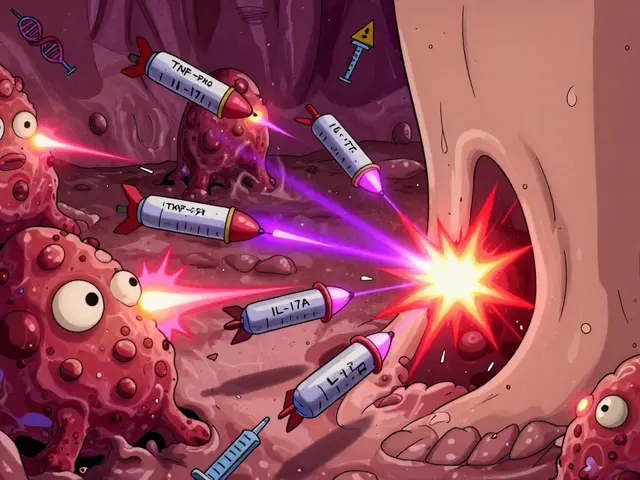
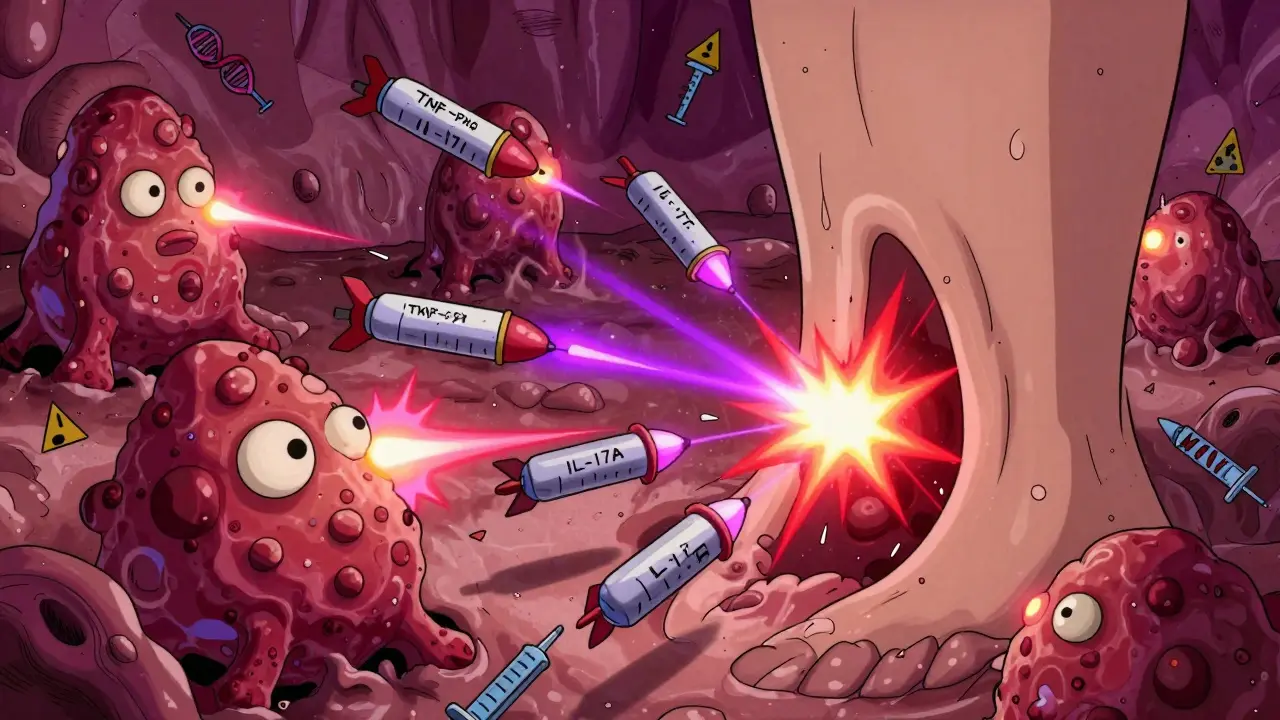
Biologics are lab-made proteins designed to block specific parts of the immune system that drive inflammation. Unlike broad immunosuppressants, they’re like precision missiles - hitting only the molecules responsible for HS flare-ups.
The first FDA-approved biologic for HS was adalimumab (Humira) in 2015. It blocks TNF-alpha, a key inflammatory signal. Patients get a weekly or every-other-week injection after an initial loading dose. In clinical trials, about 42% of users saw at least half their lesions improve within 12 weeks - nearly double the placebo rate.
Then came secukinumab (Cosentyx) in early 2024. It targets IL-17A, another major inflammatory molecule. In the SUNSHINE trial, 44.5% of patients achieved a 50% reduction in lesions by week 16. What’s notable? Many reported pain dropping from an 8 out of 10 to under 3 within just four weeks.
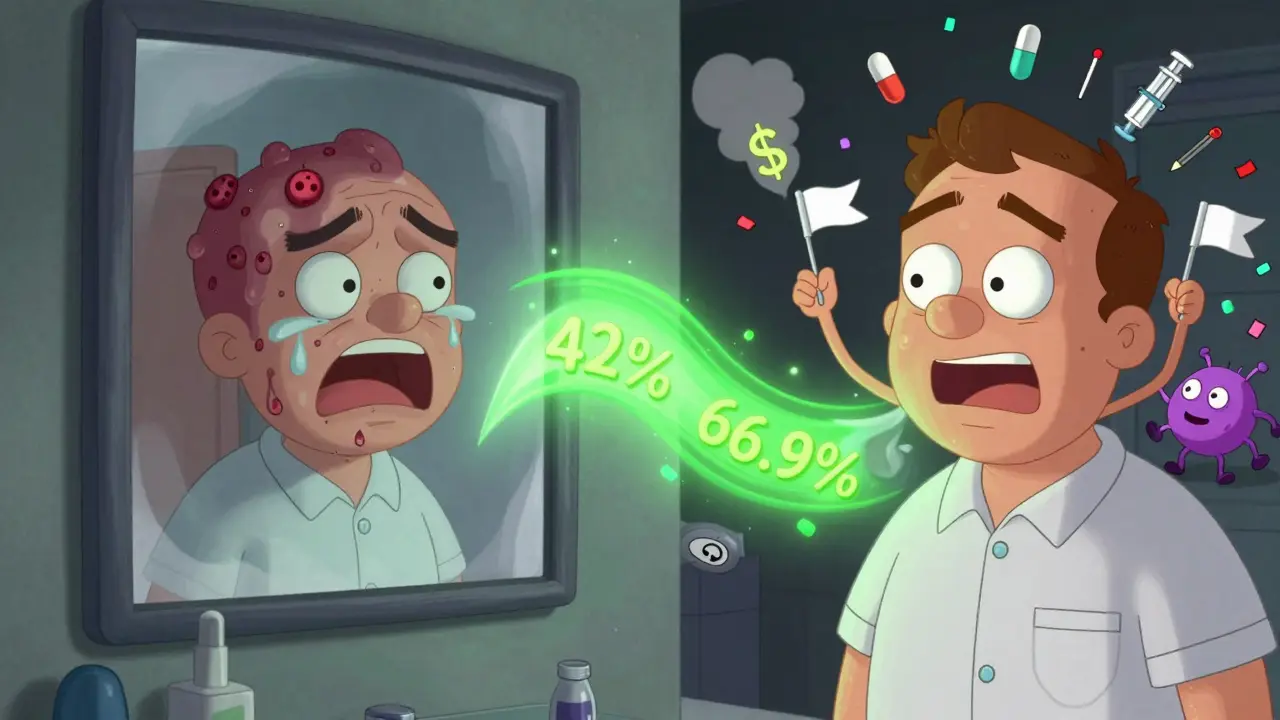
The newest option is bimekizumab (BIMZELX), approved in June 2024. It’s unique because it blocks both IL-17A and IL-17F - two closely related molecules. In the BE HEARD I trial, 66.9% of patients hit the 50% improvement mark at week 16, the highest rate seen so far. For some, the nodules disappeared entirely.
How Do These Biologics Compare?
Choosing between them isn’t just about which works best - it’s about what fits your body and your life.
| Drug | Target | Dosing Schedule | HiSCR50 at Week 12-16 | Monthly Cost (USD) |
|---|---|---|---|---|
| Adalimumab (Humira) | TNF-alpha | 40 mg weekly or every other week | 41.8% | $5,800 |
| Secukinumab (Cosentyx) | IL-17A | 300 mg every 4 weeks after initial weekly doses | 44.5% | $6,200 |
| Bimekizumab (BIMZELX) | IL-17A and IL-17F | 320 mg every 4 weeks after 640 mg loading dose | 66.9% | $6,900 |
Adalimumab has the longest track record and is often the first choice, especially if you have scarring or sinus tracts. Secukinumab works faster for some and has fewer injections over time. Bimekizumab shows the highest response rate, but it’s new - and more expensive.
Real-world data from patient forums like MyHSteam and Reddit show similar trends: 68% of adalimumab users saw major improvement, but 42% dealt with injection site reactions. For secukinumab, 56% reported dramatic relief, but cost was a barrier for one in three.
Who Benefits Most - and Who Doesn’t?
Biologics work best for people with Hurley Stage II or III HS. That means multiple abscesses, tunnels under the skin, and recurring flare-ups despite other treatments. They’re not for mild cases with just a few bumps.
But even among those who qualify, results vary. Patients with heavy scarring and deep tunnels respond less predictably. Dr. Richard Bechara at Baylor College of Medicine warns: “If you wait until your skin is full of scars, biologics won’t reverse that damage.” That’s why early intervention matters.
There’s also a hidden benefit: improved heart health. HS patients have a higher risk of heart disease. Biologics don’t just clear skin - they reduce systemic inflammation. Studies show triglycerides drop by over 15% and HDL (good cholesterol) rises within 24 weeks of starting treatment. That’s not just skin deep - it’s life-saving.
What to Expect Before and During Treatment
Starting a biologic isn’t as simple as picking up a prescription. Before your first injection, you’ll need screening tests: tuberculosis, hepatitis B and C, and a check for heart failure. Biologics can reactivate old infections or worsen certain conditions.
After starting, your dermatologist will track progress using the IHS4 score - a standardized way to count lesions and abscesses. If you’re not seeing improvement by week 12, your doctor may switch you to another biologic. Early responders (those with IHS4 under 10 at week 12) have a 78% chance of staying in remission for over two years. Late responders? Only 43%.
Laboratory tests for lipid levels are becoming routine. If your triglycerides drop and HDL rises, it’s a sign the drug is working systemically - not just on your skin.
Cost, Insurance, and Access Challenges
These drugs are expensive. Adalimumab costs around $5,800 a month. Secukinumab and bimekizumab are higher. Most patients pay only a fraction of that thanks to insurance, manufacturer coupons, or patient assistance programs. But not everyone gets coverage.
Medicaid patients face the biggest hurdles: only 45% get approved for biologics, compared to 82% of those with private insurance. Many patients report being denied because their dermatologist didn’t document “failed conventional therapies” thoroughly enough. It’s not just a medical decision - it’s a bureaucratic battle.
Out-of-pocket costs can still hit $1,200 a month for some. That’s why many stop - not because the drug doesn’t work, but because they can’t afford it.

What’s Coming Next?
The pipeline is full. Three new biologics are in late-stage trials:
- Guselkumab (targets IL-23) showed 58% response in early trials.
- Spesolimab (targets IL-36) is being tested for inflammatory flares.
- TAK-279 (a TYK2 inhibitor) is showing promise in Phase II.
Researchers are also exploring combinations - like using bimekizumab with minor surgical removal of tunnels. One study found 89% of patients responded when both were used, versus 67% with the drug alone.
Even more exciting: a 2024 study identified a 12-gene signature that predicts who will respond to adalimumab with 85% accuracy. Soon, doctors may be able to test your blood and know which biologic will work for you - before you even start.
Real Advice from People Living With HS
From patient communities, the same themes keep coming up:
- “Start early. Don’t wait until you’re in stage III.”
- “Quit smoking. It makes HS worse - no exceptions.”
- “Lose weight if you can. It helps, even if it doesn’t cure it.”
- “Keep a symptom journal. It helps your doctor adjust your dose.”
- “Don’t give up if the first biologic doesn’t work. Try another.”
And the biggest takeaway? “It’s not just about skin. It’s about living again.”
Can biologic therapy cure hidradenitis suppurativa?
No, biologics don’t cure HS. But they can put it into long-term remission. Many patients see 70-90% reduction in lesions and pain. Some stay in remission for years with continued treatment. Stopping the drug often leads to flare-ups, so most need ongoing therapy.
How long does it take for biologics to work for HS?
Most patients start noticing less pain and fewer new nodules within 4 to 8 weeks. Clearer skin and reduced abscesses usually show up by week 12. Some see dramatic changes in just 2 weeks with secukinumab or bimekizumab. But full response can take up to 16 weeks.
Are biologics safe for long-term use?
Yes, for most people. Biologics have been used for over 20 years in conditions like psoriasis and rheumatoid arthritis. The biggest risks are serious infections (like TB or pneumonia), reactivation of hepatitis, and rare neurological issues. Regular monitoring - blood tests, TB checks, and infection screenings - keeps these risks low. Most patients tolerate them well for years.
Can I use biologics if I’ve had surgery for HS?
Yes - and often, it’s recommended. Surgery removes damaged tissue, but it doesn’t stop the inflammation that causes new lesions. Many patients get biologics after surgery to prevent recurrence. Some doctors now combine surgery with biologics from the start for the best results.
Do I need to stop biologics before getting a vaccine?
For most vaccines - including flu, pneumonia, and COVID-19 - you can stay on biologics. Live vaccines (like MMR or shingles) are generally avoided while on biologics. Always check with your dermatologist before any vaccination. You don’t need to pause treatment for routine shots.
What if my insurance denies coverage for a biologic?
Denials are common, especially with Medicaid. Your dermatologist can file an appeal with clinical documentation showing failed treatments and Hurley stage. Many drug manufacturers offer co-pay assistance or free drug programs for eligible patients. Don’t give up - many approvals come after appeal.
What’s Next for HS Patients?
The future is brighter than it’s ever been. With more biologics on the horizon, better predictive tools, and growing awareness among doctors, HS is no longer a condition you just have to live with. It’s one you can manage - with less pain, fewer scars, and more control over your life.
But time matters. The longer you wait, the more damage accumulates under your skin. If you’ve been struggling with recurring abscesses, nodules, or tunnels - talk to a dermatologist who specializes in HS. Ask about biologics. You might be surprised how much better things can get.