Simvastatin & Grapefruit Juice Interaction Calculator
Input Your Details
Risk Assessment
Enter your details to see your risk level
What This Means
Safer Statin Alternatives
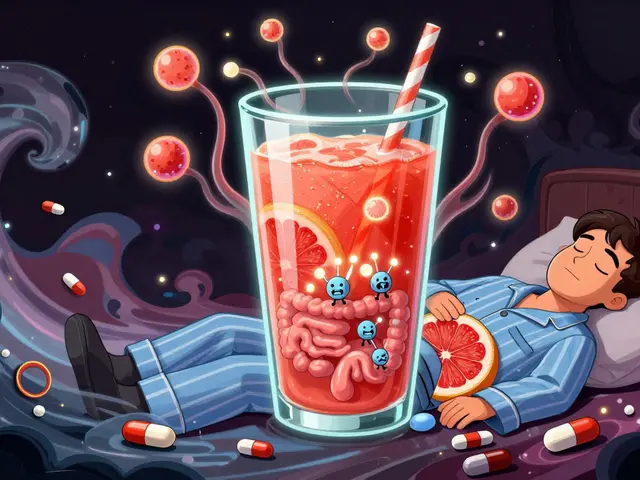
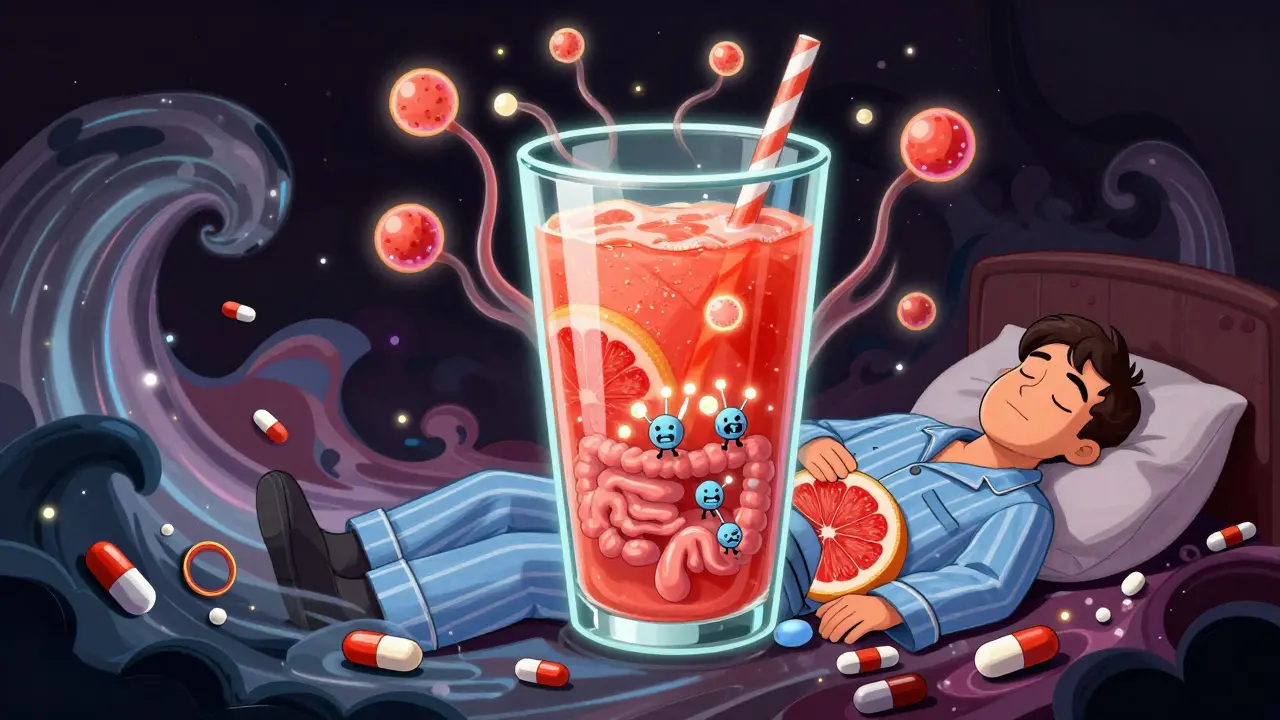
Drinking a glass of grapefruit juice with breakfast might seem like a healthy habit-until you’re on simvastatin. For millions of people taking this cholesterol-lowering drug, that innocent glass could be setting off a dangerous chain reaction inside the body. The interaction isn’t just a theoretical concern. It’s real, well-documented, and can lead to serious muscle damage, kidney failure, or even death in rare cases.
Why Grapefruit Juice Changes How Simvastatin Works
Simvastatin, sold under the brand name Zocor, is broken down in your gut by an enzyme called CYP3A4. This enzyme acts like a gatekeeper-it limits how much of the drug enters your bloodstream. Grapefruit juice doesn’t just pass through. It shuts down this gatekeeper. Specifically, compounds in grapefruit called furanocoumarins (like bergamottin and DHB) bind to CYP3A4 and permanently disable it in the intestinal lining. That means more simvastatin slips into your blood unchecked.
Studies show that drinking just 200 mL of grapefruit juice three times a day can cause simvastatin levels to spike by 16 times in your bloodstream. That’s not a small bump. That’s a flood. And since simvastatin works by breaking down muscle tissue to lower cholesterol, too much of it means too much muscle damage.
The Real Danger: Myopathy and Rhabdomyolysis
Myopathy means muscle pain, weakness, or tenderness. It’s common with statins-even without grapefruit juice. But when grapefruit juice enters the picture, the risk jumps sharply. In severe cases, muscle cells start breaking down rapidly, spilling their contents into the blood. That’s called rhabdomyolysis.
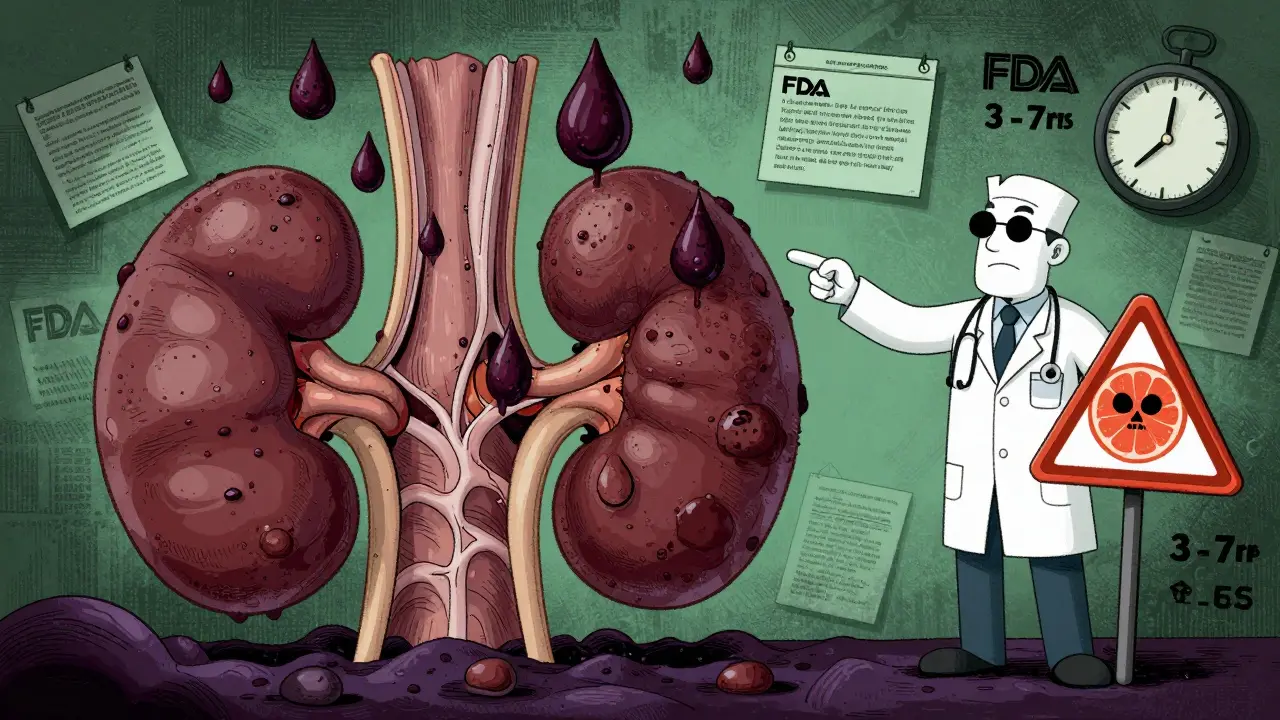
Rhabdomyolysis is dangerous because the muscle proteins, especially myoglobin, clog the kidneys. This can lead to acute kidney failure. About 0.1% of statin users develop rhabdomyolysis under normal conditions. With daily grapefruit juice, that risk can increase by 5 to 10 times. The FDA has issued multiple warnings about this exact scenario, and emergency room visits linked to this interaction have been tracked since the early 2000s.
Symptoms to watch for:
- Unexplained muscle pain or weakness, especially in the shoulders, thighs, or lower back
- Dark, tea-colored urine (a sign of myoglobin in the kidneys)
- Fatigue or fever without illness
- Decreased urination or swelling in the legs
If you’re on simvastatin and notice any of these, stop grapefruit juice immediately and contact your doctor. Don’t wait.
How Much Juice Is Too Much?
There’s no single “safe” amount, but there’s a clear danger zone. The FDA says consuming more than 1.2 liters (about five 8-ounce glasses) of grapefruit juice per day significantly increases risk. That’s not a daily habit-it’s a binge. But here’s the catch: even one glass a day can raise simvastatin levels by 30-40%. For older adults, people with kidney problems, or those on higher simvastatin doses (40 mg or 80 mg), that’s enough to tip the scale.
Studies from the American Heart Association show that regular daily intake of one glass of grapefruit juice can push simvastatin concentrations into a range where muscle damage becomes more likely. And because CYP3A4 enzymes take 3 to 7 days to regenerate after being blocked, even occasional consumption can linger in your system.
Not All Statins Are Created Equal
Here’s the good news: not every statin reacts this way. Simvastatin and lovastatin are the worst offenders because they rely almost entirely on CYP3A4 for breakdown. Atorvastatin (Lipitor) has a moderate interaction-up to 3.3 times higher blood levels with grapefruit juice. But pravastatin (Pravachol), rosuvastatin (Crestor), and fluvastatin (Lescol) are processed differently. They don’t depend on CYP3A4. That means you can drink grapefruit juice with those without increasing your risk.
This is why doctors often switch patients who regularly eat grapefruit to one of these safer alternatives. It’s not about fear-it’s about smart prescribing. In 2023, simvastatin was still the third most prescribed statin in the U.S., with over 23 million prescriptions. That means millions of people are still exposed to this risk. If you’re on simvastatin and love grapefruit, ask your provider if switching statins is an option.
What Experts Actually Recommend
The advice isn’t black and white. The FDA says: avoid large amounts. The American Heart Association says: one glass a day is unlikely to cause harm for most people. Dr. Stanley Hazen from Cleveland Clinic says: “Half a grapefruit or one glass of juice is fine if you’ve been on statins without side effects.”
But Dr. David Graham from the FDA’s surveillance team warns: “We can’t predict who will have a bad reaction.” That’s the problem. Some people develop muscle damage after one glass. Others drink two glasses a day for years with no issues. Genetics, age, kidney function, and other medications all play a role.
So what’s the safest path?
- If you’re new to simvastatin: skip grapefruit juice entirely until you know how your body reacts.
- If you’ve been on it for years with no muscle pain: one glass occasionally might be okay-but don’t make it a daily habit.
- If you’re over 65, have kidney disease, or take other drugs like amiodarone or diltiazem: avoid grapefruit juice completely.
What About Orange Juice?
Good news: regular orange juice is safe. It doesn’t contain furanocoumarins. So if you’re craving citrus, stick to oranges, tangerines, or mandarins. Even blood oranges are fine. Only grapefruit and its close relatives-like pomelos and Seville oranges-trigger the interaction. Some people confuse them, so always check the label. “Citrus juice” on a bottle doesn’t mean it’s safe.
What You Can Do Today
You don’t need to panic. But you do need to act.
- Check your prescription bottle. If it says “simvastatin,” look for the grapefruit warning on the label.
- Count how much grapefruit juice you drink daily. If it’s more than one glass, cut back.
- Ask your pharmacist or doctor: “Is there a safer statin I can switch to?”
- Monitor your body. Muscle pain that doesn’t go away? Dark urine? Call your doctor.
- If you’re switching statins, don’t stop simvastatin abruptly. Talk to your provider about how to transition safely.
Also, remember: the interaction lasts days. Taking simvastatin at night and drinking grapefruit juice in the morning doesn’t solve the problem. The enzyme inhibition is long-lasting. Timing doesn’t help. Only reducing or eliminating grapefruit does.
The Future: Safer Grapefruit?
Researchers aren’t giving up on grapefruit. The University of Florida has developed a new hybrid called UF Sweetie that has 87% less of the harmful compounds. It’s not on shelves yet, but it’s a sign that science is working on solutions. In the meantime, the best tool we have is awareness. The American Heart Association predicts that with better education, grapefruit-related statin toxicity could drop by 35-40% over the next decade.
That’s not just a statistic. That’s lives saved. And it starts with knowing what’s in your glass-and what’s happening in your body because of it.
Can I drink grapefruit juice if I take a low dose of simvastatin?
Even low doses of simvastatin (10-20 mg) can be affected by grapefruit juice. Studies show a 30-40% increase in drug levels with just one glass daily. While the FDA says risk is low below 1.2 liters per day, there’s no guaranteed safe threshold. If you’re over 65, have kidney issues, or take other medications, avoid it completely. For healthy adults with no side effects, occasional small amounts may be tolerated-but it’s not risk-free.
How long does grapefruit juice stay in my system and affect simvastatin?
The enzyme-blocking effect lasts 3 to 7 days after your last sip of grapefruit juice. That’s because your body needs time to make new CYP3A4 enzymes to replace the ones that were permanently damaged. Taking simvastatin a few hours after drinking juice won’t prevent the interaction. The only reliable way to avoid it is to stop consuming grapefruit juice entirely while on simvastatin.
Is grapefruit juice more dangerous than eating grapefruit?
The juice is more concentrated and absorbed faster, so it’s more likely to cause a strong interaction. But eating whole grapefruit can also trigger the same effect. The furanocoumarins are in the pulp and peel, not just the juice. So if you’re avoiding grapefruit juice, you should also avoid eating the fruit itself. One grapefruit equals roughly 8-10 ounces of juice in terms of risk.
Can I switch to another statin to avoid this interaction?
Yes. Pravastatin, rosuvastatin, fluvastatin, and pitavastatin are not metabolized by CYP3A4, so they don’t interact with grapefruit juice. Atorvastatin has a mild interaction but is still safer than simvastatin if you occasionally consume grapefruit. Many doctors routinely switch patients who regularly eat grapefruit to one of these alternatives. Talk to your provider about whether switching is right for you.
What should I do if I accidentally drank grapefruit juice while on simvastatin?
If you drank one glass and have no muscle pain or dark urine, monitor yourself for the next few days. If you drank more than one glass, or if you’re over 65 or have kidney disease, contact your doctor immediately. Do not wait for symptoms. Early detection of muscle damage can prevent kidney failure. Stop consuming grapefruit juice going forward, and ask your provider if you need a blood test to check for muscle enzyme levels (CK or creatine kinase).