Dehydration Risk Assessment Tool
This tool helps assess dehydration risk for elderly patients taking diuretics. Based on the latest clinical guidelines, it evaluates key indicators to determine your risk level and provides actionable recommendations. Remember: for seniors on diuretics, dehydration can lead to acute kidney injury in just 48 hours.
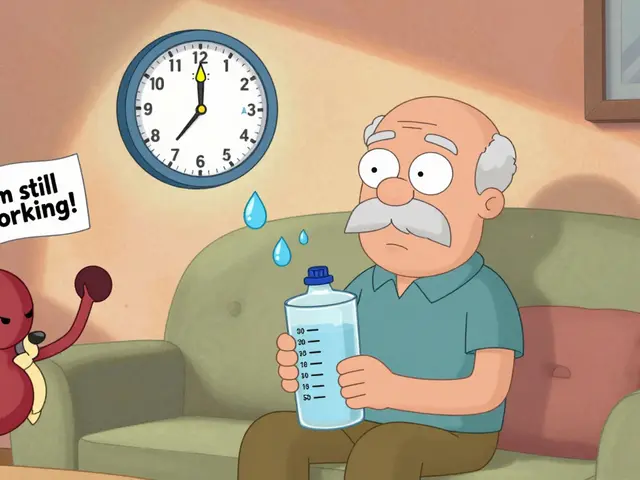
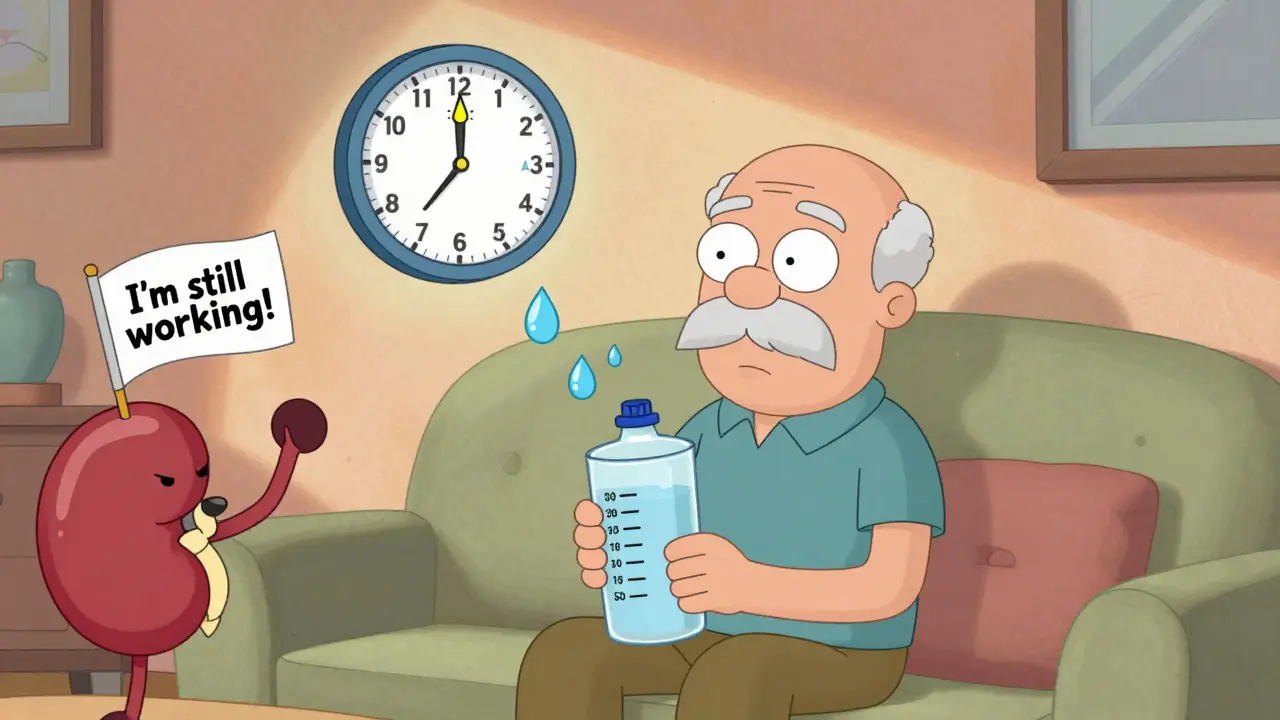
When an older adult takes a diuretic for heart failure or high blood pressure, their body is being asked to do something it’s no longer built to handle: hold onto water. As we age, our kidneys lose their ability to concentrate urine, our thirst signal fades, and even a small drop in fluid can trigger serious harm. For seniors on diuretics, dehydration isn’t just uncomfortable-it’s a direct path to acute kidney injury, hospital stays, and even death. But this isn’t inevitable. With clear, practical steps, families and caregivers can prevent these dangerous side effects and keep elderly loved ones safe at home.
Why Diuretics Are Riskier for Seniors
Diuretics like furosemide and hydrochlorothiazide are common. They help the body get rid of extra fluid, which lowers blood pressure and reduces swelling in heart failure. But in people over 65, these medications come with hidden dangers. The kidneys of an older adult can’t concentrate urine like they used to. In young adults, maximum urine osmolality reaches about 1200 mOsm/kg. By age 70, that number drops to 500-700 mOsm/kg. That means their kidneys can’t save water as efficiently, even when they’re low on fluids.
On top of that, thirst perception declines by nearly 40% after age 65. A senior might not feel thirsty even when their body is running on empty. This is compounded by polypharmacy-75% of older adults take two or more medications that affect fluid balance. Things like blood pressure pills, diabetes drugs, or even over-the-counter NSAIDs like ibuprofen can make dehydration worse. The CDC reports that 26.8% of seniors have diabetes, which increases urine output and fluid loss. When you combine all of this with diuretics, you’re setting the stage for a perfect storm.
According to Hebrew Senior Life (2023), 20% of hospitalizations in adults over 65 involve dehydration. Diuretic users face a 3.2 times higher risk of acute kidney injury (AKI) than those not taking them. AKI isn’t just a lab result-it means the kidneys suddenly stop working well. Serum creatinine rising by 0.3 mg/dL or more in 48 hours is a red flag. In some cases, creatinine jumps from 1.2 to 2.8 in just two days after a minor event like a hot day at the beach.
How Different Diuretics Affect Risk
Not all diuretics are the same. Loop diuretics like furosemide and bumetanide are powerful. They cause 20-25% of sodium to be flushed out of the body, which makes them essential for severe heart failure. But that same power makes them riskier. A 2021 study in JAMA Internal Medicine found that while loop diuretics cause more immediate fluid loss, thiazides like hydrochlorothiazide are sneakier. They lead to hyponatremia (low sodium) in 14% of elderly users-higher than the 8% seen with loop diuretics. Low sodium can cause confusion, falls, and seizures.
Potassium-sparing diuretics like spironolactone are often added to balance out potassium loss. But here’s the catch: 37% of elderly diuretic users have stage 3 or worse chronic kidney disease (CKD). In these patients, spironolactone can cause dangerous hyperkalemia (high potassium), which can trigger heart rhythm problems. Meanwhile, ACE inhibitors like lisinopril carry 18% less dehydration risk but 22% higher AKI risk during dehydration because they depend on angiotensin II to keep the kidneys filtering. If fluid drops too low, the kidneys shut down.
And then there are the newer options. SGLT2 inhibitors like empagliflozin reduce dehydration risk by 24% in seniors, but they cost $550 a month-over 60 times more than hydrochlorothiazide. For many, cost makes them inaccessible. So the real challenge isn’t finding a better drug-it’s using the right one safely.
What Happens When Seniors Get Dehydrated
Dehydration in an elderly person on diuretics doesn’t start with dry lips. It starts with subtle signs: a little less urine, a bit more dizziness, or confusion that seems "out of character." The National Council on Aging found that 68% of elderly diuretic users couldn’t identify dry mouth as a warning sign. Many assume thirst is the only clue-but by the time they feel thirsty, they’re already dehydrated.
When fluid levels drop, the kidneys can’t filter waste properly. Creatinine builds up. Blood pressure crashes. The body tries to conserve water by releasing antidiuretic hormone (ADH), but in seniors, ADH responsiveness drops by 40% between ages 30 and 80. So even if the body sends the signal to hold water, the kidneys don’t listen.
A 2022 study in the Journal of the American Geriatrics Society showed that seniors with urine specific gravity above 1.020 had 31% more AKI episodes. That’s a measurable number you can track. A reading of 1.025 or higher means the kidneys are struggling to concentrate urine. It’s a clear signal that fluid intake is too low.
Severe dehydration leads to oliguria-urine output under 400 mL per day. It leads to orthostatic hypotension-systolic blood pressure dropping more than 20 mmHg when standing. And it leads to confusion, which shows up in 78% of severe cases. That confusion is often mistaken for dementia or aging, when it’s actually a medical emergency.
Proven Strategies to Prevent Kidney Damage
Prevention isn’t about drinking gallons of water. It’s about smart, consistent habits.
1. Set a hydration schedule. A 2022 INTERACT-4 study found that giving 150 mL (about 5 oz) of water every two waking hours reduced AKI by 34% in assisted living facilities. That’s not a lot-just a few sips at a time. It’s easier to remember than "drink eight glasses." Use smartphone alarms or a simple timer.
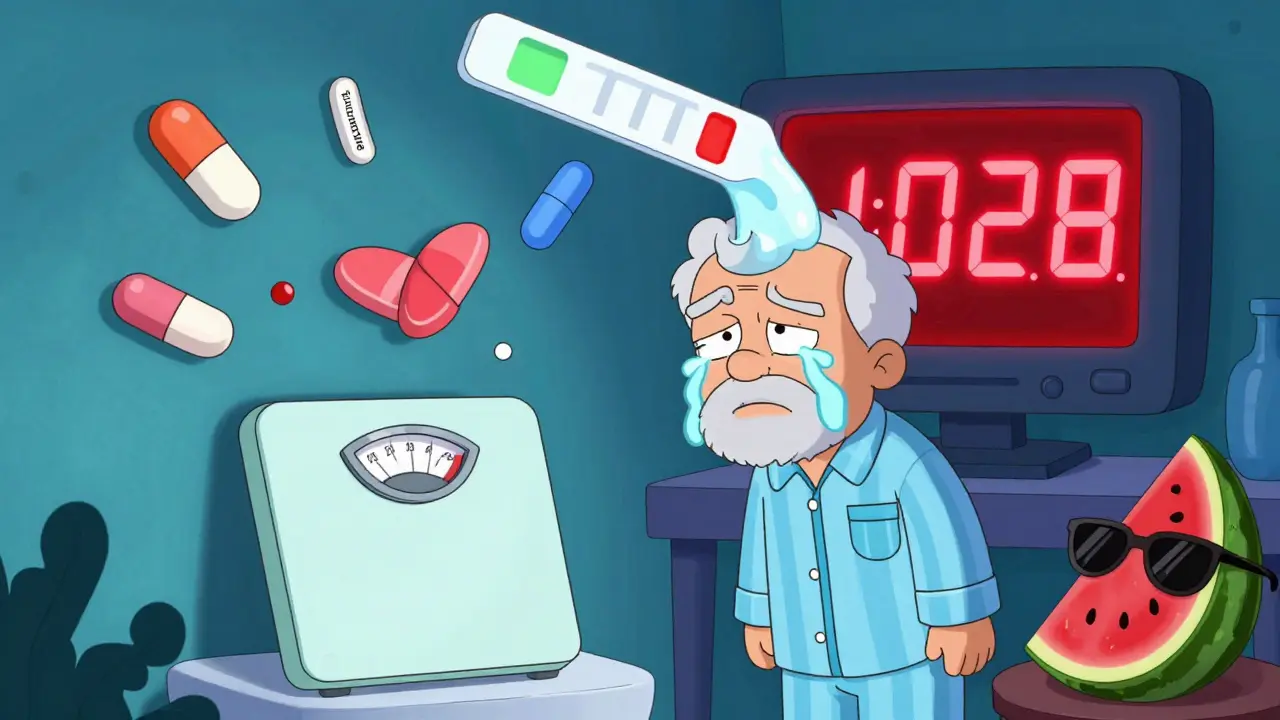
2. Use marked water bottles. Caregivers in Home Instead Senior Care’s 2023 survey reported 45% effectiveness with bottles that have volume markings. A 64 oz bottle with hourly lines makes it easy to see if they’ve had enough. No guesswork.
3. Monitor weight daily. A sudden drop of more than 2 kg (4.4 lbs) in a week signals fluid loss. Weigh the person at the same time each day, in the same clothes. A drop this big should trigger a call to the doctor.
4. Eat hydrating foods. Watermelon, cucumbers, oranges, and broth-based soups contribute significantly to fluid intake. One study in the Journal of Nutrition, Health & Aging found that 57% of successful cases included these foods. They’re easier to consume than water for some seniors.
5. Avoid NSAIDs. The FDA updated its warning in January 2023: ibuprofen and naproxen increase AKI risk by 300% in elderly diuretic users. Use acetaminophen for pain instead.
6. Check urine specific gravity. Test strips are cheap and available at pharmacies. A reading below 1.020 is ideal. Above 1.025 means more fluids are needed.
When to Call the Doctor
Not every change needs an ER visit-but some do. Call the doctor immediately if:
- Urine output drops below 400 mL per day
- Body weight drops more than 2 kg in a week
- Systolic blood pressure falls more than 20 mmHg when standing
- Confusion, dizziness, or disorientation appears suddenly
- Skin doesn’t bounce back when pinched (poor skin turgor)
And never try to "catch up" on fluids after a dry spell. Rapid rehydration can cause hyponatremia. The NHS warns that serum sodium can drop more than 10 mmol/L in 24 hours if fluids are given too quickly, leading to seizures or coma. Slow, steady intake is safer.
What Doctors Should Be Doing
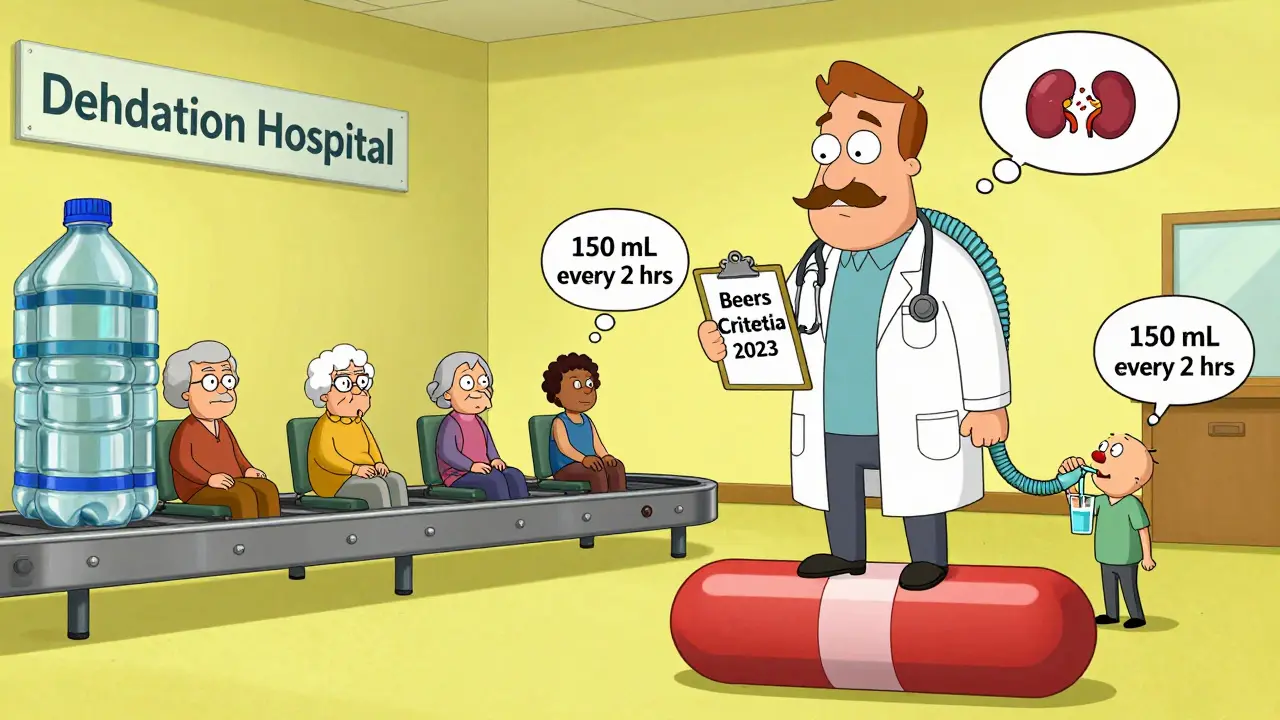
Guidelines from the American Geriatrics Society’s 2023 Beers Criteria say diuretic doses should be cut by 50% for seniors over 75 with creatinine clearance under 60 mL/min. Yet many doctors still prescribe adult doses. A 2022 study showed that reducing furosemide from 40 mg to 20 mg daily in elderly patients lowered AKI risk without losing effectiveness.
Also, serum creatinine alone isn’t enough. The kidney disease guidelines (KDIGO) are expected to recommend cystatin C testing in late 2023 because it’s more accurate in older adults. Creatinine can be normal even when kidney function is declining.
And hydration isn’t one-size-fits-all. The 2021 WATER-CKD trial found no benefit from extra water in CKD patients. But the CKD-REIN cohort showed a U-shaped curve: too little (<1L) or too much (>3L) both accelerated kidney decline. The sweet spot? 1.5-2.0 liters per day.
For patients with advanced CKD (stages 4-5), fluid restriction may still be necessary to avoid pulmonary edema. This is where care gets complex-and why individualized plans are critical.
The Real Cost of Ignoring This Issue
Dehydration-related hospitalizations cost Medicare $1.87 billion in 2023. Each admission averages $11,400. A 2022 study showed that structured hydration protocols saved $4,200 per patient annually in avoidable care. That’s not just money-it’s quality of life. Fewer falls. Fewer ER trips. Fewer days in the hospital.
Technology is helping. Smart water bottles like HidrateSpark PRO sync with apps and alert caregivers when intake is low. Wearable monitors like GYMGUYZ’s Hidrate (FDA-cleared in May 2023) are now being integrated into EHRs. Early data shows a 33% drop in emergency visits. And new hydration gels with electrolytes are showing 78% adherence in pilot studies-far better than pills or water alone.
But none of this matters if caregivers don’t know what to look for. The 2022 survey found only 32% of seniors recognized dry mouth as a sign of dehydration. Education is the most powerful tool we have.
Final Takeaways: What You Can Do Today
- Don’t wait for thirst. Offer fluids every two hours, even if they say they’re not thirsty.
- Use a marked water bottle or set phone reminders.
- Weigh your loved one once a week. A drop over 2 kg? Call the doctor.
- Avoid ibuprofen and naproxen. Use acetaminophen instead.
- Check urine specific gravity with test strips-it’s cheap and tells you more than symptoms.
- Include water-rich foods: watermelon, oranges, soups, cucumbers.
- Know the warning signs: confusion, dizziness, low urine output, sudden weight loss.
Preventing dehydration in elderly diuretic users isn’t about complicated medicine. It’s about consistency, observation, and small, daily actions. The kidneys don’t need grand gestures. They need steady, gentle care.