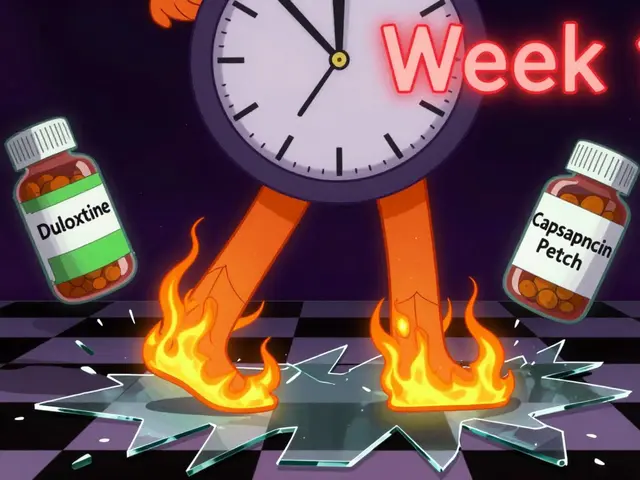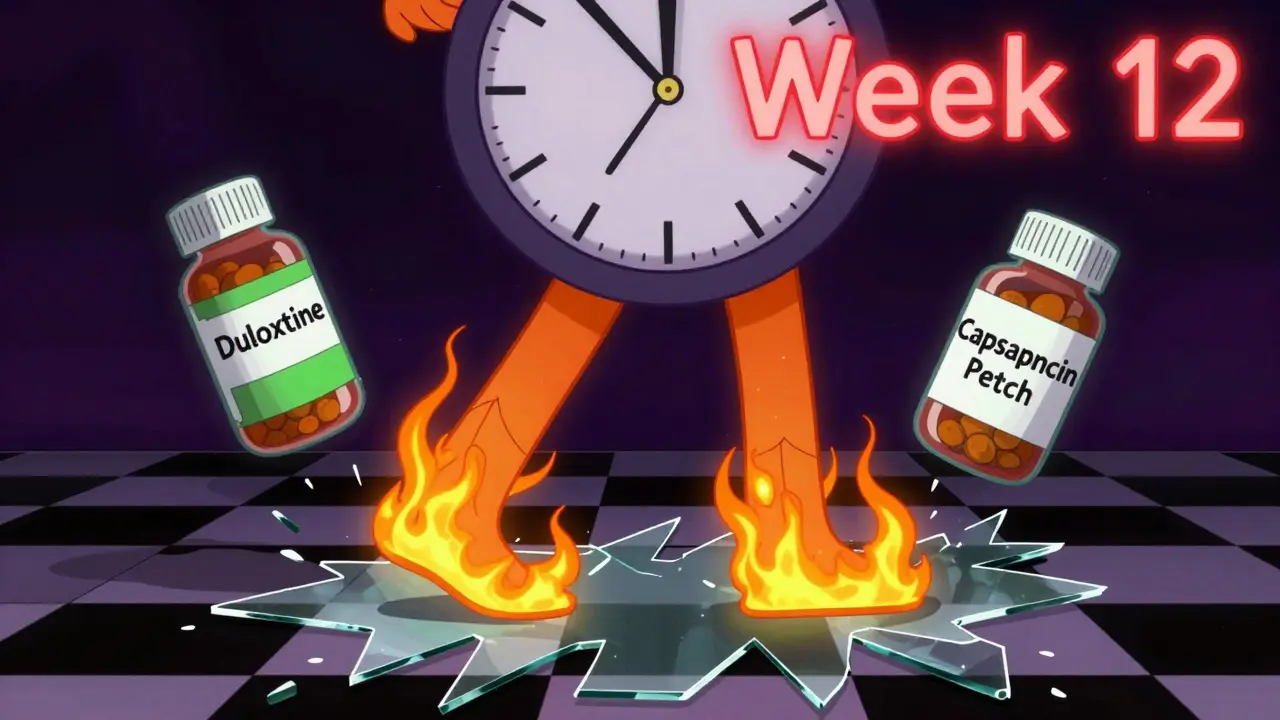
When your feet feel like they’re on fire, or like you’re walking on broken glass-even when there’s nothing there-it’s not just bad luck. It’s diabetic neuropathy. This nerve damage, caused by years of high blood sugar, affects about half of all people with diabetes. For 1 in 5, it turns into constant, sharp, burning pain that doesn’t go away with rest or over-the-counter pills. And here’s the hard truth: no medication can fix the damaged nerves. But you can take back control-by choosing the right drugs and protecting your feet like your life depends on it. Because it does.
What Medications Actually Work for Diabetic Neuropathy Pain?
The FDA has approved just four drugs specifically for diabetic neuropathy pain: duloxetine, pregabalin, tapentadol extended-release, and the 8% capsaicin patch. But most doctors start with the ones that work best for the most people-and cost the least.
Duloxetine (Cymbalta) is often the first choice. It’s an SNRI, originally an antidepressant, but it reduces pain signals in the brain and spinal cord. At 60mg daily, it cuts pain by 30-50% in most patients. The big bonus? If you’re also struggling with depression or anxiety-common in chronic pain-duloxetine helps both. Real users report feeling better emotionally, not just physically. And it’s cheap: generic duloxetine costs around $15 for 90 pills. Side effects? Nausea at first, maybe some weight gain. But most people adjust within a week.
Pregabalin (Lyrica) works fast-sometimes within 48 hours. It calms overactive nerves. But it comes with a price tag: $378 for 90 capsules, even generic. And side effects? Dizziness hits 30% of users. Some can’t drive. Others feel so sleepy they cancel plans. It’s effective, no doubt, but if you’re already tired from diabetes or work, this might not be worth it.
Gabapentin isn’t FDA-approved for this, but it’s the most prescribed. Why? It’s dirt cheap-$4 for 90 pills. It works similarly to pregabalin but needs more frequent dosing (3-4 times a day). Many patients say it helps, but the drowsiness and brain fog are real. It’s a good starting point if you’re on a tight budget and can manage the schedule.
Amitriptyline, a tricyclic antidepressant, is recommended by experts as a first-line option-even though it’s not FDA-approved for neuropathy. It’s been used since the 1980s and has a strong track record. Doses start low (10mg at night) to avoid side effects like dry mouth, constipation, and blurred vision. If you’re over 45, your doctor will check your heart first-this drug can affect heart rhythm.
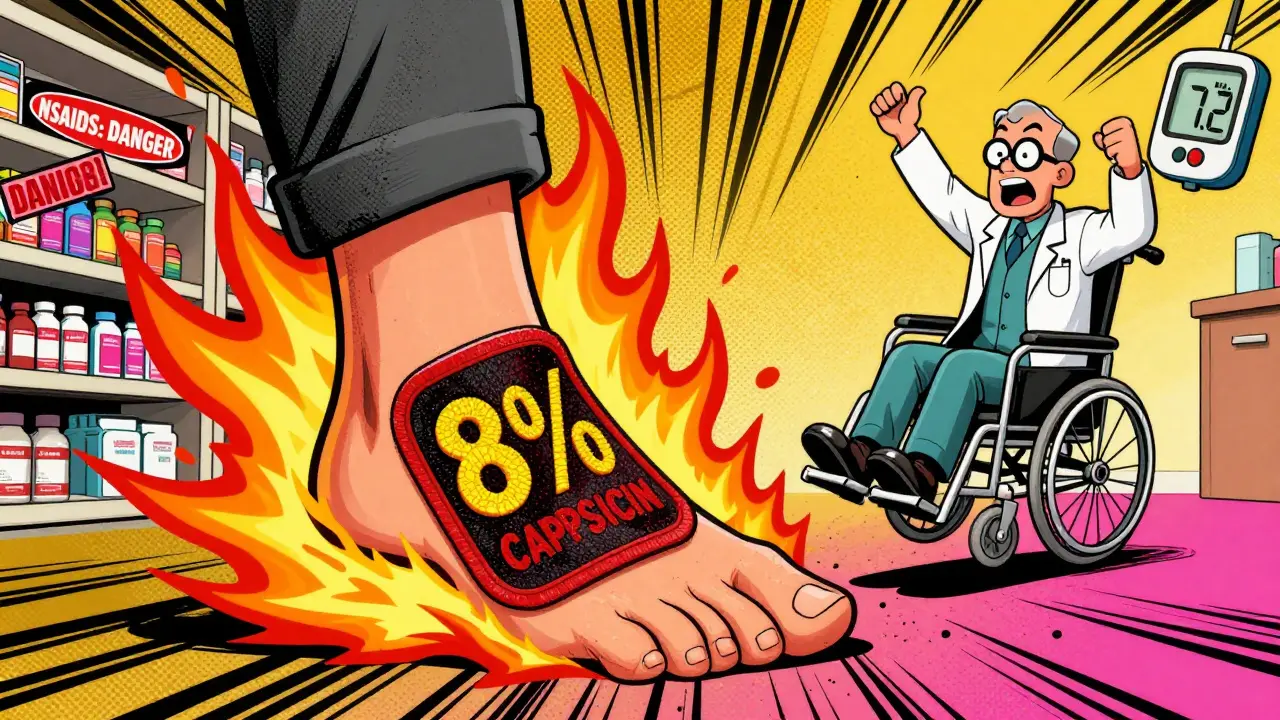
8% Capsaicin Patch (Qutenza) is for foot pain only. You don’t take it daily. You get it applied once every 3 months in a doctor’s office. The application hurts-like a burning sensation for 30-60 minutes-but afterward, many report 50-70% pain relief. One Reddit user said it cut his pain by 70%. If your pain is mostly in your feet and other drugs failed, this is worth asking about.
What Doesn’t Work (and What to Avoid)
Don’t waste time on NSAIDs like ibuprofen or naproxen. They don’t touch nerve pain. Worse-they raise your risk of kidney damage by 2.1 times if you have diabetes. Your kidneys are already under stress. Don’t add to it.
Opioids like tramadol or oxycodone? The CDC says no. They’re addictive, and long-term use leads to dependence in 3-12% of people. The American Pain Society says they’re okay for severe cases, but only under strict supervision. Most doctors won’t prescribe them unless you’ve tried everything else-and even then, it’s rare.
And don’t expect miracle cures. Supplements like alpha-lipoic acid or B vitamins? Some studies show tiny benefits, but nothing close to prescription drugs. Stick to what’s proven.
How to Start Medication-The Realistic Way
Most people don’t get it right the first time. Here’s how to do it:
- Start low. If your doctor prescribes duloxetine, begin with 30mg daily for a week. Then go to 60mg.
- Give it time. Don’t quit after two weeks. It takes 4-8 weeks to see full effect. Some patients don’t feel better until week 12.
- Track your pain. Use a simple scale: 0 = no pain, 10 = worst pain. Write it down daily.
- Watch side effects. If dizziness or nausea is bad, tell your doctor. Don’t just stop. They can adjust the dose or timing.
- If one drug fails after 8 weeks, try another. There’s no shame in switching. About 22% of people quit TCAs because of side effects-but many find relief with duloxetine or gabapentin.
And remember: meds alone won’t fix this. They just take the edge off. The real game-changer is foot care.
Foot Care: The Only Thing That Can Prevent Amputation
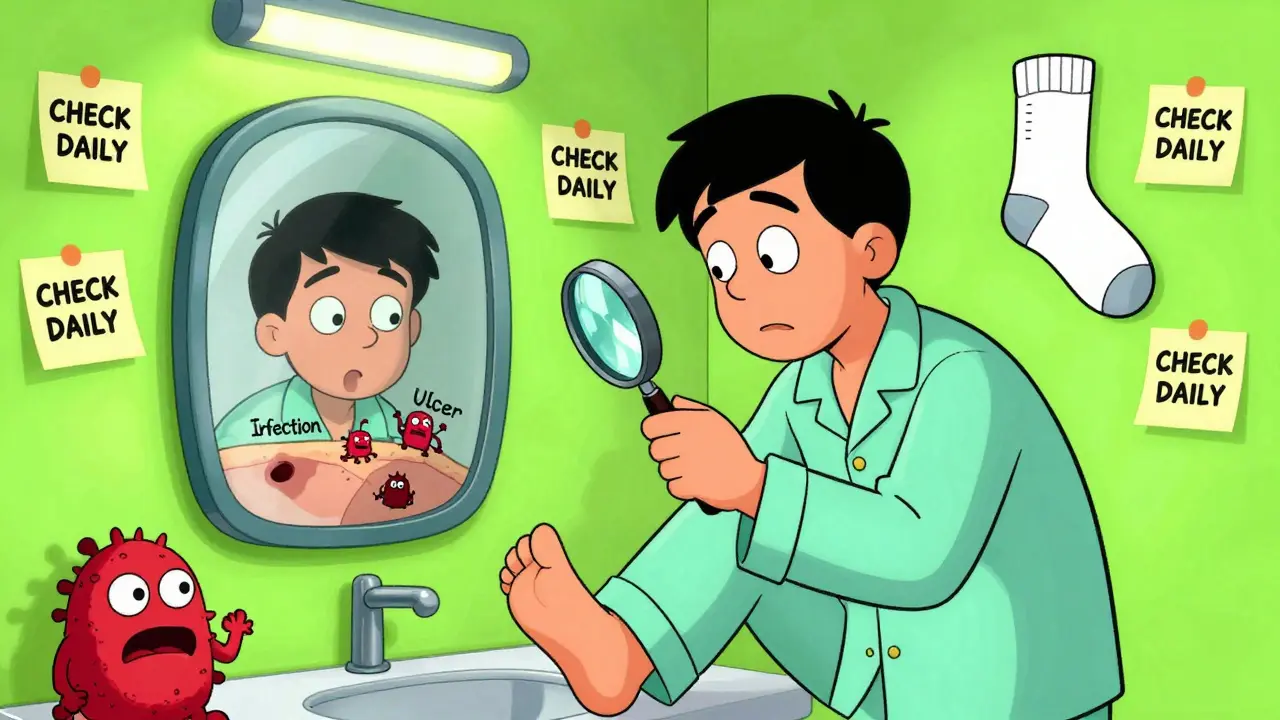
Neuropathy steals your sense of touch. You won’t feel a blister, a cut, or a splinter. That tiny wound turns into an ulcer. And ulcers? They’re the #1 reason diabetics lose toes-or worse.
The American Diabetes Association says: check your feet every single day. Not “when you remember.” Every. Single. Day.
Here’s what to do:
- Wash feet with warm (not hot) water. Test the temperature with your elbow-it’s more sensitive than your numb feet.
- Dry thoroughly, especially between toes. Moisture invites fungus and infection.
- Look for redness, swelling, cuts, blisters, or changes in skin color. Use a mirror if you can’t see the bottom of your feet.
- Never go barefoot-not even indoors. Slippers or closed shoes only.
- Trim toenails straight across. Don’t cut into the corners. If your vision is poor or hands shake, get a podiatrist to do it.
- Wear diabetic socks-no seams, no tight bands. They’re not fancy. They’re lifesavers.
- Get a 10g monofilament test at least once a year. It’s simple: your doctor touches your foot with a thin nylon wire. If you can’t feel it, your nerve damage is serious.
Shoes matter more than you think. Don’t buy regular shoes. Get fitted by a certified pedorthist. They’ll measure your feet, check for deformities, and recommend custom inserts or orthotics. Medicare covers them if you have diabetes and nerve damage.
What If Medications Don’t Work?
One in three people still have pain after trying three or more drugs. That’s not failure-it’s common. But there are still options.
Combination therapy helps. A 2022 study found that adding N-acetylcysteine to pregabalin boosted pain relief from 40% to over 70%. It’s not FDA-approved for this yet, but some pain specialists prescribe it off-label.
Physical therapy can retrain your nervous system. Techniques like transcutaneous electrical nerve stimulation (TENS) or mirror therapy reduce pain signals over time.
And new drugs are coming. Mirogabalin, expected to launch in 2026, showed 42% pain reduction in trials. SGLT2 inhibitors (like empagliflozin) may actually protect nerves-early results are promising.
But the most powerful tool? Controlling your blood sugar. No medication works well if your A1C is still above 8%. Tight control slows nerve damage. It doesn’t reverse it-but it stops it from getting worse.
Real Talk: What Patients Are Saying
On Reddit, u/NeuropathyWarrior wrote: “I tried pregabalin. Dizziness made me fall. Duloxetine gave me weight gain. Then I got the capsaicin patch. One application. 70% pain gone. The burn during application? Worth it.”
Another user said: “I started on gabapentin. $4 a month. It didn’t kill the pain, but it made it bearable. Now I can sleep. That’s enough.”
And the ones who give up? They’re the ones who didn’t check their feet. One man in Florida ignored a blister for two weeks. By the time he went to the ER, he needed a toe amputation.
It’s not about finding the perfect drug. It’s about combining smart meds with daily foot care-and never letting your guard down.
Bottom Line: You Can Live With This
Diabetic neuropathy pain is brutal. But it’s not a death sentence. You don’t need to suffer. You don’t need to lose your foot. You need a plan:
- Start with duloxetine or gabapentin. They’re affordable and effective.
- Try the capsaicin patch if your pain is foot-only.
- Avoid NSAIDs and opioids unless absolutely necessary.
- Check your feet every day. No exceptions.
- Get proper shoes and annual foot exams.
- Keep your blood sugar in range. It’s the foundation of everything.
It’s not easy. But it’s doable. Thousands of people are doing it right now-walking without pain, sleeping through the night, keeping their feet. You can too.
Can diabetic neuropathy be reversed?
No, current medications cannot reverse nerve damage caused by diabetes. The goal of treatment is to reduce pain and prevent further damage. Tight blood sugar control is the only way to stop neuropathy from getting worse.
What’s the cheapest medication for diabetic neuropathy pain?
Gabapentin is the most affordable option, averaging $4 for 90 capsules. Amitriptyline is also low-cost, around $10 for a month’s supply. Both are generic and widely covered by insurance.
Why do I need to check my feet every day?
Diabetic neuropathy damages nerves in your feet, so you can’t feel injuries. A small cut or blister can turn into a serious infection or ulcer without you noticing. Daily checks catch problems early-before they lead to amputation.
Are over-the-counter painkillers safe for diabetic neuropathy?
No. NSAIDs like ibuprofen or naproxen don’t help nerve pain and increase your risk of kidney injury by 2.1 times. They’re not recommended for people with diabetes, especially those with neuropathy.
When should I see a specialist for diabetic neuropathy?
See a neurologist or pain specialist if you’ve tried two or more medications without relief, if your pain is getting worse, or if you notice foot ulcers, swelling, or changes in skin color. Early intervention prevents serious complications.