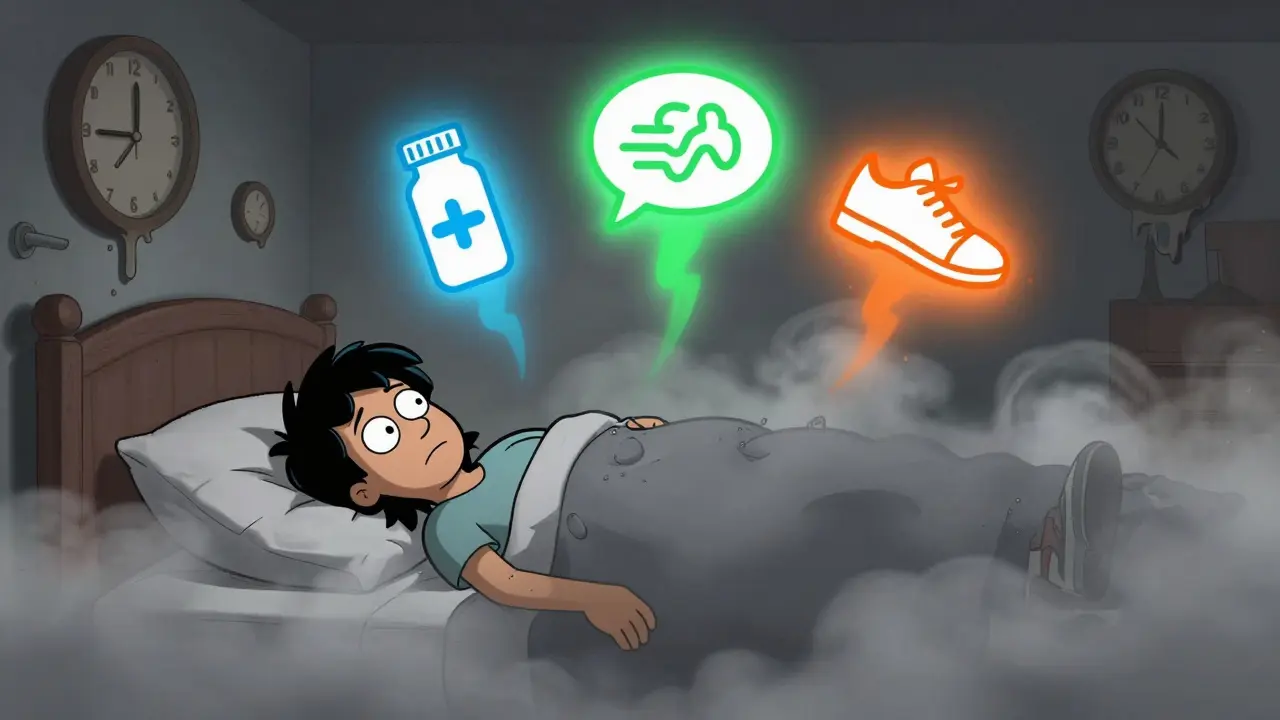
Depression isn’t just feeling sad. It’s waking up exhausted, losing interest in things you once loved, and struggling to get through the day-even when there’s no obvious reason why. It affects over 280 million people worldwide, making it the leading cause of disability globally. The good news? We now have clear, evidence-backed ways to manage it-not just one fix, but a combination of medication, therapy, and lifestyle changes that work together.
Medications: Not a Quick Fix, But a Tool
When doctors talk about antidepressants, they’re usually referring to second-generation drugs like SSRIs (selective serotonin reuptake inhibitors). These include sertraline, citalopram, and fluoxetine. They’re not magic pills. They don’t make you happy overnight. But for many people, they help lift the heavy fog that makes everything feel harder. Sertraline is often the first choice because it’s affordable and easier to tolerate than older antidepressants. About 30-50% of people on SSRIs experience sexual side effects-lower libido, trouble with arousal or orgasm. That’s common, but not inevitable. Some people switch to bupropion, which has fewer sexual side effects but carries a small seizure risk (about 0.4% at normal doses). SNRIs like venlafaxine can raise blood pressure in 10-15% of users, so monitoring matters. If one antidepressant doesn’t work after 4-8 weeks at the right dose, it’s not failure. It’s data. About 30% of people don’t respond to the first try. That’s why guidelines say to try a second medication before giving up. For treatment-resistant depression, doctors may add an atypical antipsychotic like quetiapine, which helps about 58% of people in studies. Lithium or thyroid hormone (T3) can also be added, with response rates around 36% and 30%, respectively. For severe depression, especially with psychosis, electroconvulsive therapy (ECT) remains the most effective option. It works for 70-90% of people who haven’t responded to anything else. Yes, it can cause temporary memory issues-but so can months of untreated depression.Therapy: Talking Is Medicine
Therapy isn’t just for people who "can’t handle it on their own." It’s a structured, science-backed treatment. Cognitive behavioral therapy (CBT) is the most studied. In 8-28 weekly sessions, CBT helps people spot and change thought patterns that feed depression-like "I’m worthless" or "Nothing will ever get better." Response rates? 50-60% for mild to moderate cases. Interpersonal therapy (IPT) focuses on relationships. If your depression is tied to grief, conflict, or isolation, IPT helps you rebuild connections. Twelve to sixteen sessions can match the effectiveness of medication for moderate depression. For people who’ve had depression more than once, mindfulness-based cognitive therapy (MBCT) reduces relapse risk by 31% over a year. It’s not about being "zen"-it’s about noticing negative thoughts without getting pulled into them. If your depression is tied to a troubled relationship, couples therapy can help. Studies show 40-50% symptom improvement when both partners work on it, compared to 25-30% with individual therapy alone. The bottom line? Therapy isn’t optional. For moderate to severe depression, guidelines say to start with either medication or therapy-not both at first. But if you’re not improving after 8-12 weeks, combining both raises your odds of recovery to 55-60%.Lifestyle Changes: The Quiet Powerhouse
You’ve heard it before: "Exercise more," "sleep better," "eat healthy." But here’s what the data actually shows. Exercise isn’t just for your body. Three to five sessions a week of brisk walking, cycling, or swimming for 30-45 minutes can be as effective as antidepressants for mild depression. One meta-analysis found it reduced symptoms with the same strength as medication-no pills needed. Sleep is a big one. About 75% of people with depression have trouble sleeping. Fixing sleep isn’t a side note-it’s central. Go to bed and wake up at the same time every day, even on weekends. Limit time in bed to only when you’re actually sleeping. No screens for an hour before bed. Do this consistently, and depression scores can drop by 30-40%. Diet matters more than you think. The SMILES trial gave people with depression a 12-week Mediterranean-style diet: vegetables, fruits, whole grains, fish, olive oil, nuts. After 12 weeks, 32% went into remission. The control group, which got social support but no dietary change? Only 8% improved. Stress reduction isn’t fluffy. Daily mindfulness (10-20 minutes), progressive muscle relaxation (15 minutes twice a day), yoga (2-3 times a week), or tai chi (twice a week) all show moderate to strong effects. They don’t cure depression-but they make it easier to manage.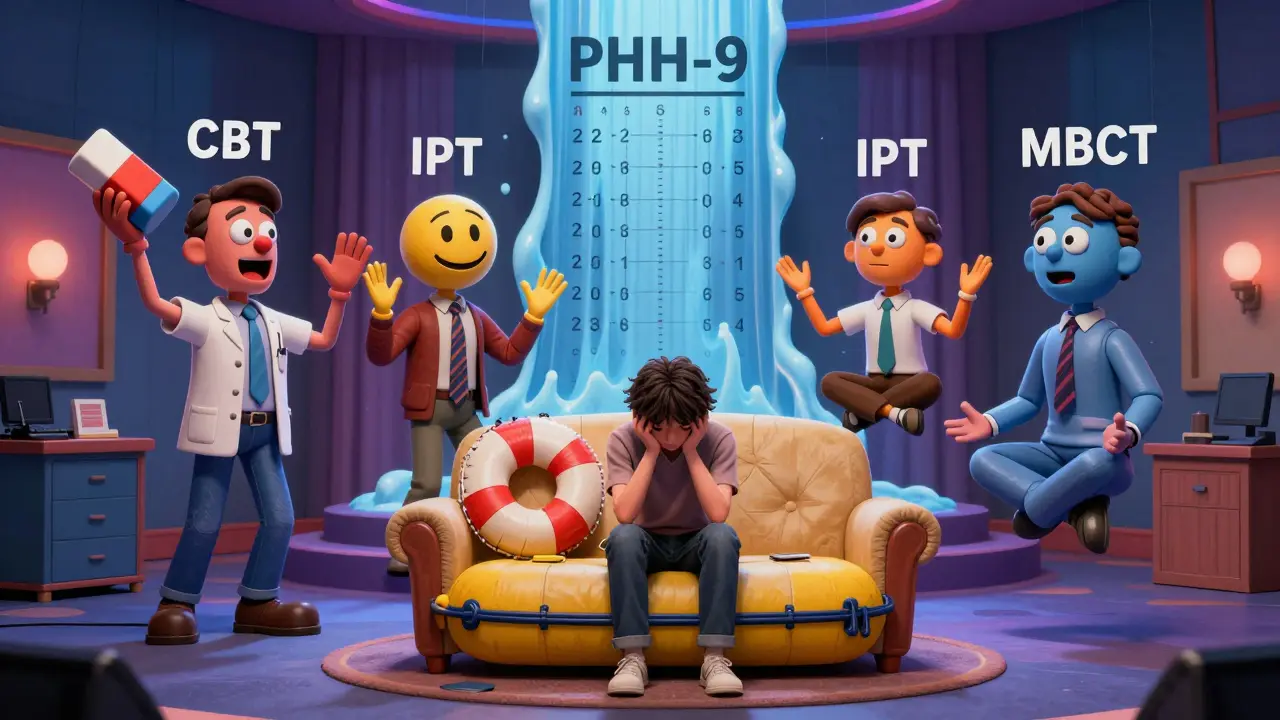
What Works Based on How Bad It Is
Depression isn’t one-size-fits-all. Treatment changes based on severity.- Mild depression (PHQ-9 score 5-9): Skip medication unless you want it. Start with exercise, guided self-help apps, or weekly check-ins with a clinician. Many people recover without drugs.
- Moderate depression (PHQ-9 score 10-14): Pick one: CBT or an SSRI. Don’t feel pressured to do both right away. If your job, relationships, or daily life are suffering, combine them.
- Severe depression (PHQ-9 score 15+): Start with both medication and therapy. Alone, each works about 40-50% of the time. Together? 60-70%.
- Psychotic depression (hallucinations or delusions): ECT or antidepressants + antipsychotics. ECT works in 70-80% of cases here.
- Chronic depression (2+ years): Try CBASP-cognitive behavioral analysis system of psychotherapy. It’s designed for long-term depression. When paired with medication, it works twice as well as meds alone.
Barriers and Real-World Challenges
Knowing what works is one thing. Getting it is another. In the U.S., only 35.6% of adults with depression get any mental health care. Why? Cost. Waitlists. Shame. There are over 6,200 areas with severe shortages of mental health providers. Digital tools are filling gaps. FDA-cleared apps like reSET offer CBT via smartphone and show a 47% response rate. But adoption is still low-only about 5% of clinics use them. Telehealth has helped: 68% of providers now offer video visits, up from 18% in 2019. Treatment takes time. Don’t give up after 2 weeks. Antidepressants need 4-8 weeks to kick in. Therapy takes 8-12 sessions to show real change. The STAR*D trial found that 67% of people who tried up to four different treatments eventually reached remission. Persistence pays.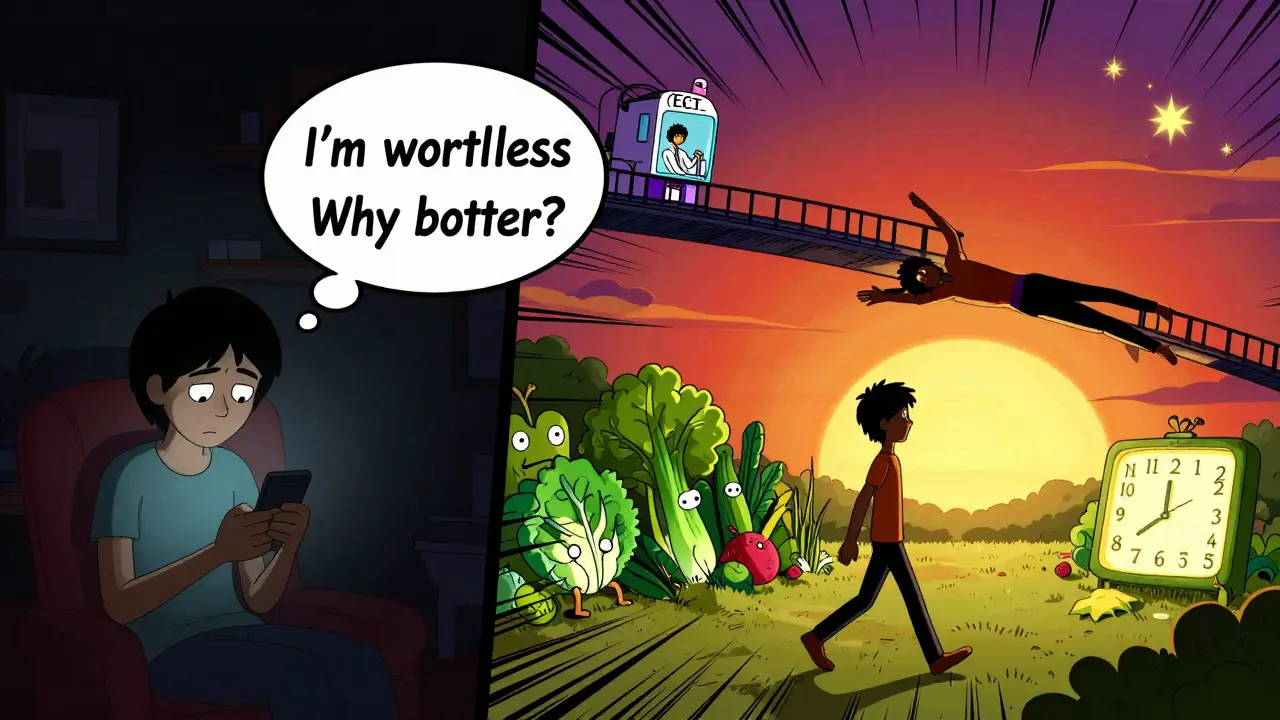
The Future Is Personalized
The idea that depression is just a "chemical imbalance" is outdated. We now know it’s a mix of biology, environment, trauma, sleep, diet, and relationships. New tools are emerging. Psilocybin-assisted therapy showed a 71% response rate in a 2021 trial-but it’s still experimental. Smartphone apps that track your speech patterns, movement, and social activity can predict a depressive episode up to 7 days in advance with 82% accuracy. And the biggest shift? Personalization. Your depression isn’t the same as someone else’s. If you struggle with insomnia, sleep therapy matters more. If you’re isolated, IPT might be better than CBT. If you hate pills, start with exercise and diet. The goal isn’t to fix everything at once. It’s to find the right mix-for you. Medication helps some. Therapy helps others. Lifestyle changes help everyone. Together? They’re powerful.What to Do Next
If you’re struggling:- Take a quick PHQ-9 screening online (many clinics offer it).
- Write down what’s hardest: sleeping? Motivation? Relationships? That tells you where to start.
- Try one thing: a 20-minute walk every day. Or a sleep schedule. Or a free CBT app.
- Talk to your doctor. Ask: "What’s the best first step for me?" Don’t accept "take a pill" as the only answer.
Let me tell you something real: antidepressants aren’t the problem - the system is. I’ve seen people on sertraline for two years, still crying in the shower, because no one ever asked if their job was soul-crushing or if they were isolated because their community collapsed. Medicine helps, sure - but it’s bandaging a wound caused by a society that values productivity over humanity.
And don’t get me started on ‘just exercise more.’ Try running when your legs feel like lead and your brain is whispering you’re a burden. It’s not laziness. It’s neurochemistry. We need structural change - better access, less stigma, real support - not just another pamphlet on Mediterranean diets.
CBT is great, but if you’re living in a trailer park with no internet and two kids to raise, who’s gonna sit through 12 sessions? We’re treating symptoms like they’re the disease. They’re not. They’re signals. Listen to them. Fix the environment. Not just the person.
I’ve worked in mental health for 18 years. I’ve seen the data. I’ve held people’s hands through ECT. And I’ll say this: the most effective ‘treatment’ I’ve ever witnessed? A neighbor who showed up with soup and didn’t ask questions. Sometimes, human presence is the only pharmacology that matters.
Ugh. Another ‘here’s how to fix depression’ guide that ignores trauma. You think someone with childhood abuse just needs to ‘try CBT’? No. They need safety. Not a worksheet. Not a pill. Not a 20-minute walk. They need someone to believe them. And the system doesn’t do that. It just pushes meds and mindfulness like it’s a yoga retreat.
Okay but the SMILES trial? 🤯 32% remission on diet alone? That’s wild. I mean, I knew sugar was trash but I didn’t know it was that *deep* in the brain. Also, who’s the genius who thought ‘eat more olives’ was a clinical intervention? 🤡 But honestly? I’m trying it. No more processed crap. I’m going full Med diet. 🍅🐟🧄
So many Americans think depression is just ‘being lazy’ or ‘not trying hard enough.’ Here in India, we don’t even have words for it. We say ‘dil dukhta hai’ - heart hurts. But no one talks about therapy. Everyone takes ‘vitamins’ and prays. I wish I had access to this info when I was 17. You’re right - start small. One walk. One sleep hour. One breath. That’s enough.
Oh great. Another ‘depression is complex’ article written by someone who’s never had to work a 9-to-5 while crying in the bathroom. You say ‘try exercise’ like it’s a Starbucks order. Try running when your body feels like it’s drowning in syrup and your boss thinks you’re ‘not team-oriented.’
And ECT? Yeah, sure - it works. But only if you’re rich enough to afford the time off and the insurance doesn’t deny it. Most people get ‘take an SSRI and call me in 6 weeks.’ That’s not care. That’s neglect dressed in clinical jargon.
Let’s be brutally honest: Western psychiatry is a corporate Ponzi scheme. SSRIs? Patented by Big Pharma in the 90s. CBT? Repackaged behavioral conditioning. ECT? A 1930s tool with a new PR team.
We’ve turned human suffering into a diagnostic checklist. PHQ-9 scores? More like a corporate KPI. You’re not ‘moderately depressed’ - you’re surviving a system designed to grind you down. The real treatment? Quit. Walk away. Reclaim your autonomy. No pill, no app, no therapist can fix a world that’s broken - only you can choose to leave it.
And if you think diet fixes trauma? Please. You’re not healing. You’re just consuming another wellness trend like a capitalist zombie.
As a veteran of the VA mental health system, I can confirm: the only thing more dangerous than untreated depression is the bureaucratic inertia that surrounds treatment. I waited 14 months for a therapist. My SSRI was changed three times because ‘formulary restrictions.’
And now you want me to start ‘mindfulness’? I have PTSD from watching my buddies die. No amount of yoga will undo that. ECT saved my life - and I’m grateful. But I shouldn’t have had to fight the system to get it.
Stop romanticizing ‘lifestyle changes.’ Some of us need more than kale and sleep schedules. We need justice.
There’s a quiet revolution happening - not in clinics, but in the dark corners of DMs and Reddit threads. People are sharing their PHQ-9 scores like poetry. They’re posting about sleep schedules like they’re sacred rituals. They’re saying, ‘I took a walk today. That’s enough.’
That’s the real science: not the trials, not the meds - it’s the collective whisper of people refusing to be erased. We’re not broken. We’re adapting. And maybe… that’s the most therapeutic thing of all.
Also, if you’ve ever cried while making oatmeal? You’re not weak. You’re human. 🫶
Just one thing: if you’re reading this and you’re struggling - you don’t have to fix everything today. Just breathe. One breath. Then another. That’s the whole therapy right there. No app. No pill. Just you, and the fact that you’re still here. That’s enough.