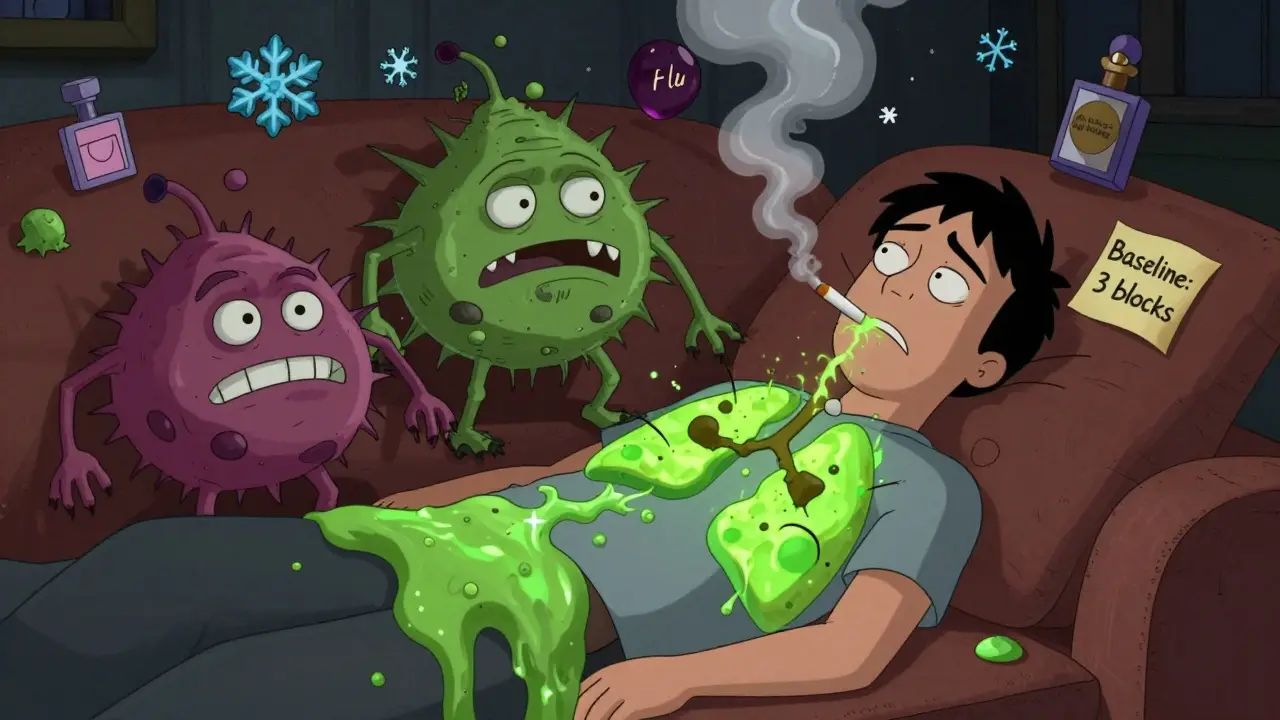
When your breathing gets worse than usual - not just a bad day, but a full-blown crisis - it could be a COPD exacerbation. For someone living with chronic obstructive pulmonary disease, this isn’t just a cough or extra wheezing. It’s a medical emergency that can land you in the hospital, accelerate lung damage, or even be life-threatening. And it happens more often than most people realize. In the U.S. alone, over 10 million healthcare visits each year are tied to COPD flare-ups. If you or someone you care about has COPD, knowing what triggers these episodes, how to spot them early, and what to do right away can make all the difference.
What Exactly Is a COPD Exacerbation?
A COPD exacerbation, also called a flare-up, is when symptoms suddenly get much worse than your usual day-to-day baseline. It’s not just feeling tired or having a bit more phlegm. It’s when your breathing becomes noticeably harder, your cough turns more frequent and deeper, and your sputum changes in color, thickness, or amount. These changes last for at least two days and often longer - sometimes up to two weeks. Unlike normal variations in symptoms, a flare-up means your airways are under serious stress. Inflammation spikes, muscles around your airways tighten, and your lungs fill with extra mucus. This makes it harder for air to move in and out. The result? You feel like you’re suffocating, even when sitting still. The worst part? Each flare-up can leave behind permanent damage. Studies show that even after you recover, your lung function often doesn’t fully return to what it was before. Over time, these repeated injuries add up, making COPD worse faster than it would otherwise progress.Top Triggers of COPD Flare-Ups
Not all flare-ups happen for the same reason. But most have one thing in common: something has irritated your already sensitive lungs. The biggest culprits fall into three groups.1. Infections - The #1 Cause
About 75% of COPD exacerbations are caused by infections. That’s three out of every four flare-ups.- Viral infections - Rhinovirus (common cold), influenza, coronavirus, and RSV are the most common. During the pandemic, many assumed COVID-19 would cause severe COPD flare-ups, but studies found that people on regular inhaled COPD medications often had milder cases than expected. Their medications may have offered some protection.
- Bacterial infections - Haemophilus influenzae, Moraxella catarrhalis, Streptococcus pneumoniae, and Pseudomonas aeruginosa are the usual suspects. These often follow a cold or flu and turn a mild illness into a full-blown crisis.
2. Environmental Irritants
Your lungs are like smoke detectors - they go off at the slightest trigger.- Air pollution - Smog, factory fumes, or even heavy traffic on busy roads can set off a flare-up.
- Cold air - Breathing in chilly air tightens airways. In Manchester, where winters are damp and chilly, this is a real daily risk.
- Strong smells - Perfume, cleaning products, paint fumes, and even scented candles can be dangerous.
- Smoke - Cigarette smoke, secondhand smoke, or even wood-burning stoves can trigger severe reactions.
3. Other Factors
- Missing medications - Skipping your daily inhaler, even for a day or two, can lower your defenses.
- Changes in weather - Sudden drops in barometric pressure or humidity spikes can make breathing harder.
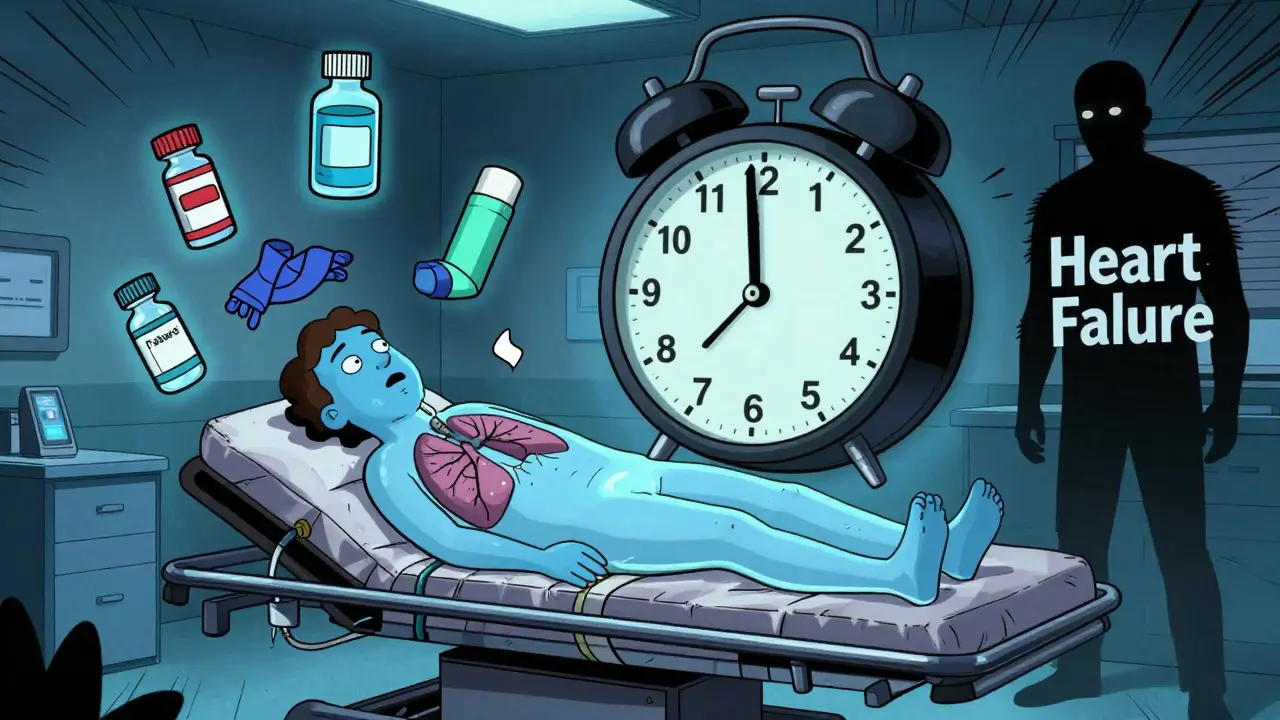
- Heart problems - Sometimes, what feels like a COPD flare-up is actually heart failure. The symptoms overlap, so it’s important to get checked.
How to Recognize a Flare-Up Early
The sooner you act, the less damage you’ll do. Look for these signs - especially if they last more than two days:- More coughing - Your cough becomes constant, worse at night, or doesn’t go away.
- Changes in sputum - It gets thicker, darker, or turns yellow, green, or even streaked with blood.
- Bigger breathlessness - Even simple tasks like walking to the kitchen or getting dressed leave you winded.
- Wheezing or chest tightness - A new or louder wheeze, or a feeling like a band is squeezing your chest.
- Increased fatigue - You’re exhausted just from breathing.
- Fever or chills - A sign your body is fighting an infection.
- Swelling in ankles - Could mean your heart is struggling, which often happens with severe flare-ups.
What to Do During a COPD Exacerbation
Don’t wait. Don’t hope it passes. Act fast.Step 1: Use Your Action Plan
Every person with COPD should have a personalized COPD Action Plan from their doctor. This isn’t a suggestion - it’s a lifeline. It tells you exactly what to do when symptoms worsen. It usually includes:- When to increase your rescue inhaler (like albuterol)
- When to start oral steroids (like prednisone)
- When to take antibiotics (if you’ve had bacterial infections before)
- When to call your doctor or go to the ER
Step 2: Use Oxygen If Prescribed
If your doctor gave you home oxygen, turn it on. Don’t wait until you’re gasping. Low oxygen levels can damage your heart and brain. If you’re using oxygen and your lips or fingernails turn blue, that’s a red flag.Step 3: Seek Emergency Help If…
Call 999 or go to A&E immediately if you have:- Severe shortness of breath - you can’t speak in full sentences
- Confusion, dizziness, or extreme fatigue
- Blue lips or fingernails
- Fast heartbeat with chest pain
- High fever (over 38°C) with chills
Why This Matters - The Big Picture
COPD is the fourth leading cause of death in the UK and the U.S. Each flare-up doesn’t just make you feel awful - it speeds up the disease. Studies show lung function never fully recovers after an exacerbation. That means every episode leaves you a little more breathless than before. And it’s not just your lungs. During a flare-up, your whole body goes into overdrive. Inflammation spreads. Your heart works harder. Blood pressure spikes. Research shows people who have frequent COPD flare-ups are at higher risk for heart attacks and strokes. This is why prevention isn’t optional - it’s survival.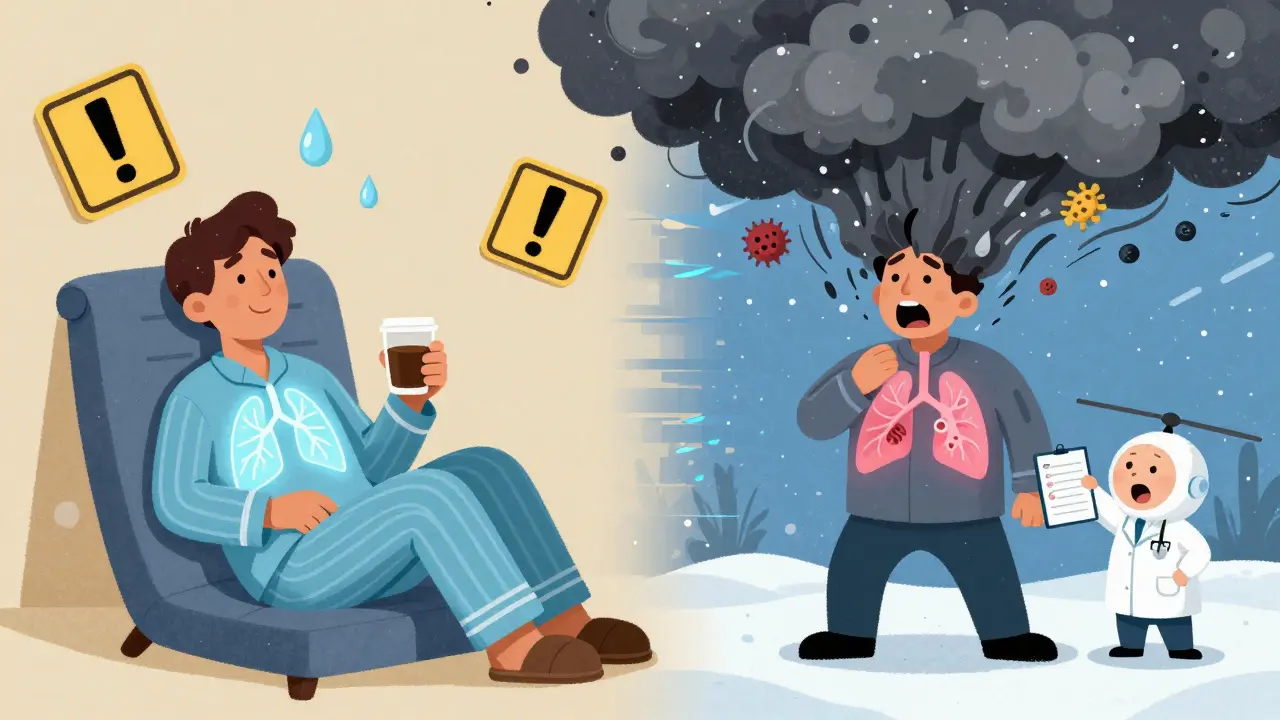
How to Prevent Flare-Ups Before They Start
The best treatment is the one you never need.- Get vaccinated - Annual flu shots and pneumococcal vaccines (Pneumovax 23 and Prevnar 13) are critical. They cut infection-related flare-ups by up to 50%.
- Take your maintenance meds - Inhaled steroids, long-acting bronchodilators, and combination inhalers keep your airways open and reduce inflammation daily. Skipping them is like leaving your front door unlocked.
- Avoid triggers - Use air purifiers, avoid strong scents, stay indoors on high-pollution days, and wear a scarf over your nose and mouth in cold weather.
- Quit smoking - If you still smoke, this is the single most important thing you can do. No medication, no inhaler, no treatment works as well as stopping.
- Stay active - Even light walking or seated exercises helps your lungs stay stronger longer.
Final Thoughts
COPD exacerbations are serious, predictable, and often preventable. You don’t have to wait for a crisis. Know your triggers. Track your symptoms. Have a plan. Act fast. Every time you catch a flare-up early and treat it right, you protect your lungs, your heart, and your future ability to breathe. That’s not just good health - it’s freedom.What are the first signs of a COPD exacerbation?
The earliest signs include increased coughing, changes in sputum (thicker, darker, or more than usual), more shortness of breath during daily tasks, wheezing, and feeling unusually tired. These symptoms last at least two days and are worse than your normal baseline.
How long does a COPD flare-up usually last?
Most COPD exacerbations last between 7 to 14 days, but some can stretch for weeks. Even after symptoms improve, lung function often doesn’t return to pre-flare-up levels, which is why each episode can cause lasting damage.
Can cold weather cause a COPD flare-up?
Yes. Cold, dry air causes airways to tighten and increases mucus production. In places like Manchester, where winter temperatures often drop below freezing, this is a major trigger. Wearing a scarf over your nose and mouth when outside can help warm the air before you breathe it in.
Do inhalers prevent COPD exacerbations?
Maintenance inhalers - especially those with inhaled corticosteroids and long-acting bronchodilators - reduce inflammation and keep airways open, lowering the risk of flare-ups by up to 40%. Rescue inhalers (like albuterol) treat symptoms during a flare-up but don’t prevent them. Taking your daily inhalers exactly as prescribed is one of the best ways to avoid hospital visits.
When should I go to the hospital for a COPD flare-up?
Go to A&E if you can’t speak in full sentences, your lips or fingernails turn blue, you’re confused or dizzy, your heart is racing with chest pain, or you have a high fever with chills. These mean your oxygen levels are dangerously low and you need emergency care.
Can COPD flare-ups cause heart problems?
Yes. During a flare-up, systemic inflammation rises, putting extra strain on the heart. Studies show people with frequent COPD exacerbations have higher risks of heart attack, stroke, and heart failure. This is why managing flare-ups isn’t just about breathing - it’s about protecting your whole body.
Are there any vaccines that help prevent COPD flare-ups?
Yes. The annual flu vaccine and pneumococcal vaccines (Pneumovax 23 and Prevnar 13) are strongly recommended for people with COPD. These vaccines prevent the most common infections that trigger flare-ups. Getting them every year can cut your risk of hospitalization by nearly half.
What’s the difference between a bad day and a COPD exacerbation?
A bad day might mean you’re a little more tired or cough a bit more. A flare-up lasts at least two days and includes clear changes: more sputum, darker sputum, worse shortness of breath, new wheezing, or fever. If you’re unsure, use your action plan or call your GP. Better to act early than wait.
This post is spot on, but let's be real - most people don't follow their action plans until it's too late. I've seen it over and over. Someone skips their inhaler for 'a couple days' because they're 'feeling fine'... then ends up in the ER gasping. It's not rocket science. It's discipline. And discipline? That's what separates survivors from statistics.
Stop treating COPD like it's optional. It's not. Your lungs don't care if you're 'too busy' or 'don't feel like it.' They just keep deteriorating. Get your plan. Follow it. Or stop pretending you're in control.
Also - vaccines. If you're still skipping flu shots, you're not just risking yourself. You're risking everyone around you. That's not just irresponsible - it's selfish.
bro i had a flare up last winter and i just thought it was a cold so i kept smoking. yeah. i know. dumb. but like... i didn't think it'd get that bad. ended up in the hospital for 5 days. they gave me steroids and said 'if you don't quit, next time you won't wake up.'
so yeah. smoke's the worst. no excuse. just stop.
omg YES. cold air is the WORST 😭 i wear 3 scarves and still feel like my lungs are freezing. and why is no one talking about how bad humidity is?? it’s like breathing soup. i use an air purifier now and my nights are actually sleepable. if you don’t have one, get one. it’s a game changer. 💨❤️
I'm a caregiver for my mom with COPD and this post made me cry - in a good way. We’ve been so scared to ask for an action plan because we didn’t know where to start. Now I’m calling her doctor tomorrow. Thank you for writing this like someone who actually gets it.
Oh please. This is just Big Pharma’s way of selling more inhalers. In India, we manage COPD with turmeric, steam, and breathing exercises. No steroids. No vaccines. Just nature. Why are Americans so dependent on pills? It’s pathetic. Your lungs don’t need chemicals - they need fresh air and discipline. And maybe stop eating processed food while you’re at it.
There is an ontological distinction between a symptom and a signal. A COPD exacerbation is not merely a symptom cluster - it is a systemic signal of physiological collapse. The body, in its wisdom, is screaming for intervention. To ignore it is to deny the integrity of homeostasis itself.
Furthermore, the notion that 'lungs don’t recover' is misleading. They do - but only if the environment of stress is removed. The damage is not irreversible; it is perpetuated. We must reframe the narrative from 'progressive decline' to 'preventable deterioration.'
And vaccines? They are not mere prophylactics - they are acts of social epistemology. To refuse them is to reject collective responsibility as a biological imperative.
Key point: maintenance inhalers reduce exacerbations by 40%. That’s not a suggestion - it’s a clinical benchmark. If you’re on a rescue inhaler only, you’re not managing COPD. You’re reacting to it. That’s like only using your brakes - not your engine. Get the combo inhaler. Take it daily. Even on good days. Your FEV1 will thank you.
Okay but what if the real trigger is capitalism? 😏 We’re told to 'take your meds' but no one talks about how air quality is a privilege. Or how people in rural areas can't afford oxygen tanks. Or how the 'action plan' requires a doctor, insurance, and time off work. This post is technically accurate... but it’s a luxury pamphlet for people who already have access. 🤷♀️
Thank you for writing this with so much care. I’m from the Philippines and we don’t have much COPD awareness here - but my brother has it, and I’ve been translating this into Tagalog to share with our family. The part about cold air and scarves? That’s exactly what we do. We use blankets as makeshift masks. It’s not perfect, but it helps. I’m so glad someone in the US is talking about this like it matters - because it does. ❤️