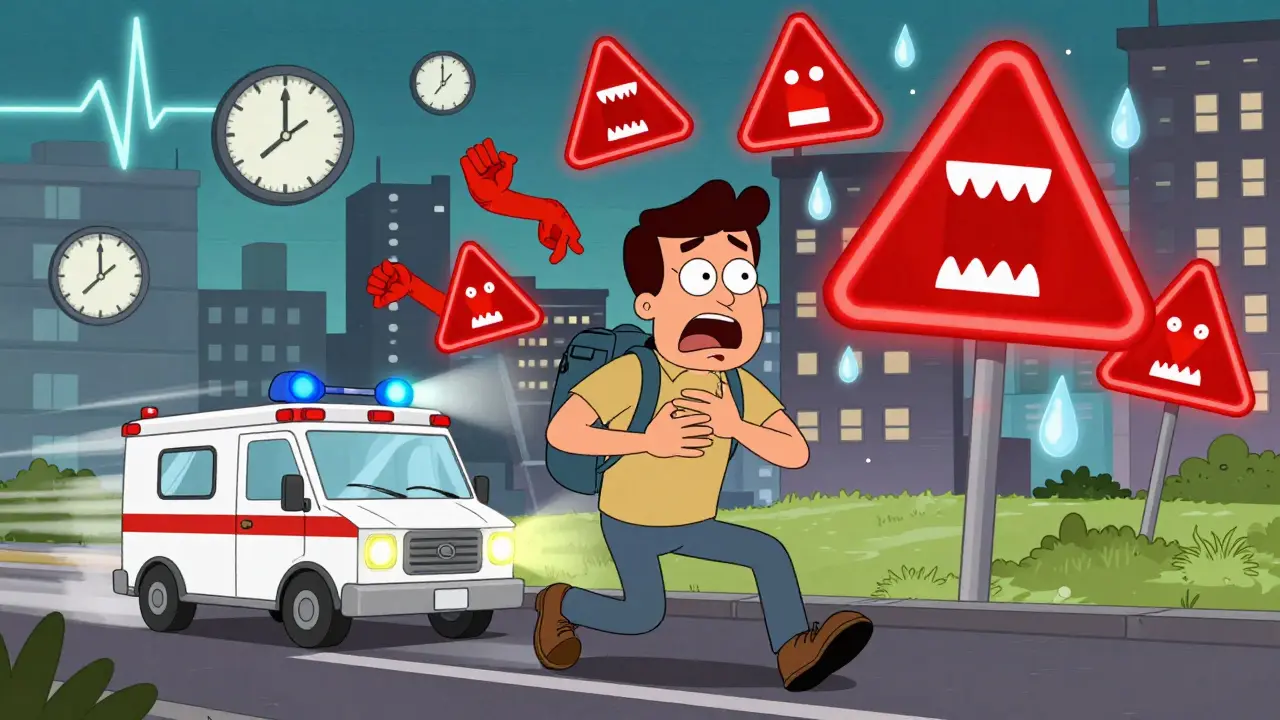
When your chest hurts, it’s easy to panic. Is it heartburn? A pulled muscle? Or something serious like a heart attack? The truth is, chest pain doesn’t always mean your heart is failing-but it can. Knowing when to call 9-1-1 instead of waiting it out or driving yourself to the clinic could save your life.
Every year in the U.S., about 7 million people show up at emergency departments with chest pain. Only about 1 in 8 of them actually have a heart attack. But that 1 in 8? They can’t afford to wait. The difference between getting help in 10 minutes versus 40 minutes can mean the difference between living and dying.
What Counts as Chest Pain?
Chest pain isn’t just a sharp stab or crushing weight in the center of your chest. It can show up as pressure, tightness, burning, or even a dull ache. And it doesn’t even have to be in your chest. People often feel it in their jaw, left arm, back, neck, or upper belly. Some describe it like an elephant sitting on their chest. Others say it’s just strange-like they can’t catch their breath, feel nauseous, or suddenly break out in cold sweat.
Shortness of breath, extreme fatigue, or dizziness without chest discomfort? Those can be silent signs of heart trouble too. These are called "anginal equivalents"-symptoms that point to heart ischemia even when the classic pain isn’t there. This is especially true for women, older adults, and people with diabetes. Don’t dismiss them just because you don’t feel "typical" pain.
When to Go to the Emergency Department
Here’s the rule: If you’re unsure, go. But if you have any of these signs, don’t hesitate-call 9-1-1 right away:
- Chest pain that lasts more than 5 minutes, especially if it comes on suddenly or gets worse with activity
- Pain that spreads to your arm, jaw, neck, or back
- Breaking out in a cold sweat for no reason
- Nausea, vomiting, or sudden dizziness
- Shortness of breath with no clear cause (like climbing stairs)
- Feeling like you’re going to pass out
- Heart rate over 100 beats per minute or blood pressure below 90 systolic
These aren’t just "maybe" signs. They’re red flags that match the clinical criteria from the 2021 AHA/ACC guidelines. If you have two or more of these, you’re in the high-risk group. Don’t drive yourself. Don’t wait to see if it goes away. Ambulances have ECG machines, and paramedics can start treatment before you even reach the hospital.
Why Ambulance Over a Car?
Driving yourself to the ER sounds practical, but it’s risky. Studies show that people who drive themselves have a 25-30% higher chance of having a cardiac arrest or other serious event on the way. Why? Because if your heart starts to fail while you’re behind the wheel, you might lose control. Or worse-you might not even realize something’s wrong until it’s too late.
EMS crews can start monitoring your heart right away. They can give aspirin, oxygen, or even begin treatment before arrival. Most importantly, they can transmit your ECG to the hospital so the team is ready when you get there. That cuts down your door-to-balloon time-the time between arriving at the hospital and getting a blocked artery opened. The goal is under 90 minutes. With EMS, it’s often under 60.
The Role of the ECG and Troponin
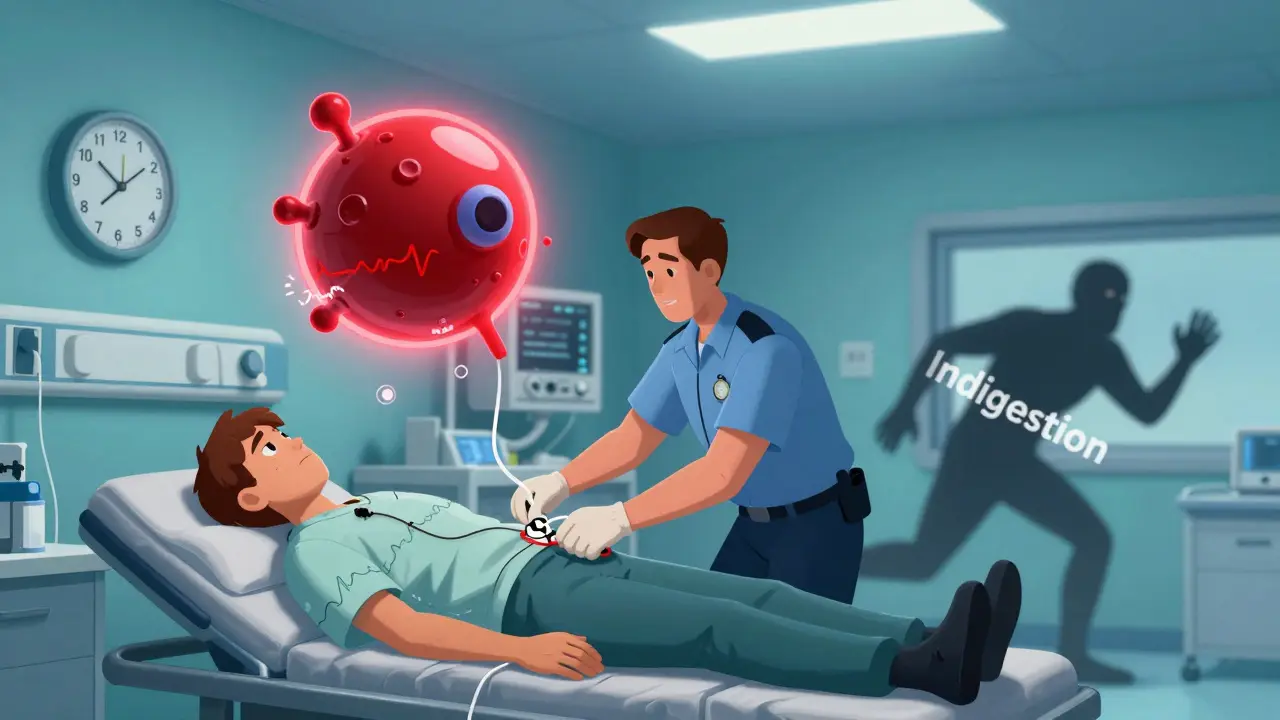
When you arrive at the ER, the first thing they’ll do is hook you up to an ECG machine. It’s quick, painless, and gives immediate clues. The 2021 guidelines say this must be done within 10 minutes of arrival. Why? Because if you’re having a STEMI-a type of heart attack with a clear spike on the ECG-time is everything. Every minute without treatment kills about 1 million heart muscle cells.
After the ECG, they’ll check your blood for cardiac troponin. This is a protein released when heart muscle is damaged. Modern high-sensitivity troponin tests can detect tiny amounts, even in the first hour. Many hospitals now use rapid protocols: take a sample when you arrive, then another one hour later. If both are normal and your symptoms aren’t worsening, you might be ruled out for a heart attack in under two hours.
But here’s the catch: older troponin tests can’t do this. If your hospital still uses outdated assays, they might miss early signs. Ask: "Are you using high-sensitivity troponin?" If they say no, it’s worth pushing for a transfer or second opinion.
What If It’s Not a Heart Attack?
Most chest pain isn’t from a heart attack. But that doesn’t mean it’s harmless. Other causes include:
- Heartburn or acid reflux
- Costochondritis (inflamed rib cartilage)
- Pulmonary embolism (blood clot in the lung)
- Pneumonia or pleurisy
- Anxiety or panic attacks
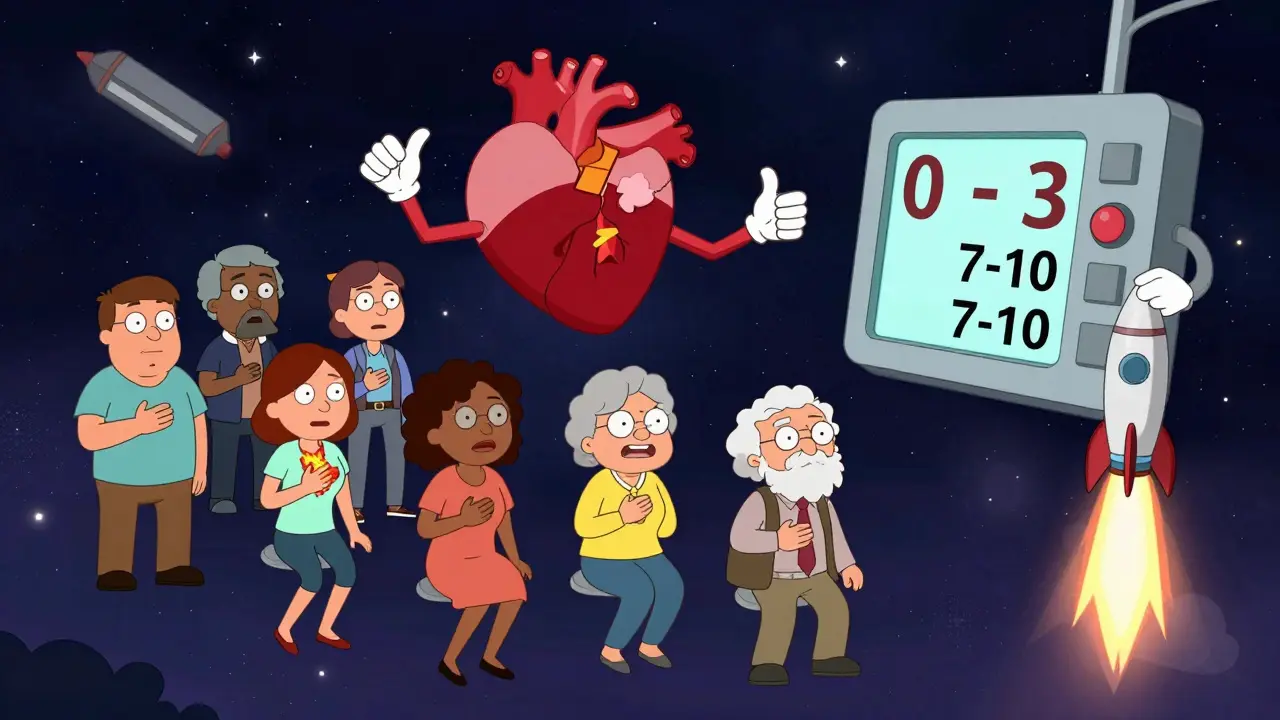
Doctors use tools like the HEART score to sort things out. It looks at five things: your history (what you describe), ECG results, age, risk factors (like smoking or high blood pressure), and troponin level. A score of 0-3 means low risk-you can likely go home with follow-up. A score of 7-10? That’s high risk. You’re going straight to the cath lab.
Even if your heart is fine, you might still need more testing. Some people have INOCA-Ischemia with No Obstructive Coronary Artery disease. Their arteries aren’t blocked, but their heart still doesn’t get enough blood. This is more common in women and often gets missed. If you keep having symptoms after being cleared, ask about specialized tests like coronary flow reserve or cardiac MRI.
What Not to Do
Don’t ignore symptoms because "it’s probably just indigestion." I’ve seen too many patients come in days later with full-blown heart damage because they waited. Don’t take antacids and hope it goes away. Don’t rely on a friend’s advice. Don’t think "I’m young, so it can’t be my heart." Heart attacks happen to people in their 30s and 40s.
And please, don’t wait to see if it gets better. If you’re having chest discomfort that feels off, call 9-1-1. Better to be wrong and have a scare than to be right and not make it.
The Future of Chest Pain Evaluation
By 2025, 75% of U.S. hospitals will use AI to help read ECGs. These systems can spot subtle changes humans miss-like tiny ST-segment shifts that signal early ischemia. One study showed AI detected 98.5% of these changes, compared to 87% for experienced cardiologists. That means faster, more accurate decisions.
Right now, many hospitals are still catching up. The biggest delay? Not getting the ECG done on time. The guideline says 10 minutes. The reality? In some places, it’s 25. That’s 15 minutes of heart muscle dying. If you’re in an ER and they don’t hook you up within 10 minutes, politely ask why.
And remember: shared decision-making matters. Your doctor should explain your risk level, what tests are needed, what the risks of each test are (like radiation from a CT scan), and what happens if you don’t do them. You have a right to understand your options.
Heart health isn’t about fear. It’s about awareness. Know your body. Know the signs. And when in doubt-call 9-1-1. It’s not dramatic. It’s smart.
Simple rule: if it feels wrong, it is. Call 9-1-1. No shame in being wrong. Plenty of shame in being dead.
You’re not being proactive. You’re being lucky.
Here’s the thing: we’ve saved lives because someone called an ambulance. Not because they were sure. Because they were scared. And that’s enough.
Now I tell everyone: if it’s new, weird, or just doesn’t feel right-call the ambulance. Even if you’re 25. Even if you’re fit. Even if you think you’re overreacting. You’re not.